

Murang’a County is currently the site of a significant infrastructure rollout as the national government moves forward with the construction of 25 modern markets. The projects, which carry a combined price tag of KSh 2.5 billion, are part of a broader national initiative to formalize the retail sector.
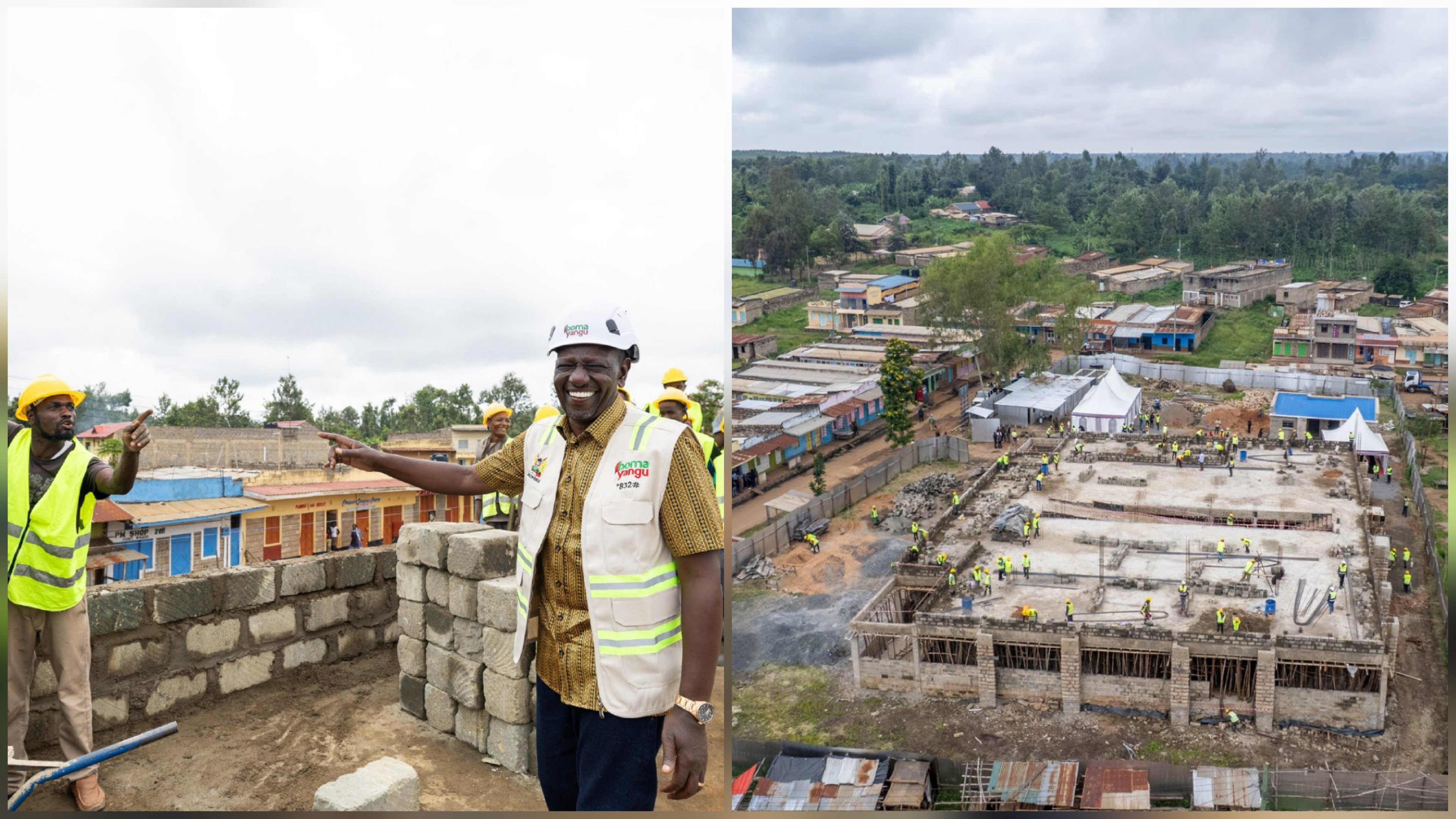
President Ruto visited the construction site of the Ciumbu Modern Market in Maragua Constituency to assess progress on the ground. During the inspection, it was confirmed that the specific facility at Ciumbu will accommodate over 200 traders once the contractors hand over the finished site.
The Murang’a projects are not isolated developments. Across the country, 600 similar markets are currently in various stages of completion. These facilities are designed to replace informal trading spots with structured, weather-protected environments.
For many small-scale retailers, often referred to as Mama Mboga, these sites represent a shift from roadside trading to dedicated stalls. The government has framed these investments as a way to provide decent, hygienic, and organized places of work for the nation’s growing trader population.
The Ciumbu site visit showed active structural work, with President Ruto joined by local leaders and construction teams. The design of these modern markets typically includes improved drainage, lighting, and security features that are often missing in traditional open-air settings.
Budgetary allocations for these projects come at a time when the government is prioritizing the "Bottom-Up" economic model. By investing in the physical infrastructure used by micro-enterprises, the administration aims to reduce post-harvest losses and improve the daily earnings of local vendors.
The KSh 2.5 billion investment in Murang’a alone highlights the scale of the localized spending. Each of the 25 markets is expected to serve as a hub for its respective community, drawing in more customers and allowing for longer operating hours due to better security.
Nationally, the 600-market target is one of the most ambitious retail infrastructure programs seen in recent years. While the Ciumbu market is relatively modest in its 200-trader capacity, the cumulative effect of hundreds of such sites is intended to change the face of Kenyan commerce.
The residents in Maragua have expressed interest in the completion timelines, as the current informal arrangements often leave them exposed to the elements. The transition to a "modern market" setup is expected to bring better regulation and sanitation to the local food supply chain.
As the various projects move toward the finishing stages, the focus will likely shift to the management of these spaces. Ensuring that the intended beneficiaries, the small-scale traders, actually secure the stalls remains a key point of interest for the public.
For now, the heavy machinery and rising brickwork at Ciumbu serve as a tangible sign of the KSh 2.5 billion commitment to Murang’a. The successful delivery of these 25 sites will be a test of the government's ability to execute high-volume infrastructure projects on a tight schedule.
Comments (0)
Leave a Comment
No comments yet. Be the first to share your thoughts!