
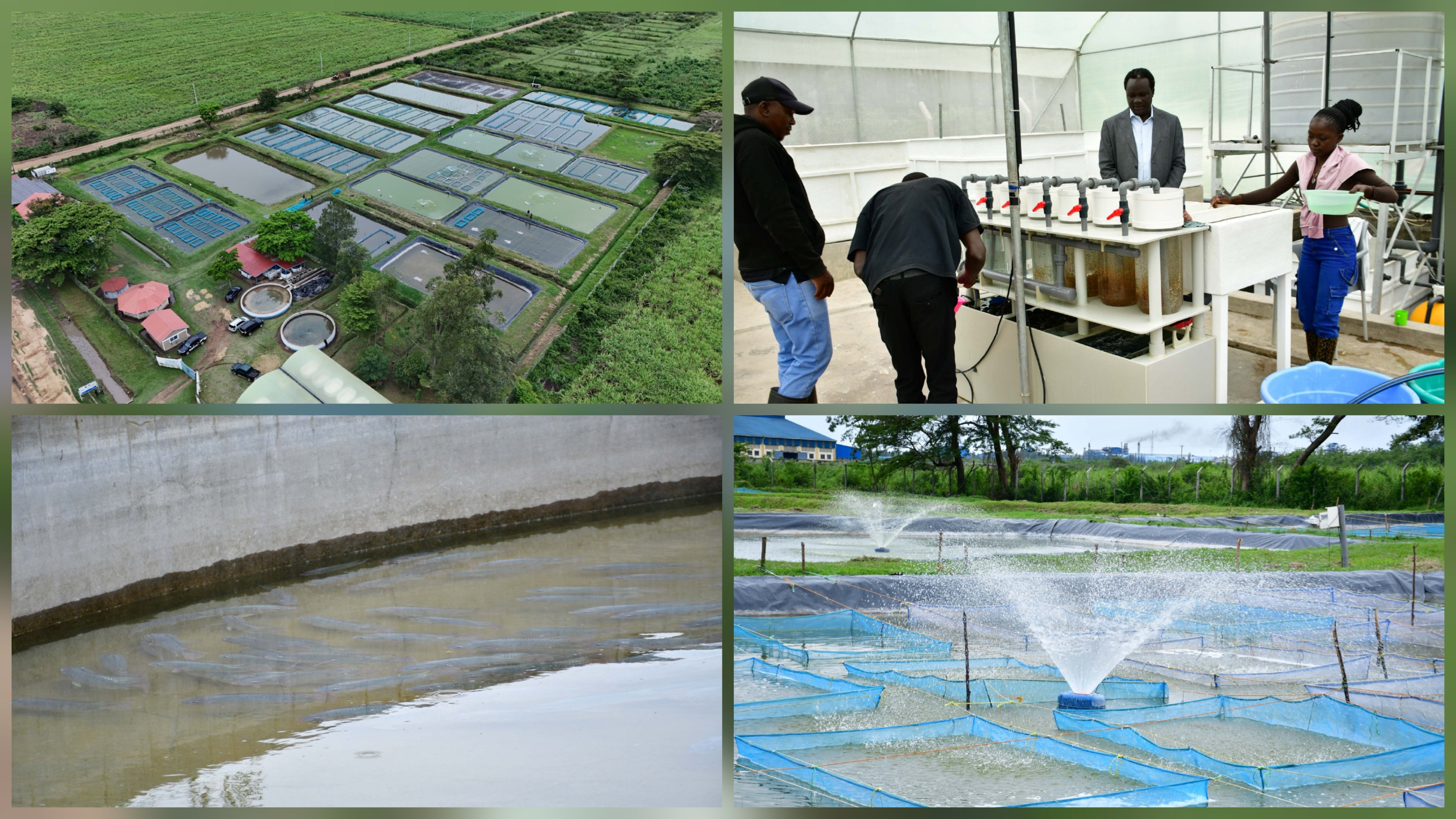

The Kibos Aquaculture Centre in Kisumu County is undergoing a phased return to full operational status, following a decade of stalled activity at the government-owned site. Managed by the Lake Basin Development Authority, the facility now serves as a primary hub for fingerling production and aquaculture training in the Lake Victoria region.
A capital injection from the government in 2024 allowed for the restoration of the centre’s 21 ponds. This intervention was supported by a strategic partnership with Aquarech Ltd, which focused on the modernisation of existing infrastructure and the integration of new management systems to accelerate recovery.
The facility currently operates two distinct production lines, including Recirculating Aquaculture Systems. These setups have improved biological security and efficiency, resulting in fingerling survival rates of up to 80%.
Data from 2025 indicates the centre produced 12 million fingerlings, which is approximately one-third of its total designed capacity. This output provided essential seed stock to roughly 3,000 farmers across the region.
Current projections for 2026 aim to increase the reach of the facility to 5,000 farmers. Management expects the site to hit its full annual production target of 36 million fingerlings by August this year.
To manage this increased volume, the hatchery has integrated automated fingerling counting technology. This addition is intended to improve inventory accuracy and ensure that farmers receive the exact quantities purchased, reducing the margins of error common in manual sorting.
Beyond its role as a production site, the centre functions as a capacity-building hub for the blue-economy sector. The onsite training facility can host 50 farmers per session for practical demonstrations on fish husbandry and pond management.
The physical training is supported by a digital component through the Blue Planet Academy platform. This online resource provides access to over 150 instructional videos detailing best practices for rearing Nile tilapia and African catfish.
Labor requirements at the site involve 22 daily staff members. The workforce is composed of both men and women, with a notable majority drawn from the local youth population.
The revitalisation of the Kibos site is viewed by the Authority as a central component of the broader regional strategy to stabilize the supply chain for aquaculture. By providing high-quality fingerlings, the facility addresses a common bottleneck for small-scale and commercial fish farmers.
With the 2026 targets approaching, the focus remains on maintaining the integrity of the Recirculating Aquaculture Systems and ensuring the automated systems remain calibrated for high-volume output.
Comments (0)
Leave a Comment
No comments yet. Be the first to share your thoughts!