
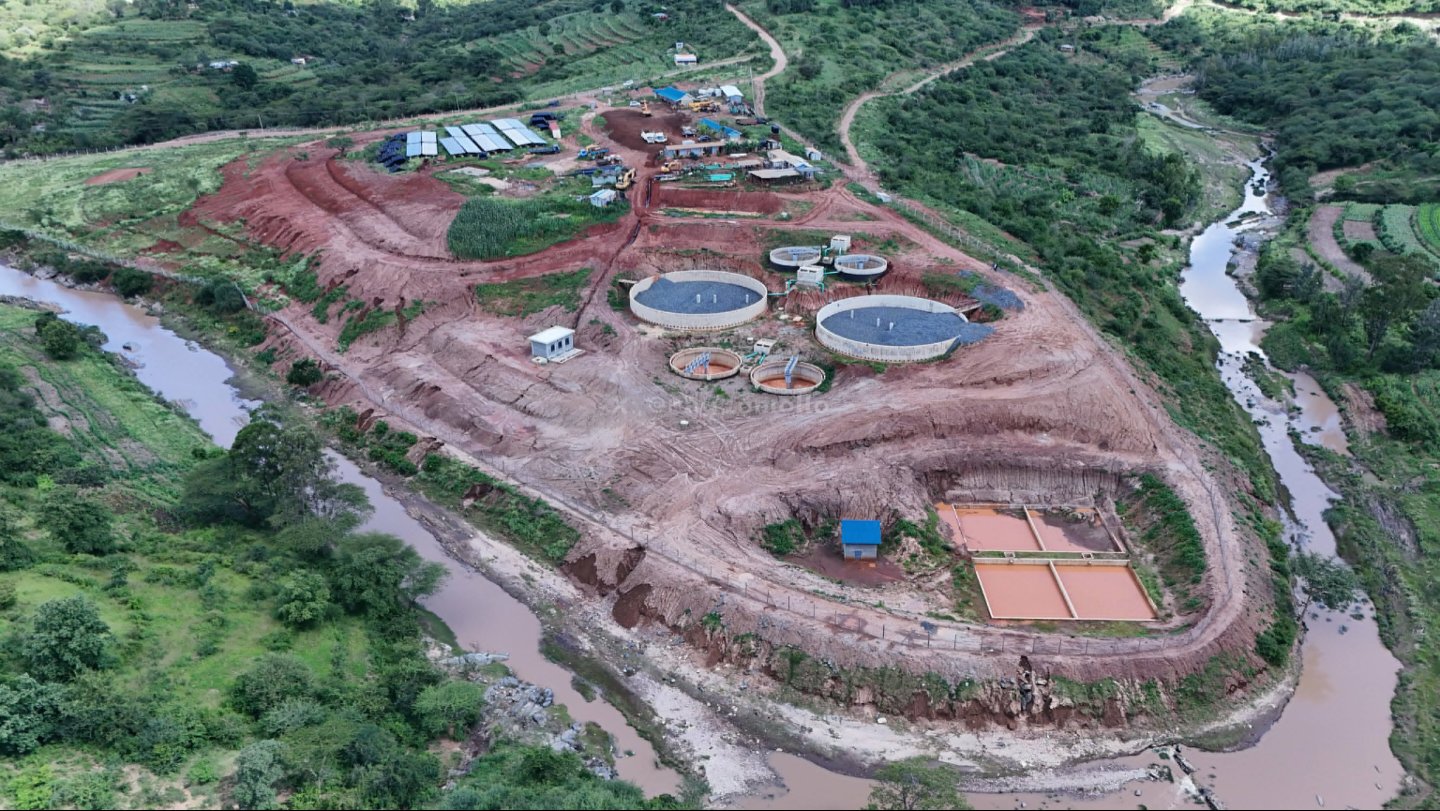

The Kenyan government is nearing the completion of a comprehensive modernization of the Machakos sewerage project, an initiative aimed at overhauling the sanitation infrastructure of a town that once served as the nation's first administrative headquarters.
Established in 1899 as the initial capital of the British East Africa Protectorate, Machakos has outgrown its legacy systems. The current project seeks to rectify decades of underinvestment that saw the town relying on a defunct sewer network constructed in 1952.
The Ministry of Water, Sanitation and Irrigation is spearheading the works through the Tanathi Water Works Development Agency. Officials confirm that the project has reached an advanced stage of completion, addressing urgent public health and environmental protection requirements for the growing urban population.
Technical specifications of the upgrade include the installation of a modern wastewater treatment system. At the heart of the facility is a reinforced concrete clarifier tank equipped with a central-drive sludge scraper. This component is designed to continuously remove settled solids, significantly increasing the efficiency of the treatment process.
Construction crews are also laying approximately 65 kilometers of trunk and lateral sewer pipelines. These lines are engineered to facilitate the conveyance of wastewater from residential, commercial, and institutional zones directly to the new treatment plant.
Dr. Raymond Omollo, the Principal Secretary for Internal Security and National Administration, noted that his department is playing a facilitative role in the project. The focus remains on safeguarding public health outcomes through grassroots sensitization and ensuring residents connect to the new system legally.
The involvement of the State Department for Internal Security aims to foster compliance with environmental and public sanitation regulations. This includes mitigating illegal discharges that have historically plagued the local drainage systems and contaminated the surrounding environment.
Machakos has seen rapid expansion in recent years, with a rising population and commerce putting immense pressure on existing facilities. The shift from mid-century infrastructure to a modern high-capacity network is viewed as a necessary step for sustainable urban development in the region.
The project is expected to provide a reliable drainage solution that meets contemporary urban demands, moving away from the patchwork repairs that characterized the older 1952 system. By modernizing the sludge removal and filtration process, the agency aims to ensure that the water discharged back into the ecosystem meets strict safety standards.
Local administrators continue to coordinate with the Tanathi Water Works Development Agency to finalize the remaining pipeline stretches. The completion of this 65-kilometer network will mark one of the most significant infrastructure shifts for Machakos since the colonial era.
Comments (0)
Leave a Comment
No comments yet. Be the first to share your thoughts!