
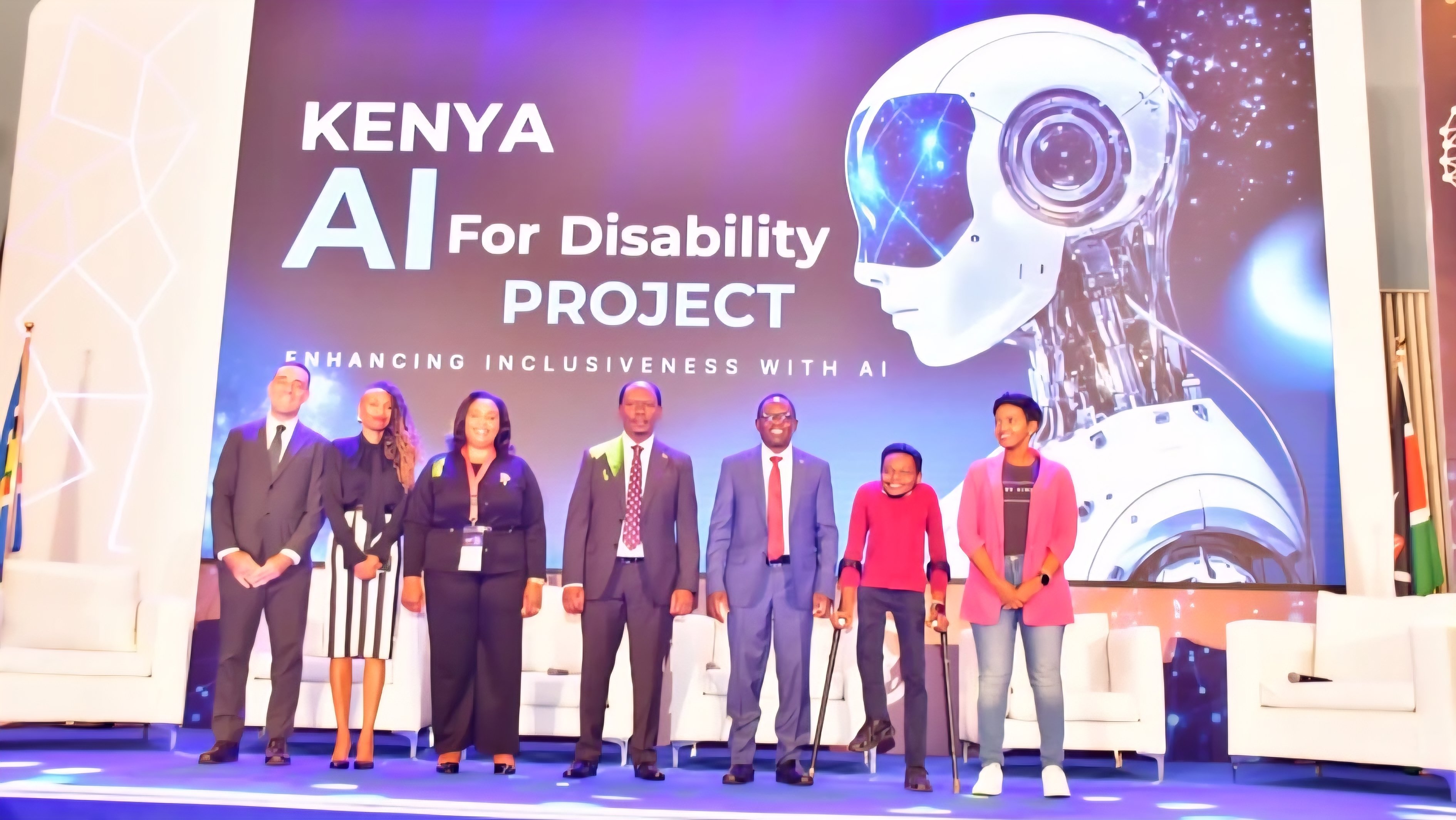

Kenya has officially introduced the AI for Disability Project, a central initiative focused on shifting technological development from retrofitted solutions to inclusion by design. The project was unveiled at the conclusion of the Connected Africa Summit 2026 in Nairobi, following the adoption of a ministerial communiqué on April 30.
The Ministry of Information, Communications and the Digital Economy (MoICDE) is leading the partnership. Collaborative efforts involve the Kenya Institute of Special Education (KISE), inABLE, and the AT4D Trust. Global technology firm Huawei and local innovators, including Qhala, are also contributing to the development of hardware and software designed specifically for persons with disabilities.
A dedicated manufacturing plant is already operational at the KISE headquarters in Nairobi. This facility will handle the local production and distribution of assistive equipment. By manufacturing these tools within the country, the government intends to reduce the costs associated with importing specialized technology while supporting the local innovation ecosystem.
William Kabogo, the Cabinet Secretary for Information, Communications and the Digital Economy, noted that the initiative ensures persons with disabilities are not secondary considerations in the digital economy. The project aligns with the national AI strategy, utilizing state assets like the Konza Technopolis Data Centre and a network of digital hubs to host and scale new applications.
Mary Kerema, Secretary for ICT, E-Government and Digital Economy, described the move as a structural shift in how the government delivers services. She explained that the partnership aims to co-engineer systems from the baseline, rather than adding accessibility features as an afterthought to existing products.
The program also emphasizes the harmonization of digital devices across the continent. Under this framework, assistive tools developed in Kenya are intended to be interoperable with systems in other African nations, such as Malawi, allowing users to maintain a consistent interface when traveling.
Software development for the project will be managed by local developers. This focus on domestic talent is part of a broader commitment to building AI capacity among youth and underserved communities. The initiative is expected to open new avenues for employment and entrepreneurship by removing technical barriers to participation.
By establishing a hub for accessible technology, Kenya is positioning its digital infrastructure to serve as a testing ground for inclusive innovation. This approach is intended to bridge the gap between emerging AI capabilities and the practical needs of the approximately 4.5 million persons with disabilities in the country.
Comments (0)
Leave a Comment
No comments yet. Be the first to share your thoughts!