
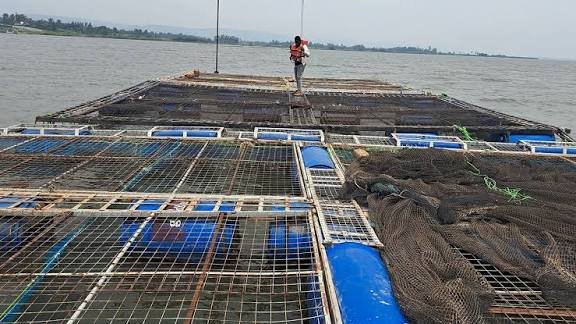

The government has intensified its investment in the Kibos Aquaculture Centre, a facility managed by the Lake Basin Development Authority (LBDA). This move is aimed at scaling up fish production through the adoption of modern aquaculture technologies.
Located in Kisumu, the centre holds the status of being the largest government-owned fingerling production facility in the region. It currently serves as a central pillar for the development of the aquaculture value chain in the Lake Victoria basin.
Operational data indicates that the facility manages 21 ponds. While it possesses an annual production capacity of 36 million fingerlings, current output levels remain at approximately 35 per cent of its total potential.
A critical capital injection from the government in 2024 has allowed for the revitalization of the site. This funding follows nearly ten years of stalled operations, during which technical issues and financial constraints hindered the facility’s productivity.
To accelerate the recovery and modernization of the infrastructure, the LBDA has entered into a strategic partnership with Aquarech Ltd. This collaboration is designed to integrate private-sector efficiencies into the public facility's management and technical processes.
Construction and upgrade works at the site include the installation of advanced systems to improve water management and hatching rates. These improvements are necessary to address the high mortality rates often associated with large-scale fingerling production.
The modernization efforts involve the deployment of a recirculating aquaculture system and the construction of greenhouse platforms. These structural additions are intended to provide a controlled environment for the growth of tilapia and catfish fingerlings.
By upgrading the infrastructure at Kibos, the government aims to support local farmers who have faced a shortage of high-quality seeds. The facility also plays a role in restocking efforts for Lake Victoria, where natural fish stocks have seen a decline.
The integration of technology at the centre includes digital platforms for market linkage. This ensures that the increased production of fingerlings translates into a more reliable supply chain for small-scale and medium-scale fish farmers in the region.
As works continue, the LBDA expects the facility to reach its full operational capacity within the next few years. This expansion is part of a broader infrastructure strategy to reduce Kenya’s reliance on fish imports through enhanced domestic capacity.
Comments (0)
Leave a Comment
No comments yet. Be the first to share your thoughts!