
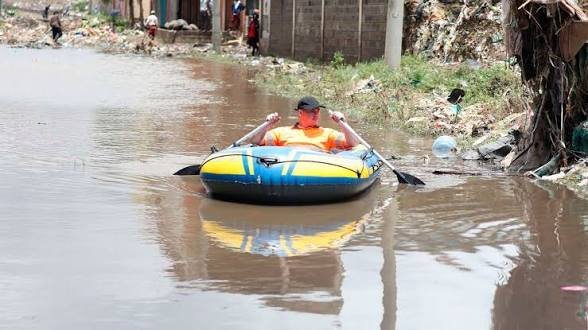

The recent flooding across Nairobi has exposed a deep-seated crisis within the city’s construction sector, where unauthorized developments have systematically encroached on vital waterways. While heavy rainfall acts as the immediate trigger, the scale of the destruction points toward years of regulatory failure and the aggressive expansion of real estate into riparian zones.
Investigations into the city’s drainage infrastructure reveal that many natural rivers and streams have been narrowed to a fraction of their original width. In several high-density neighborhoods, developers have erected perimeter walls and even multi-story buildings directly over drainage paths, which restricts the natural flow of water during storms.
State agencies tasked with oversight, including the National Environment Management Authority (NEMA) and the Water Resources Authority (WRA), are under fire for failing to stop these projects during their early stages. Environmental experts argue that the conversion of wetlands into concrete jungles has reduced the earth’s ability to absorb runoff, which forces water onto roads and into residential homes.
In areas like Kileleshwa, Lang’ata, and Nairobi West, the consequences of these bottlenecks are visible. The narrowing of the Ngong and Nairobi River tributaries means that any significant increase in volume could lead to immediate overflows. These "man-made" disasters are often the result of developers who secure approvals through dubious means or who simply ignore stop orders issued by planning authorities.
The impact on the city’s infrastructure is severe. Roads are frequently washed away, and sewer lines often burst when overwhelmed by floodwater, which poses a secondary health risk to the public. Engineers note that even the most advanced drainage designs cannot function if the primary discharge points are blocked by illegal masonry.
Beyond the physical obstruction, the use of substandard materials in these rogue projects adds another layer of danger. When foundations are weakened by saturated soil, the risk of building collapse increases, although many developers continue to prioritize rapid completion over structural safety.
Correcting these systemic issues requires more than just emergency response. There is a growing call for the aggressive demolition of all structures identified as sitting on riparian land, regardless of their value. Critics argue that unless the "rogue developer" culture is dismantled through strict prosecution and the enforcement of the 30-meter riparian rule, the city will remain a hostage to the weather.
The government has recently hinted at a renewed crackdown, but residents remain skeptical. Previous attempts to clear waterways were often met with legal injunctions that allowed developers to maintain their grip on the land. For now, the city’s residents are left to navigate a landscape where the boundary between solid ground and riverbed has been dangerously blurred by unregulated construction.
Comments (0)
Leave a Comment
No comments yet. Be the first to share your thoughts!