

Officials from the Lake Basin Development Authority (LBDA) have initiated a major agricultural reclamation drive in Homa Bay County. The project targets wetlands that previously served as communal grazing grounds, converting them into managed agricultural fields for commercial grain production.
The transformation focuses heavily on the wetlands of Oriang Kogweno within Rachuonyo North sub-county. For several decades, this waterlogged land remained completely idle, but it is now being utilized to increase local food supplies and reduce reliance on imported commodities.
Smallholder farmers are receiving direct assistance through the Kimira Oluch Smallholder Farmer Improvement Project (KOSFIP), which has reclaimed over 2,000 acres of previously unproductive territory. More than 1,500 smallholders are participating in the commercial crop initiative, which integrates mechanical tools into traditional farming.
The multi-billion shilling irrigation scheme provides a constant supply of water through a network of 181 kilometers of canals. Agricultural experts state that the infrastructure has the capacity to support extensive vegetable and cereal cultivation, although many local areas still depend on food from neighboring counties.
To maximize the efficiency of the canal system, regional administrators are training participants in modern agronomic practices. LBDA provides comprehensive support from initial land preparation to final marketing, who ensure that local producers transition from subsistence farming to commercial enterprise.
Local farmer James Nyagwala expects to earn at least Sh85,000 from his first harvest on land that was once a communal grazing field, if weather conditions remain favorable. This projected income represents a significant change for families who previously derived little value from the waterlogged soil.
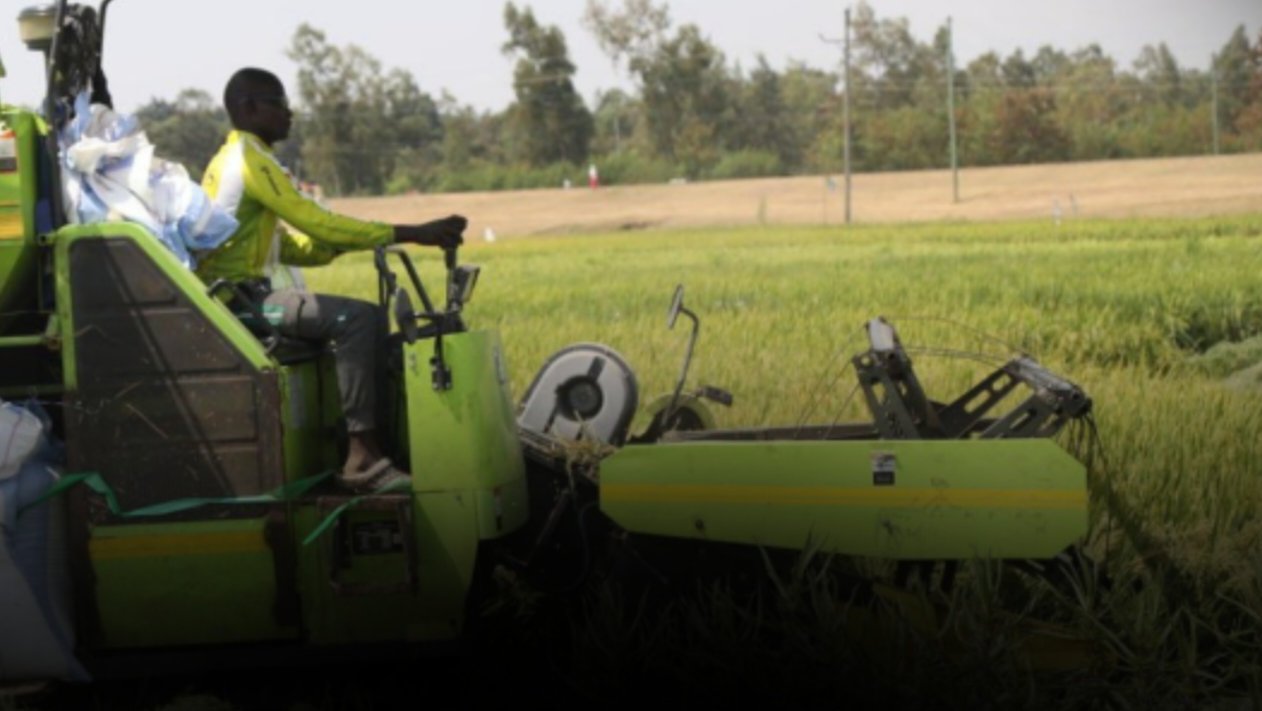
Agronomists working within the scheme note that cultivating the heavy clay soil using bare hands has historically restricted output. To address this, the project has partnered with agricultural institutions like Nyabon Enterprises Limited, which distributes small hand-held machines to local growers.
The introduction of hand-held seed drills, pumps, inter-cultivators, and threshers has simplified primary and secondary tillage operations. According to KOSFIP Senior Agronomist Amos Amenya, the shift to mechanical tools provides efficiency by performing chores faster, which increases soil productivity and crop yields.
Some participants have already reported substantial increases in their seasonal output. For instance, one local model grower recently harvested 24 bags of grain from a three-quarter acre piece of land, but her previous manual harvest yielded only eight bags from the same plot.
Despite these advancements, infrastructural challenges persist in the wider Rachuonyo region. The stalled construction of the Kanyadhiang-Pala-Kadel ring road complicates access to markets, although local leaders continue to petition the national government for the completion of key transport corridors.
Better transport connectivity remains vital for ensuring that fresh agricultural produce reaches urban distribution centers before spoiling. Representatives from local water users associations have highlighted that transport delays cause financial losses, which can discourage long-term investment in mechanized farming.
National administrators, including President Ruto, have previously acknowledged the strategic importance of the irrigation infrastructure. Government officials have emphasized that modernizing local food systems is essential, if the country is to achieve complete food security and eliminate dependency on external grain markets.
The ongoing training programs focus extensively on operating these small machines, which are less technical than heavy tractors. As more smallholders adopt these technologies, regional planners expect the multi-billion shilling scheme to serve as a reliable regional food basket.
Comments (0)
Leave a Comment
No comments yet. Be the first to share your thoughts!