
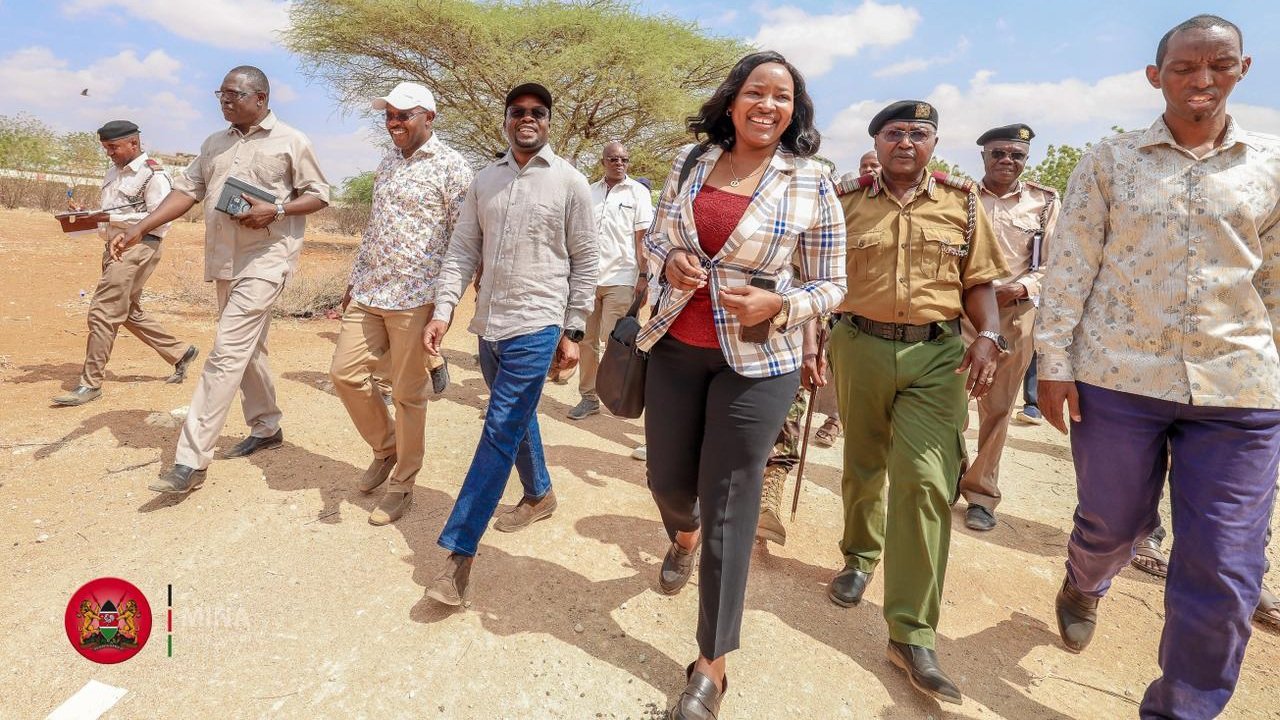

Wajir County has officially entered the construction phase for a new stadium facility, intended to serve as the primary venue for the 63rd Madaraka Day celebrations. The move follows a formal site inspection by government officials, who have now cleared the way for active works to begin on the ground.
The project is being treated as a priority infrastructure development for the region, which is preparing to host the national event on June 1, 2026. This rotation of national holidays to various counties is a policy established to decentralize state functions and stimulate local infrastructure growth.
During the inspection, officials reviewed the technical requirements for the site, which must accommodate high-capacity seating, secure VIP areas, and parade grounds suitable for military honors. The start of these works signals the transition from the planning and logistical stage to the physical assembly of the arena.
Local authorities, led by Governor Ahmed Abdullahi, have previously emphasized the importance of utilizing this opportunity to provide the county with a lasting sports and social asset. The timeline for completion is strictly tied to the national holiday calendar, leaving little room for delays in the mobilization of labor and machinery.
Contractors are expected to focus on the earthworks and foundation stability in the initial weeks, given the specific soil conditions and climate of Wajir. The rapid nature of the project will require coordinated efforts between the county government and national security teams to ensure the site meets all safety protocols.
Hosting Madaraka Day involves more than just the stadium structure. It typically triggers a broader range of civil works, including the improvement of access roads, street lighting, and the upgrading of local hospitality and health facilities to handle the influx of visitors and dignitaries.
The 63rd anniversary of Madaraka Day commemorates the moment Kenya attained internal self-rule from British colonial power in 1963. For Wajir, the successful delivery of this stadium is a test of the region's capacity to execute large-scale public works under a fixed deadline.
Work is proceeding under the observation of the national celebrations committee, which oversees the standards for any venue hosting the President and other high-ranking officials. The inspection team noted that this phase is critical to ensuring the structural integrity of the facility before the final finishing works begin.
The residents of Wajir are watching the development closely, as the project represents one of the most significant investments in public recreational space in the county's recent history. Beyond the holiday, the stadium is intended to host local sporting leagues and community gatherings.
Engineers on site have been tasked with maintaining a 24-hour work cycle if necessary, to compensate for any environmental challenges. This approach is common for Madaraka Day projects, which often serve as a catalyst for rapid-fire urban renewal in the host towns.
Comments (0)
Leave a Comment
No comments yet. Be the first to share your thoughts!