
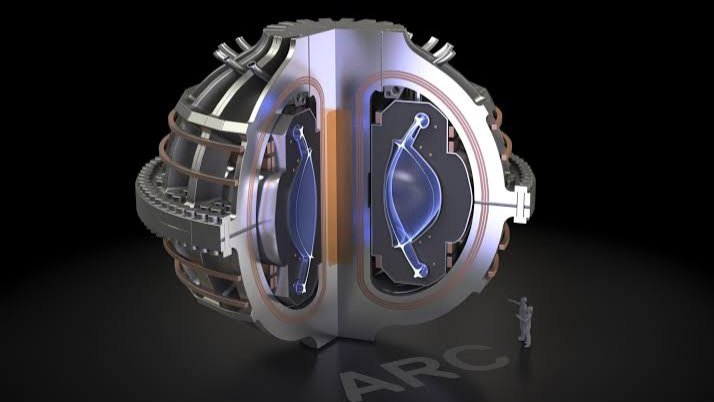

The pursuit of commercial fusion energy is transitioning from a theoretical physics problem into a complex infrastructure and mechanical engineering reality. In a converted industrial park in Devons, Massachusetts, engineers are currently assembling a device that aims to produce net energy from fusion for the first time in history.
The machine, known as Spark, is being built by Commonwealth Fusion Systems, a company established through research at the MIT Plasma Science and Fusion Center. The project recently reached a significant construction milestone with the announcement at the start of 2026 that the first toroidal field magnet had been installed on the reactor.
This development follows the delivery of the vacuum vessel’s first half in July 2025, a 48-ton component machined to tolerances measured in fractions of a millimeter. The full complement of 18 magnets is expected to be in place by the end of summer 2026, keeping the project on track for its first plasma target in 2027.
The technical shift driving this progress involves the use of rare-earth barium copper oxide, or Rebco. These high-temperature superconductors allow for magnetic fields of 20 Tesla, which is the most powerful field ever produced by a fusion-relevant magnet. Because plasma confinement improves with the strength of the magnetic field, these magnets enable a much smaller and more cost-effective reactor design than previous global efforts.
The International Thermonuclear Experimental Reactor, or ITER, currently under construction in France, serves as the primary point of comparison. While ITER is a massive undertaking with a 23,000-ton tokamak, its reliance on conventional superconducting magnets requires a scale that has led to repeated budget increases and timeline shifts.
Spark is designed to achieve a lower energy gain than ITER, but in a machine that is a fraction of the size. This smaller footprint allows for faster construction and iteration. The underlying strategy mimics the shift from mainframe computers to personal systems, focusing on a faster development cycle rather than just a larger machine.
Financial backing for these projects has also changed, with private investment in the sector exceeding $6 billion since 2020. Major corporations, including Google and the Italian energy firm Eni, have provided capital. Notably, Eni has signed a power purchase agreement for electricity from the planned commercial successor to Spark, indicating that energy industry due diligence has found the engineering risks acceptable.
If Spark succeeds in its 2027 targets, the next step is the construction of a commercial machine called Arc. Planned for a site near Richmond, Virginia, this facility is intended to produce 400 megawatts of electrical power, which is enough to supply approximately 300,000 homes.
Remaining challenges for the industry include breeding tritium fuel and developing materials capable of withstanding intense neutron bombardment over many years. While these are significant material science and mechanical engineering hurdles, the successful testing of the Spark magnets and the integration of AI-driven control systems suggest that the primary obstacles are now matters of execution rather than fundamental physics.
Comments (0)
Leave a Comment
No comments yet. Be the first to share your thoughts!