

A version of this article appeared on LinkedIn.
Most delays in metro rail projects are not rooted in the physical execution of work on site. Instead, they stem from poor interface management.
In the high-stakes environment of complex urban transit, multiple packages such as civil works, track laying, and mechanical, electrical, and plumbing systems must operate in perfect alignment. When these systems fail to sync, the impact on the project timeline is immediate.
Satender Kumar, a lead in project management, notes that several common interface issues consistently appear across major infrastructure projects.
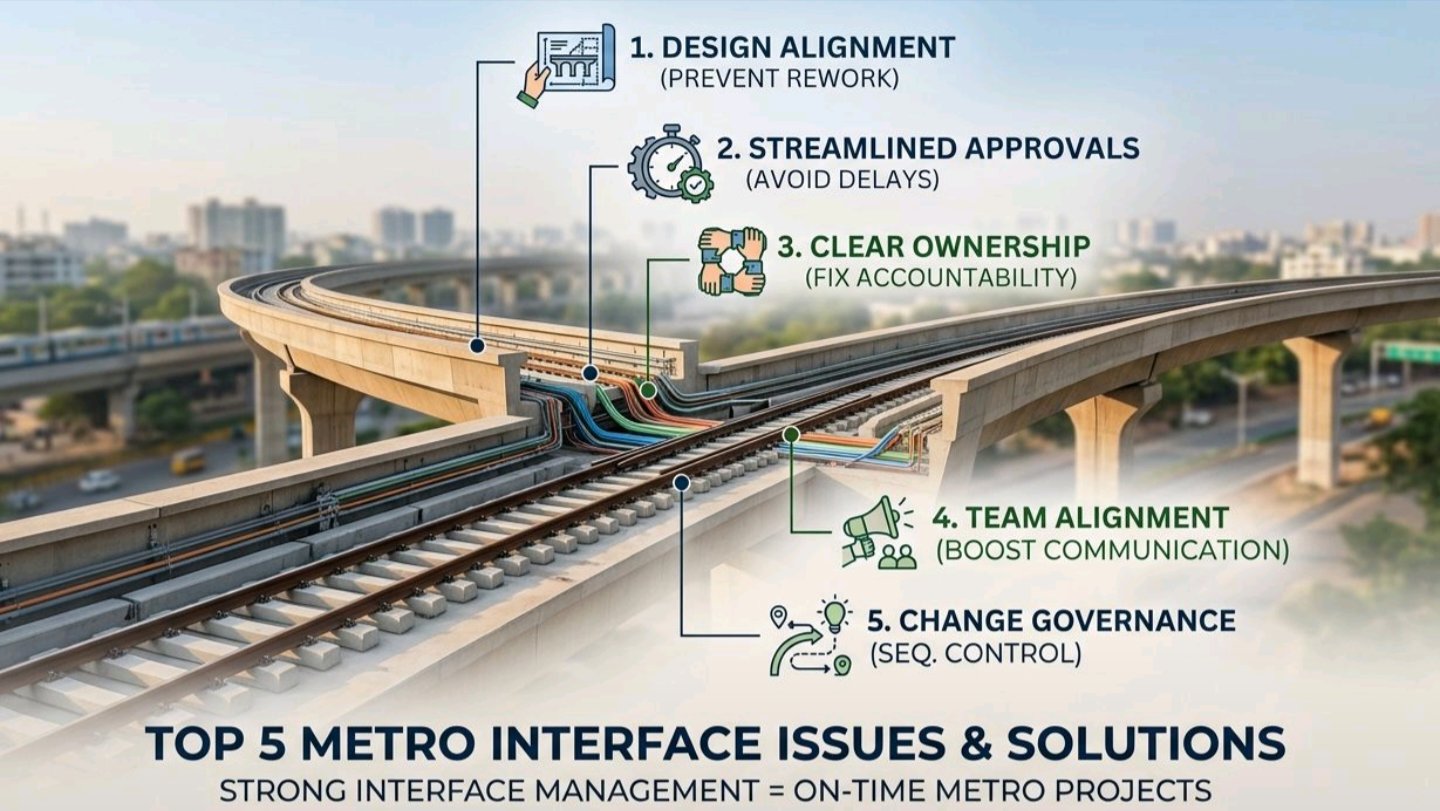
One of the primary hurdles is the misalignment between civil structures and rail system requirements. This specific failure often forces teams into costly and time-consuming rework.
Delayed design approvals also create a cascading effect. Because metro projects are interdependent, a holdup in one package inevitably stalls progress across several others.
Accountability often suffers due to a lack of clear ownership between stakeholders. Without a defined hierarchy, significant accountability gaps emerge.
Communication breakdowns remain a persistent threat. These gaps typically occur between contractors, consultants, and the client teams overseeing the work.
Finally, late-stage design changes frequently disrupt construction sequencing. These shifts can throw entire project schedules into disarray.
Solving these complex problems requires more than basic coordination. It demands proactive planning and the implementation of clear responsibility matrices.
Continuous stakeholder alignment is necessary to ensure every party remains on the same page throughout the project lifecycle.
Strong interface management should not be viewed as a mere support function. In the current infrastructure landscape, it is a critical success factor for delivering metro projects on time.
In Kenya, where the expansion of transit networks is a key priority for the administration of President Ruto, these management principles are increasingly relevant. As the country looks to modernize its transport corridors, avoiding the pitfalls of poor integration will be vital for maintaining budgets.
Efficient project delivery depends on fixing accountability and boosting communication through team alignment. Without these controls, even the most well-funded rail projects can face stagnation.
Comments (0)
Leave a Comment
No comments yet. Be the first to share your thoughts!