
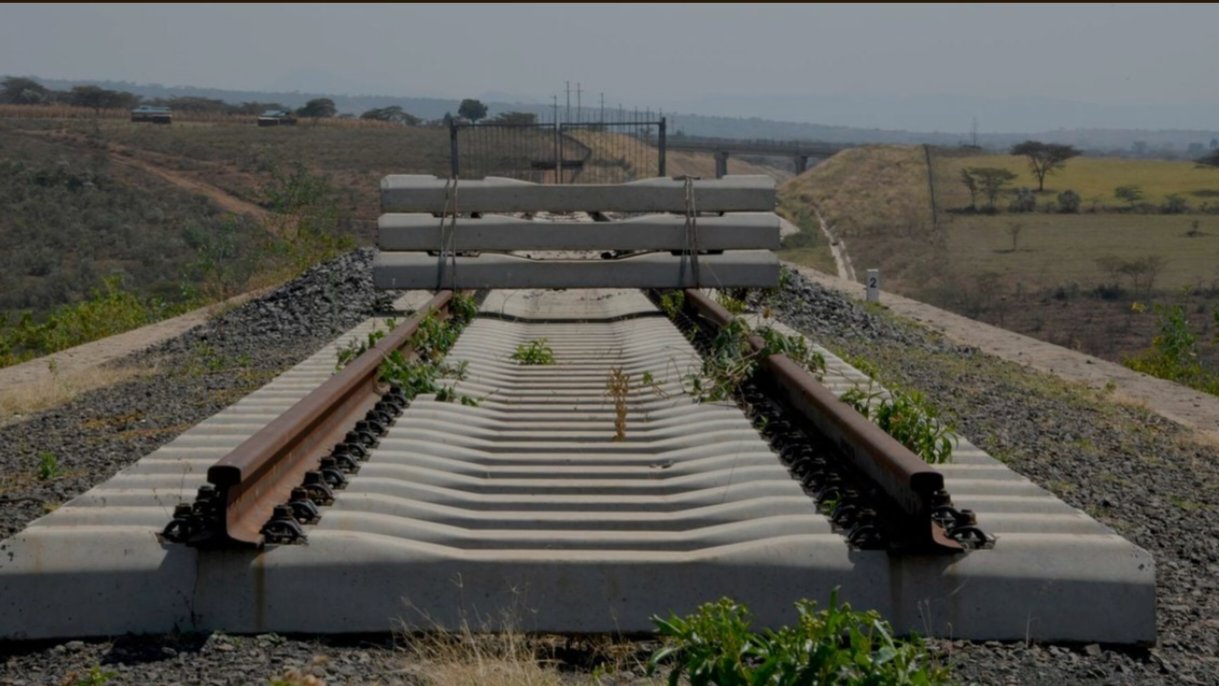

The Kenyan government’s plan to extend the Standard Gauge Railway (SGR) from Naivasha to the Ugandan border at Malaba has hit a fresh procedural hurdle, with the National Treasury revealing that the project's financing model requires explicit backing from China. National Treasury Cabinet Secretary John Mbadi has indicated that for Kenya to successfully issue a proposed 15-year bond worth Sh390 billion, the cooperation of Beijing is essential.
This latest development follows a shift in strategy by the Kenyan administration, which is seeking to move away from direct bilateral loans in favor of more diversified financing instruments. The proposed Sh390 billion bond is intended to cover the funding gap for the long-delayed extension, which is estimated to cost approximately $5.3 billion for the Kenyan section alone. This phase, encompassing Phases 2B and 2C, will traverse Narok, Bomet, Nyamira, and Kisumu before reaching the border town of Malaba.
The requirement for Chinese support stems from the existing financial architecture of the SGR project. China Exim Bank was the primary financier for the initial phases from Mombasa to Naivasha, and the project’s technical and commercial viability remains closely tied to Chinese involvement. CS Mbadi noted that the government is exploring various avenues, including the possibility of a "Panda bond", a yuan-denominated instrument sold in the Chinese domestic market to raise the necessary capital.
Securitization of the Railway Development Levy (RDL) is a central component of this new funding drive. The government intends to leverage the future revenues of the levy, which currently generates about Sh40 billion annually, to provide the necessary security for the 15-year bond. However, officials admit that while the levy is a reliable revenue stream, it does not provide the immediate liquidity required to complete a project of this magnitude within the targeted two-to-three-year construction window.
The push for this bond comes at a time when Kenya is also managing a significant debt restructuring process with China. Recent negotiations have seen the repayment period for existing SGR loans extended from 2035 to 2040, providing some fiscal breathing room. Part of this arrangement involved converting dollar-denominated debt into yuan to mitigate exchange rate risks, a move the Treasury says will save the country roughly Sh27.7 billion annually.
While the Kenyan government has expressed optimism about launching the extension by early 2026, the successful issuance of the bond remains the primary gateway for construction to begin. President William Ruto has previously emphasized that the SGR extension is vital for regional trade integration, with plans eventually to link the network to Kampala and onwards to the Democratic Republic of Congo.
The National Land Commission has already begun preliminary reconnaissance for the Naivasha-Kisumu-Malaba route to identify public land and manage potential compensation challenges. However, without a finalized financial agreement and the necessary backing from Beijing to launch the bond, the timeline for the project remains contingent on high-level diplomatic and financial negotiations.
Comments (0)
Leave a Comment
No comments yet. Be the first to share your thoughts!