
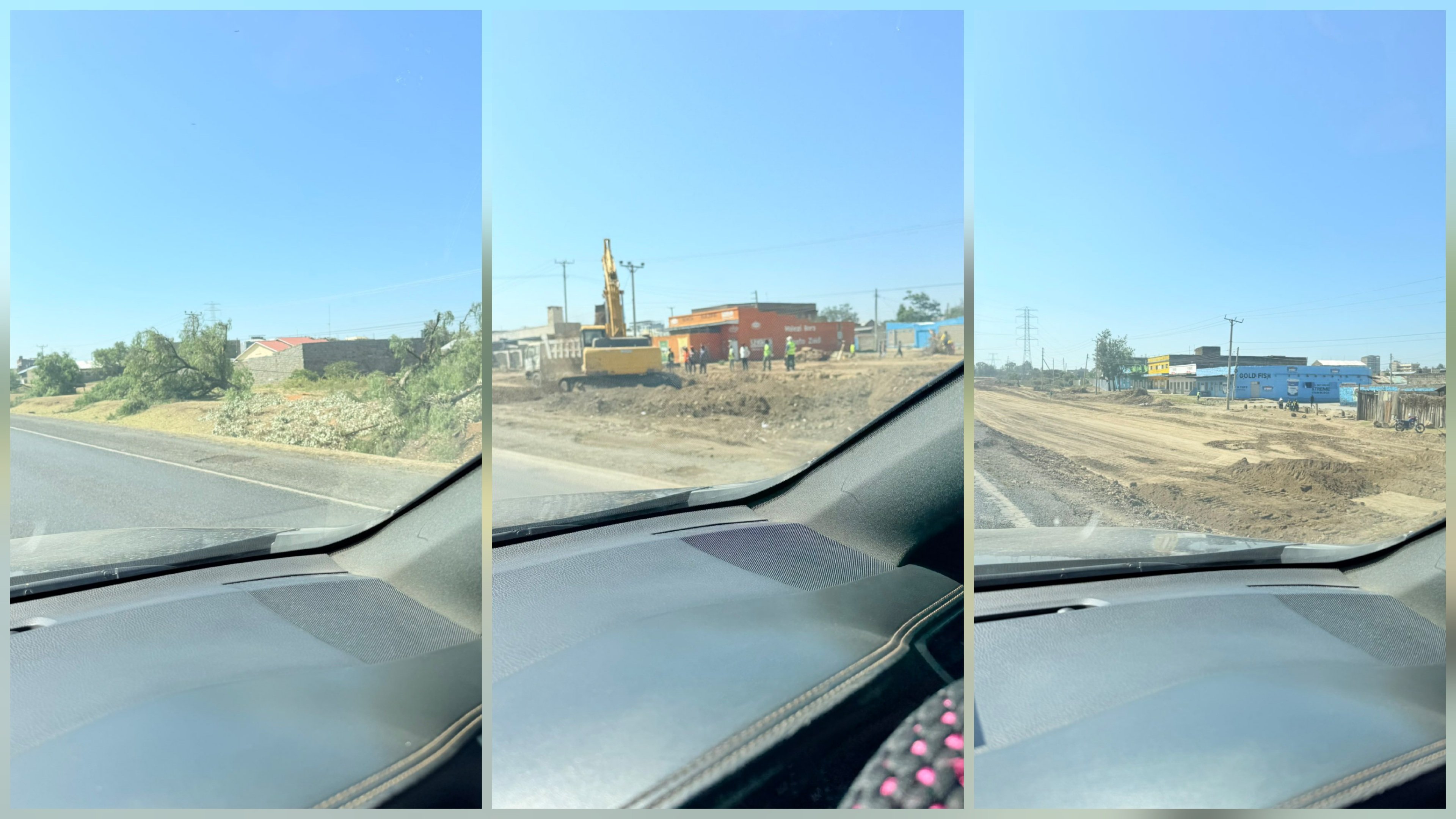

Construction activities on the Rironi-Nakuru-Mau Summit highway have intensified as contractors mobilize heavy machinery to the Naivasha section for site clearing and initial earthworks. Recent sightings on the ground confirm that workers have begun the removal of trees and vegetation within the road reserve to create space for the planned expansion of the corridor.
The project, which was officially launched in November 2025, is being implemented through a Public-Private Partnership (PPP) involving the China Road and Bridge Corporation (CRBC) and the National Social Security Fund (NSSF). The presence of excavators and specialized construction crews in Naivasha follows recent inspections by Ministry of Transport officials, who indicated that work would be scaled up across multiple sites simultaneously to meet a projected completion deadline of mid-2027.
Under the current design, the highway will be upgraded to a four-lane dual carriageway between Rironi and Naivasha. From Naivasha to Nakuru, the road is expected to expand further into a six-lane dual carriageway to accommodate higher traffic volumes. The mobilization in Naivasha is a critical phase for the PPP Directorate, led by Director General Eng. Kefa Seda, as the government seeks to demonstrate consistent progress on the 175-kilometer stretch.
The works in Naivasha are part of a broader mobilization strategy that includes active sites at Rironi, Gilgil, and Kariandusi. Reports indicate that contractors have organized multiple work groups to operate along different segments of the Northern Corridor to ensure the construction remains on schedule. This multi-site approach is intended to mitigate the chronic traffic congestion that has historically affected this primary trade route linking Nairobi to Western Kenya and the wider East African region.
Initial site preparation involving tree clearing and the leveling of the road reserve is a prerequisite for the heavy civil engineering works that will follow, including the construction of interchanges and grade-separated overpasses. While the project has faced legal challenges and scrutiny regarding its tolling model, the visible activity on the ground suggests that the consortium is moving forward with the technical phases of the contract.
Financing for the project includes a significant local equity component through the NSSF, which recently confirmed its intention to invest up to Ksh30 billion. The government maintains that the upgrade will improve road safety and reduce travel times for commercial and private motorists once the 30-year concession period begins. For now, the focus remains on the Naivasha segment, where heavy machinery continues to reshape the road reserve in preparation for the dual-carriageway expansion.
Comments (0)
Leave a Comment
No comments yet. Be the first to share your thoughts!