
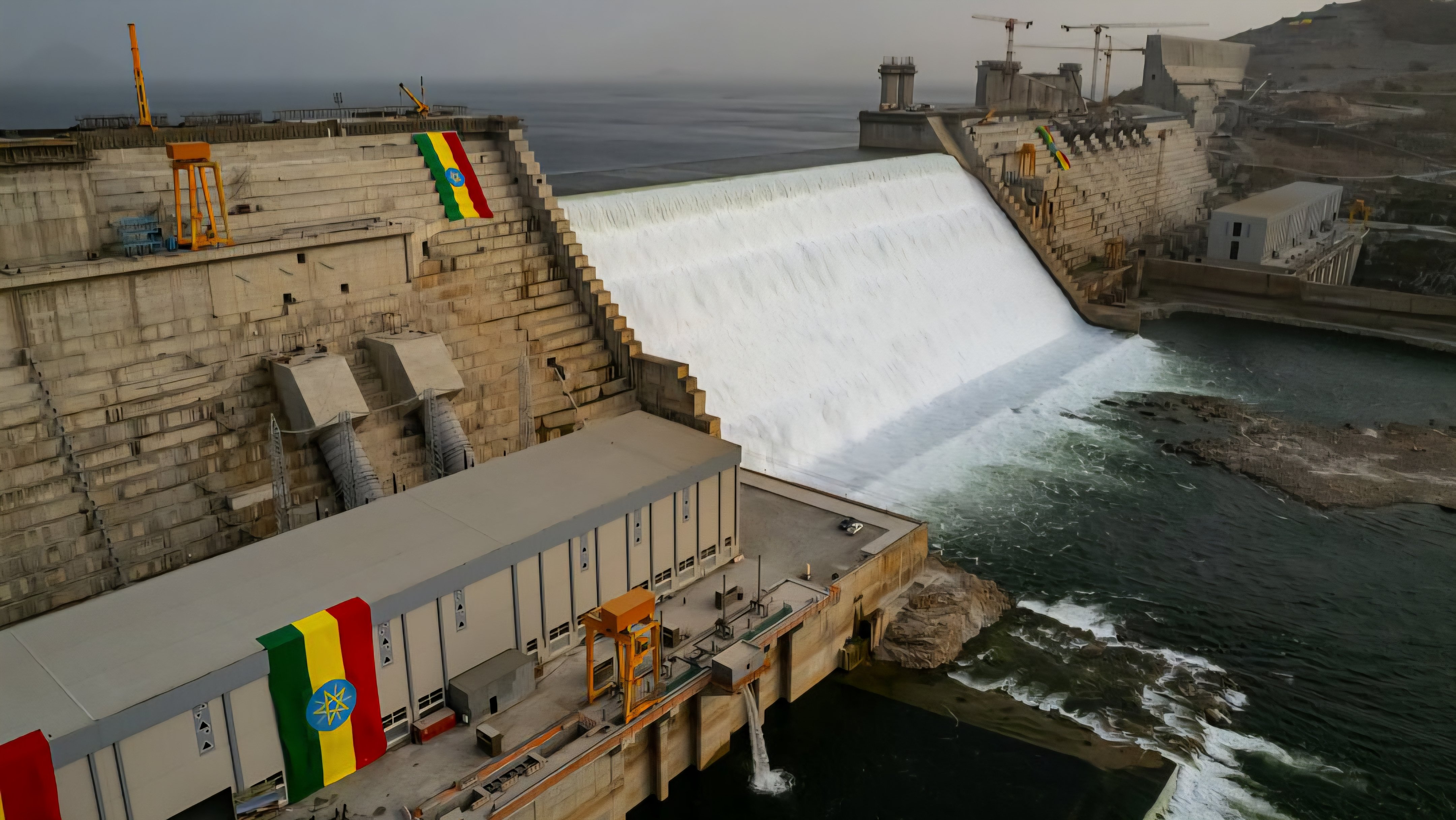

Ethiopia is rapidly positioning itself as the primary energy provider for East Africa following a significant increase in its national power generation capacity. The state-owned utility, Ethiopian Electric Power, confirmed that the country’s total installed capacity has reached 9,600 megawatts. This growth is largely attributed to the continued scaling of the Grand Ethiopian Renaissance Dam (GERD), a project that has remained central to the country’s industrial and economic strategy despite years of regional diplomatic friction.
The GERD project, situated on the Blue Nile in the Guba region, recently saw the activation of two additional turbines. These units, each capable of generating 400 megawatts, have effectively doubled the dam’s current contribution to the national grid. While the project is not yet at its full design capacity, the recent additions bring the total number of operational turbines to four. This expansion has allowed Ethiopia to move beyond meeting domestic demand and focus on lucrative cross-border energy trade.
Data from Ethiopian Electric Power indicates that the country is currently generating substantial revenue from electricity sales to its neighbors. During the first five months of the current Ethiopian fiscal year, the utility reported earnings of $48 million from power exports. Kenya remains one of the primary beneficiaries of this arrangement, alongside Djibouti and Sudan. There are ongoing discussions and technical assessments to extend the reach of the Ethiopian grid further south and west, with Tanzania and South Sudan identified as potential future markets.
The infrastructure required to facilitate these exports has been a major focus of construction and engineering efforts in the region. High-voltage transmission lines now link the Ethiopian highlands to the Kenyan interior, representing one of the most significant pieces of cross-border energy infrastructure in Sub-Saharan Africa. For Kenya, these imports offer a way to stabilize the local grid and manage costs, while for Ethiopia, the exports provide a critical source of foreign currency.
Despite the technical successes at the dam site, the project continues to operate against a backdrop of complex water-sharing negotiations. Downstream nations, particularly Egypt and Sudan, have frequently raised concerns regarding the impact of the reservoir on their own water security. Ethiopia maintains that the dam is a non-consumptive hydroelectric installation that will actually regulate water flow and reduce sedimentation for downstream neighbors. The recent increase in generation capacity suggests that Addis Ababa is moving forward with its operational timeline regardless of the stalled tripartite talks.
The broader strategy for Ethiopia involves reaching an eventual generation goal of 17,000 megawatts within the next decade. To achieve this, the government is looking beyond the Blue Nile, exploring geothermal, wind, and solar projects to diversify the energy mix. However, the GERD remains the centerpiece of this ambition. The construction of the dam has faced numerous hurdles since it began in 2011, including financing challenges and the need for significant internal funding after international lenders stayed away due to the controversial nature of the project.
For the construction sector, the progress at the GERD site serves as a case study in large-scale civil engineering under pressure. The dam is a gravity-type structure made of roller-compacted concrete, standing 145 meters high. The logistics of moving materials to the remote Guba site and the management of the seasonal Nile floods have required precise engineering oversight. As the remaining turbines are installed over the coming years, the project will continue to reshape the economic geography of the Horn of Africa.
The regional implications of Ethiopia’s 9.6GW milestone are significant. As the country secures its position as a regional power hub, the dependency of neighboring economies on Ethiopian energy is expected to grow. This shift places a premium on the physical security of transmission infrastructure and the long-term reliability of the Blue Nile's flow. For now, the focus remains on completing the final phases of the GERD and formalizing more supply contracts across the East African Power Pool.
Comments (0)
Leave a Comment
No comments yet. Be the first to share your thoughts!