
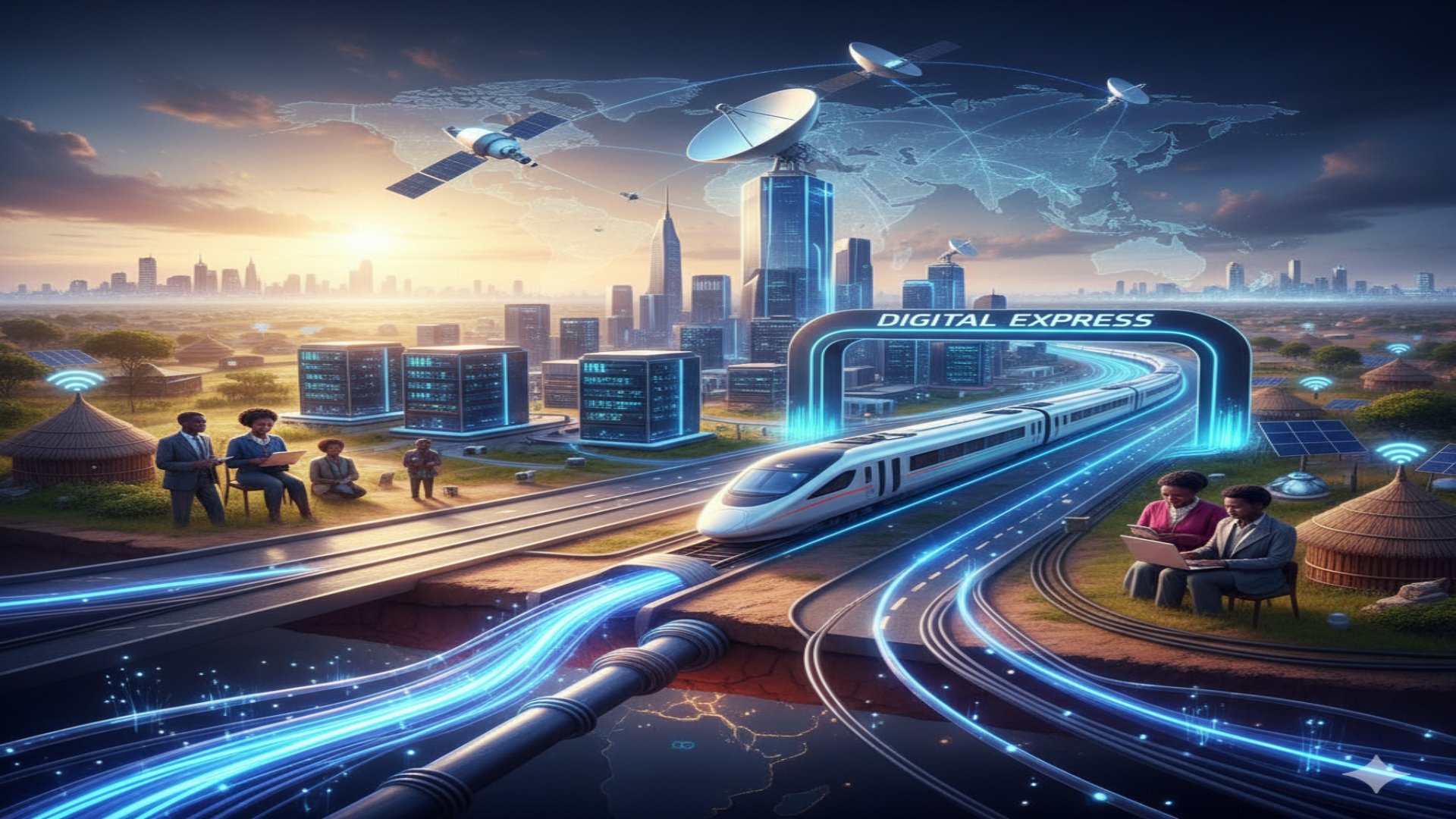

A century ago, the defining infrastructure of East Africa was the railway, a major engineering feat often dubbed the Lunatic Express. This enormous project connected the interior of Uganda and Kenya to the crucial port of Mombasa on the Indian Ocean. Its construction was marked by massive costs, severe logistical difficulties, and numerous challenges, including disease outbreaks and attacks by wildlife. Yet, despite the initial mockery and overwhelming hardships, the Kenya-Uganda Railway ultimately reshaped the region’s economic geography and its political evolution forever. It became the essential transport artery that powered colonial expansion and the subsequent establishment of key urban centres along its route, as strongly suggested in The East African by columnist Charles Onyango Obbo. Today. East Africa is engaged in building another monumental piece of infrastructure that is equally poised to determine its path in the modern world.
If the early twentieth century was dominated by iron rails and paved highways, then the current century belongs entirely to fibre-optic cables and the frequencies they transmit. This new digital backbone is widely recognised as the Digital Express. Similar to its historical predecessor, this current project demands enormous investment and is designed to eliminate distance, though this time through instantaneous connection rather than physical transportation. A recent report by the International Telecommunication Union powerfully illustrates this profound technological shift and points out that East Africa is now home to some of the continent’s fastest-growing broadband networks. Importantly, the cost of accessing the internet in the region is experiencing some of the steepest and most dramatic declines worldwide.
The comparison between these two critical infrastructure projects is compelling, yet the potential of the Digital Express is far more profound in its scope and influence. The colonial-era railway was primarily built to facilitate the movement of heavy physical goods, raw materials, and colonial administrators. The digital infrastructure, in stark contrast, carries data, knowledge, and capital at the speed of light across continents. This fundamental change in the core commodity being transported, moving from tangible items to complex information, is rapidly redefining national economies. It enables local entrepreneurs in major cities and remote towns alike to engage with global markets with unprecedented speed, thus effectively transforming geographical remoteness into functional digital proximity. This transition is paving the way for a dynamic and growing digital economy.

The challenges facing the Digital Express, while different, are still significant. They include persistent issues like complex regulatory hurdles, extensive gaps in digital literacy among the population, and the high cost associated with the "last mile" connectivity to individual homes. While the core fibre backbone is largely complete, ensuring fair and equitable access for all citizens, especially those in rural communities, remains a massive undertaking requiring committed effort. The physical railway created a centralized economy, largely favoring the major cities and towns directly along its tracks. Conversely, the true transformative power of the Digital Express lies in its ability to decentralize opportunity, spreading economic activity and growth far beyond the traditional urban hubs.
This distinction highlights the article’s core argument, which focuses intensely on the required mindset. The construction of the original railway was a powerful testament to colonial engineering and sheer human persistence. However, the successful implementation and utilization of the Digital Express is fundamentally "down to imagination." Simply laying the fibre-optic cables represents only the necessary foundation; the true, lasting revolution depends entirely on the systems and services that East Africans create on top of that infrastructure. This initiative requires deep policy innovation to ensure data security, educational creativity to cultivate essential digital skills, and ambitious entrepreneurial vision to fully exploit this powerful new digital platform. Political leaders and technology pioneers must collectively envision the seamless, pan-African digital market that this newly available connectivity can facilitate.
Comments (0)
Leave a Comment
No comments yet. Be the first to share your thoughts!