
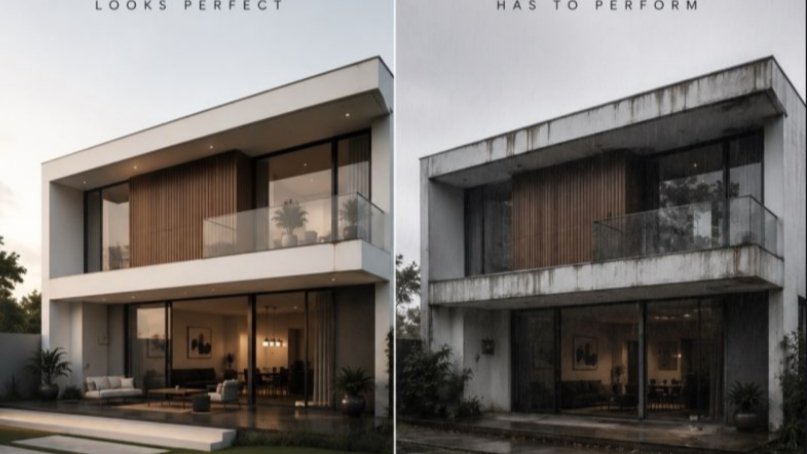

Architects and clients often get captivated by stunning 3D renders and photorealistic visualisations. Yet Shingirira Manyumwa, a professional in the field, offers a timely reminder that these images have limitations. A render never faces real-world challenges.
A render does not deal with rain leaking through poorly detailed roofs. It does not worry about overheating caused by excessive glazing without proper shading. It ignores long-term maintenance issues or the discomfort when afternoon sun turns a beautiful space into an unbearable one.
Manyumwa points out that while renders only need to look convincing, the people who use the building must live with the actual results. This distinction lies at the heart of good architectural practice.
The post highlights that good architecture is not primarily about producing beautiful images. It is about making sound decisions throughout the design and construction process. These decisions determine how a building performs over decades.
Issues such as effective drainage, buildability, weathering, thermal comfort and ease of maintenance often prove difficult to showcase in renders. Yet they frequently have greater impact on a building’s long-term success than its initial appearance.
Most people tend to judge architecture based on how it looks in promotional materials. The true test, however, comes from how the building functions in everyday use. People do not live in renders. They live with the consequences of design decisions.
In Kenya and across Africa, where climate conditions can be harsh, this principle carries extra weight. Buildings must handle intense sunlight, heavy rains, high humidity and temperature fluctuations. Designs that ignore these realities lead to higher energy bills, frequent repairs and reduced occupant comfort.
Manyumwa encourages the industry to place more emphasis on building performance. This includes proper orientation for natural ventilation, appropriate material selection, effective waterproofing details, and thoughtful integration of passive design strategies.
The conversation sparked useful comments from fellow professionals. Many agreed that functionality and aesthetics must work together. Others stressed the need for optimised ventilation, airtight openings and adherence to best practices beyond creating pretty pictures.
For clients, developers and young architects, the message is clear. While impressive visuals help win competitions and attract buyers, the real value emerges years later when the building continues to serve its purpose efficiently and comfortably.
This perspective aligns with growing global interest in performance-based design. Architects are increasingly using tools such as building performance simulation, thermal modelling and lifecycle analysis to predict and improve how structures will behave.
Ultimately, the buildings that stand the test of time are those where careful decisions were made about how they work, not just how they look. As Manyumwa aptly concludes, long after the render is forgotten, the building remains.
Comments (0)
Leave a Comment
No comments yet. Be the first to share your thoughts!