
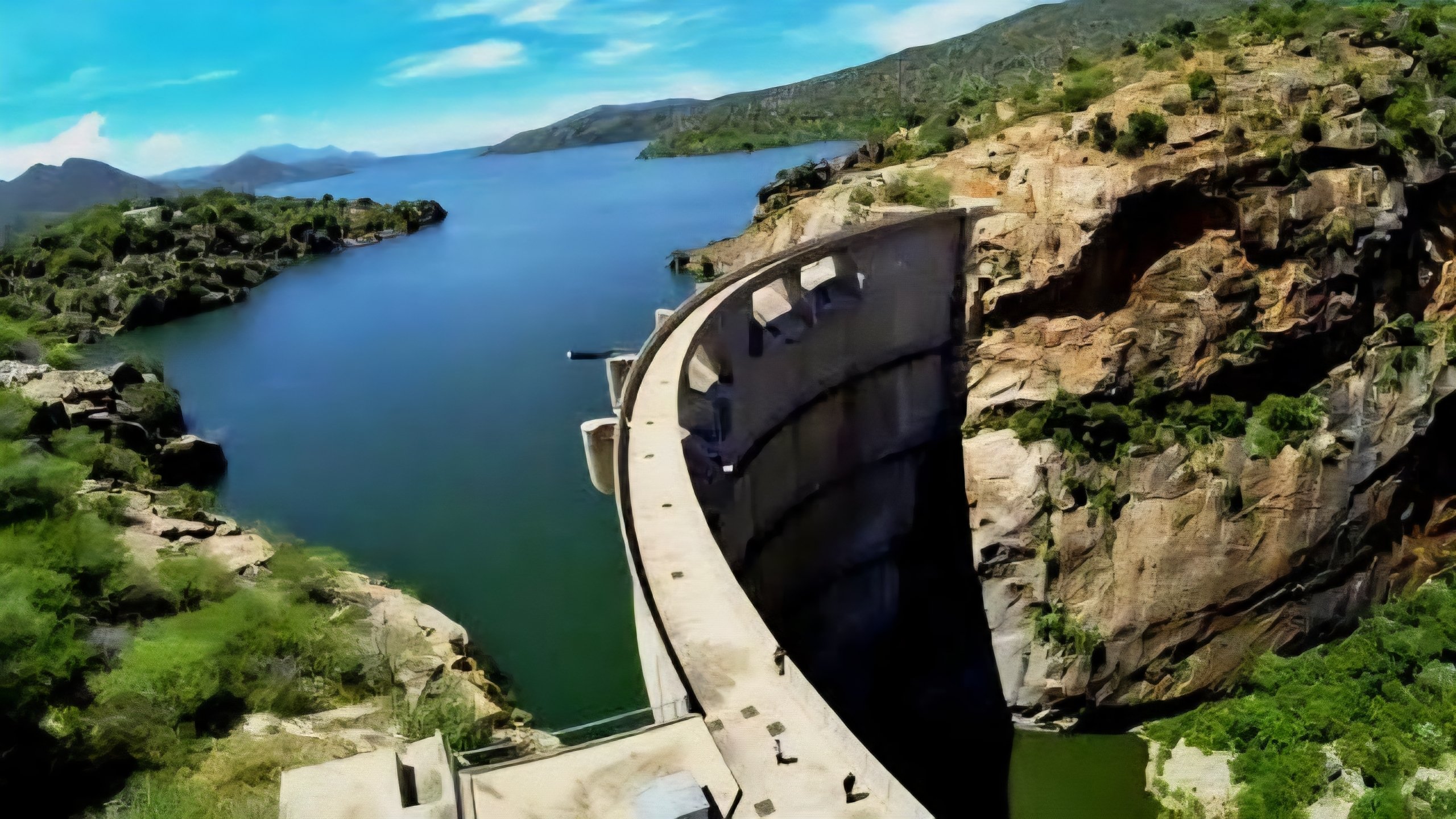

The Kenyan government has moved to secure the technical viability of the South Lokichar oil project by unveiling a comprehensive bulk water supply plan designed to feed extraction operations in the arid Turkana region. Central to the strategy is the construction of a 105-kilometer raw water transmission pipeline, which will transport water from the Turkwel Gorge Dam directly to the oil fields in Blocks T6 and T7.
Appearing before a joint parliamentary committee, Cabinet Secretary for Water and Sanitation, Eng. Eric Murithi Mugaa confirmed that preliminary designs for the infrastructure are now complete. The project is a critical enabler for Gulf Energy, the new operator of the project following the exit of Tullow Oil, as it prepares for a targeted commercial production start date in December 2026.
Engineering specifications for the system include a raw water intake and pumping facility at the dam, capable of abstracting up to 407,470 cubic meters per day. While the majority of this volume is intended for industrial and irrigation purposes, approximately 16,534 cubic meters per day will be dedicated to oil production. This injection water is vital for maintaining reservoir pressure and facilitating the recovery of crude from the subterranean basins.
To address long-standing concerns regarding resource competition in the water-stressed county, the plan includes a treatment facility at Riting. This plant is expected to process 62,616 cubic meters per day to provide clean water to at least 15 communities situated along the pipeline corridor, as well as Lodwar Municipality.
The Ministry has also integrated a large-scale agricultural component into the design. The proposed Lower Turkwel Irrigation Scheme aims to utilize 328,000 cubic meters per day to support 10,000 acres of farmland. Officials stated that this integrated approach seeks to turn the underutilized storage capacity of the Turkwel Dam, currently at 1.64 billion cubic meters, into a regional economic asset.
Environmental safeguards have been formalized with the issuance of an Environmental Impact Assessment license by the National Environment Management Authority in January 2025. To protect existing hydropower functions at the dam, water abstraction will only be permitted when levels remain above 1,107 meters above sea level.
Operation and maintenance of the bulk infrastructure will fall under the North Rift Valley Water Works Development Agency. While a final bulk water tariff framework is still pending approval, the government intends to recover costs through commercial sales to the oil operators. Monitoring will be handled through automated SCADA technology to ensure transparency in water volumes moving through the system.
This infrastructure push comes as Gulf Energy commits to a $6 billion investment over the next 25 years. The initial phase of oil production is projected to reach 20,000 barrels per day, eventually scaling to 50,000 barrels by 2032. By shifting the water source to the Turkwel Dam, the state aims to reduce the project's reliance on local groundwater, which has been a point of friction and environmental concern for pastoralist communities in the basin.
Comments (0)
Leave a Comment
No comments yet. Be the first to share your thoughts!