
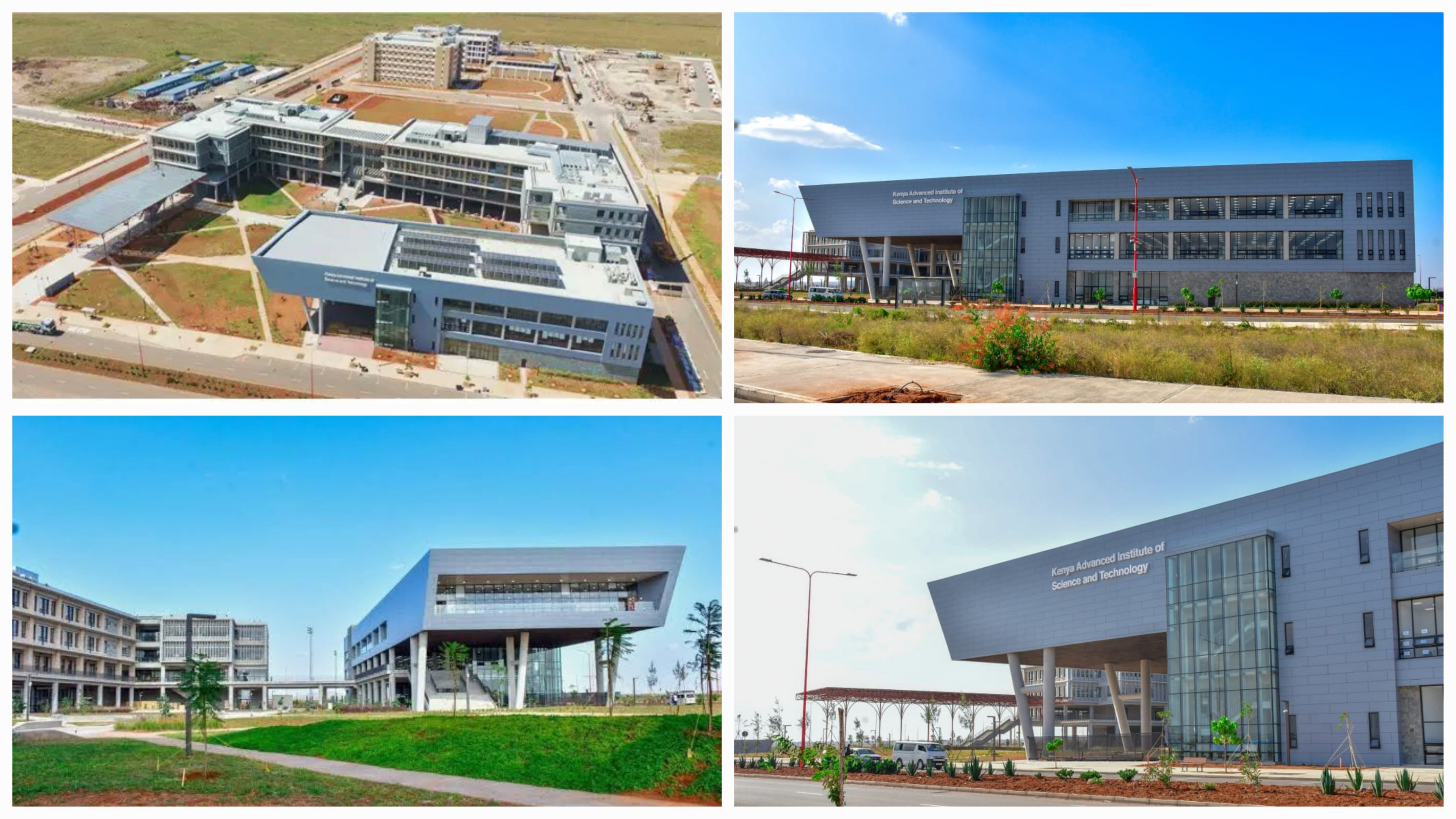

The physical landscape of the Konza Technopolis is undergoing a visible transition as the Kenya Advanced Institute of Science and Technology, known as Kenya-AIST, nears the final phases of its construction. Situated approximately 64 kilometers south of Nairobi, the specialized postgraduate university represents one of the most significant institutional investments within the Phase One development of the 5,000-acre smart city. Recent site assessments indicate that the primary structural work and external cladding for the initial campus buildings are largely complete, revealing a modern architectural profile defined by clean lines and functionalist design.
Modelled after the Korea Advanced Institute of Science and Technology, the project is a flagship initiative of the Kenya Vision 2030 development plan. The institution occupies a 22-acre site and is designed to address a persistent shortage of high-level technical expertise in the East African region. The design and construction of the campus were led by a consortium of Korean architectural and engineering firms, specifically Samoo and Sunjin, following a competitive international bidding process. Their involvement ensured that the facility mirrors the standards of its South Korean namesake, which is recognized globally for its focus on specialized science and engineering.
Financial backing for the development involved a significant bilateral arrangement. The project cost is estimated at approximately Sh14.5 billion, supported by a Sh10.1 billion loan from the Export-Import Bank of Korea and a Sh4.4 billion contribution from the Government of Kenya. This capital has been directed toward creating a research-intensive environment that includes advanced laboratories and specialized teaching facilities. The university is structured to operate six initial departments, including Agricultural Biotechnology, Chemical Engineering, and Civil Engineering, alongside ICT, Electrical, and Mechanical Engineering.
The completion of the Kenya-AIST campus is a critical component for the Konza Technopolis Development Authority as it seeks to attract further private sector investment. By establishing an academic anchor, the authority intends to create a talent pipeline that will support the technology firms and research centers expected to populate the city. This strategy was recently reinforced by the groundbreaking of other nearby projects, such as the African Centre for Technology Studies complex, which will sit on a 2.1-acre parcel nearby. The clustering of these institutions is intended to foster a live-work-innovate ecosystem within the special economic zone.
Current site progress shows that the horizontal infrastructure surrounding the campus, including paved road networks, utility corridors, and digital connectivity, is already operational. This internal road network connects the institute to the Nairobi-Mombasa highway, providing essential logistics access for the university. Although initial timelines faced shifts due to funding and procurement cycles, the current state of the facility suggests it is preparing for an imminent operational phase. The Kenya-AIST Council recently conducted tours of the facilities to verify that the laboratories and lecture halls meet the requirements for the award of a charter.
As the government moves to finalize the remaining interior fittings and equipment installations, the focus is shifting toward the first intake of 200 postgraduate students. These pioneers will be the first to utilize the specialized research infrastructure that has been rising in the Makueni and Machakos county border for several years. The success of this construction project is seen as a bellwether for the broader Konza project, proving that the ambitious master plan for the Silicon Savannah can transition from digital renderings to physical reality.
Comments (0)
Leave a Comment
No comments yet. Be the first to share your thoughts!