
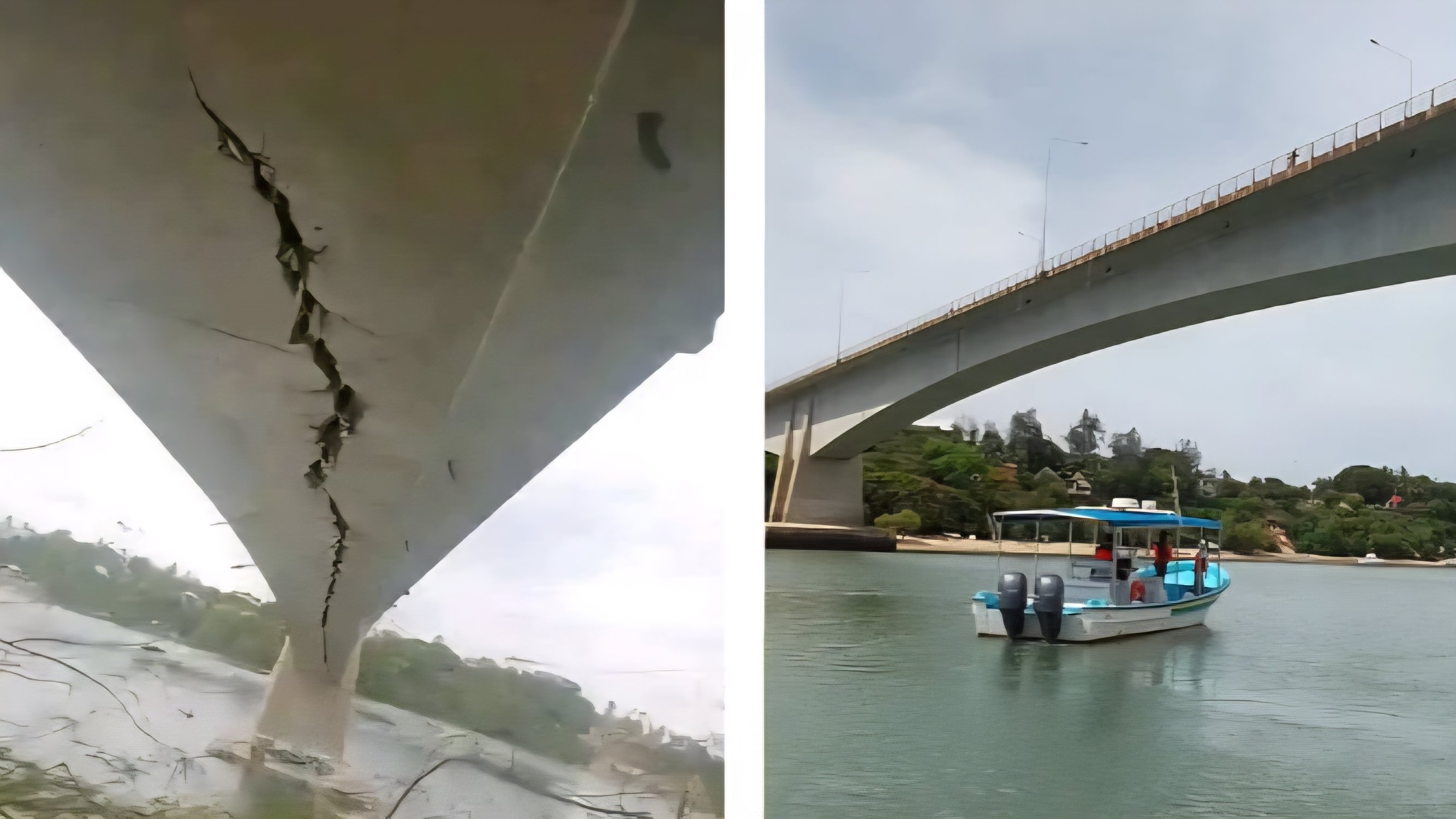

The Kenya National Highways Authority (KeNHA) has moved to reassure the public following the spread of digital images depicting severe structural damage to the Kilifi Bridge. In a formal statement released on Tuesday, March 24, 2026, the authority categorized the widely shared photos as fabricated and cautioned that they do not represent the actual state of the infrastructure.
The images in question appeared to show a deep vertical crack running through the underbelly of a concrete bridge span. However, KeNHA technicians and communication officials identified the visuals as products of artificial intelligence rather than authentic photography of the site.
According to the authority, the Kilifi Bridge, also known locally as the Mnarani Bridge, remains structurally sound and safe for all motorable traffic. The agency noted that it maintains a schedule of continuous inspections across the national road network to monitor the integrity of such critical links.
The Kilifi County Government also joined the effort to quell public anxiety. A multi-agency team, including the County Security and Intelligence Committee, conducted a physical site visit on Monday to verify the condition of the crossing. Their assessment confirmed that the bridge is intact and fully operational.
Local officials noted that the timing of the fake reports coincided with heavy rainfall in several parts of the country, which may have been used to lend credibility to claims of infrastructure failure. The county statement urged the locals to disregard the misinformation and refrain from sharing unverified content that could disrupt transit and trade.
The bridge serves as a vital artery for the North Coast, linking Mombasa to Malindi and facilitating the movement of goods and tourists. Any perceived threat to its stability often triggers immediate economic concern, which authorities suggest was the likely intent behind the digital fabrication.
KeNHA has advised Kenyans to rely on its official communication channels, including its verified social media handles and website, for updates on road conditions. The authority reaffirmed its commitment to maintaining the safety and functionality of all major bridges and highways under its mandate.
This incident follows a pattern of high-quality AI-generated imagery being used to misinform the public regarding public works. Engineers have emphasized that while the images looked realistic to a casual observer, the specific patterns of the depicted "cracks" did not align with known stress-point failures for a bridge of that design.
Road users have been encouraged to continue their journeys without fear, as the joint monitoring between the national government and county security teams remains active. The authority concluded its briefing by reminding the public that spreading alarmist misinformation regarding national infrastructure can have legal consequences.
Comments (0)
Leave a Comment
No comments yet. Be the first to share your thoughts!