
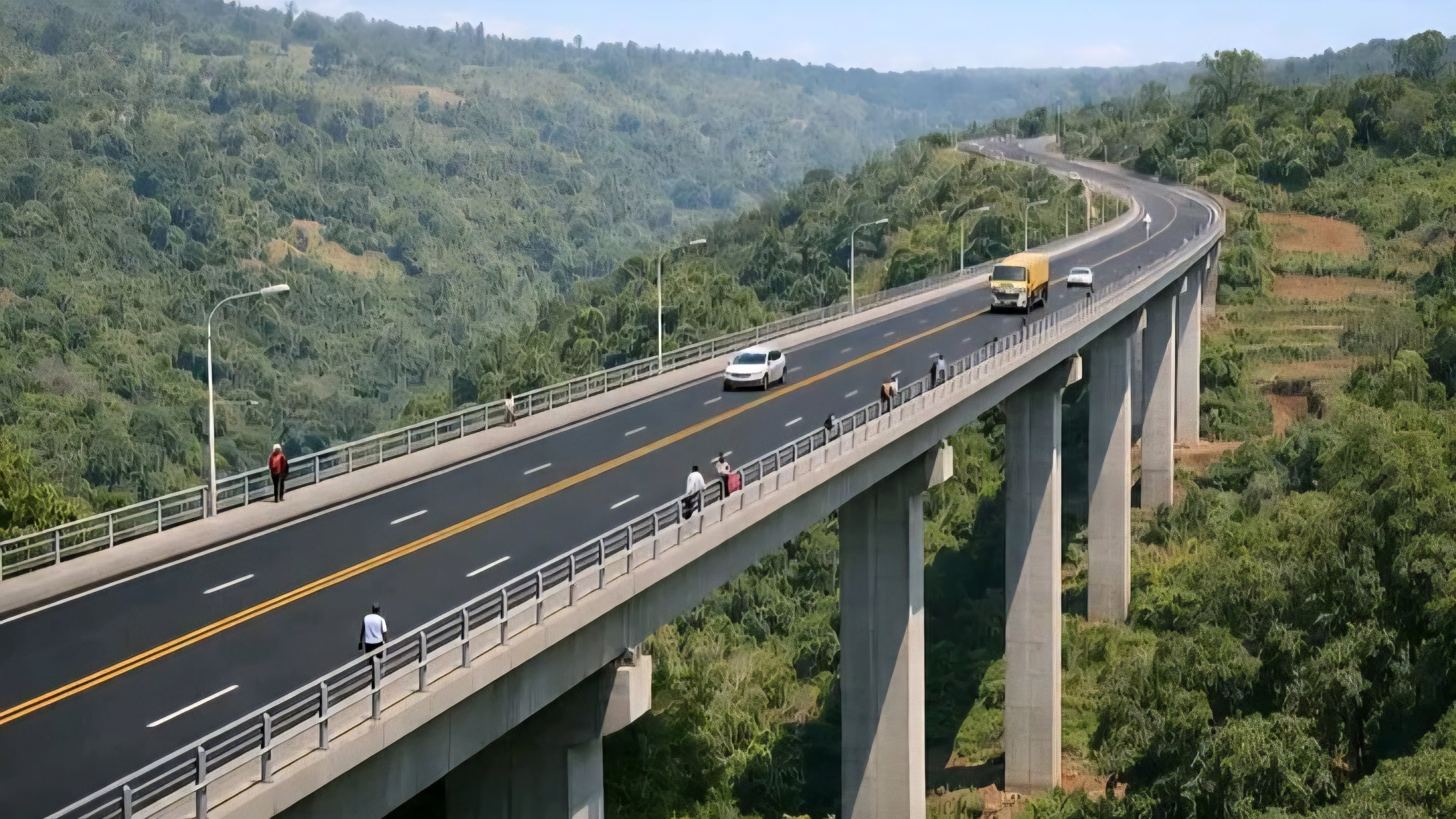

The Kenya National Highways Authority (KeNHA) has moved to address the long-standing safety crisis at the Nithi River bridge with a comprehensive modern redesign. The proposal, situated along the Embu-Meru (A9) Road, involves a major structural overhaul of the section that has historically been one of Kenya's most dangerous road blackspots.
According to technical specifications released by the authority, the project will feature a 2.7-kilometre road realignment. This new path is specifically engineered to bypass the treacherous descent that has plagued the current crossing since its commissioning in 1985. Central to this plan is the construction of an 880-metre-long bridge spanning the valley.
The design team has focused heavily on geometric improvements to mitigate the risks associated with heavy commercial vehicle movement. The new approach sections will be limited to a maximum gradient of 8%, a significant reduction from the current steep climbs. The bridge deck itself is designed with a 1.16% gradient, which engineers state will provide much-needed stability for vehicles crossing the valley.
Safety for non-motorized transport has also been integrated into the new layout. The 8-metre-wide carriage-way will be flanked by 2-metre pedestrian walkways on both sides, ensuring that local residents are separated from high-speed traffic.
The Nithi Bridge section has seen numerous fatal accidents over the decades, often attributed to brake failure on the steep slopes and the sharp horizontal curves of the existing bridge. By straightening the alignment and extending the bridge length, KeNHA aims to improve sight distances and provide a more predictable driving environment.
Local stakeholders and administrators have recently participated in sensitisation forums to discuss the project's impact. The government has indicated that the procurement phase and site mobilisation are key priorities. The project has an estimated cost of approximately 7 billion shillings.
The proposed works will include:
- 2.7-kilometre road alignment to enhance approach and connectivity
- 880-metre-long bridge across the valley
- 8-metre-wide carriageway for smoother traffic movement
- 2-metre pedestrian walkways on both sides for safety
- Maximum 8% gradient on approach sections to ease steep climbs
- 1.16% gradient on the bridge deck for improved stability
- Enhanced safety features and upgraded geometric standards
Once the construction begins, the project is expected to take approximately two years. Traffic management plans will be essential during the construction phase to maintain the flow of goods along the busy Embu-Meru corridor, which serves as a vital link for the agricultural and commercial sectors in the Mount Kenya region.
Comments (0)
Leave a Comment
No comments yet. Be the first to share your thoughts!