
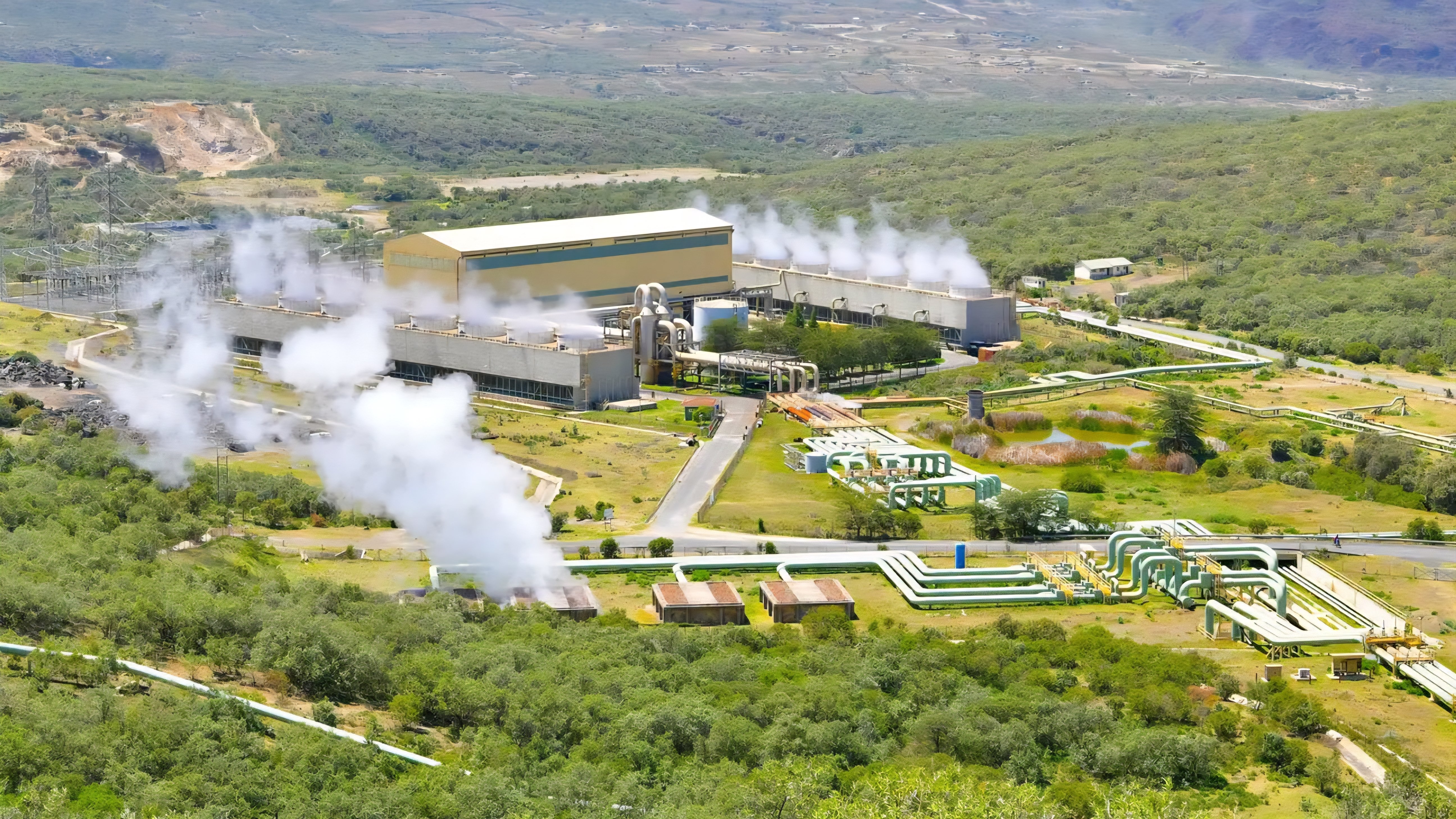

Kenya is solidifying its position as a global leader in geothermal energy, pivoting from traditional hydropower to the reliable heat of the Great Rift Valley. What began as a niche experimental source has become the bedrock of the national electricity mix, providing nearly half of the country’s power.
Recent data shows that geothermal energy provided approximately 46% of Kenya’s electricity in 2024. This shift is driven by the inherent reliability of steam power, which operates at a 95% availability rate. Unlike hydropower, which remains vulnerable to the frequent droughts affecting reservoir levels, geothermal plants provide a constant baseload.
The Kenya Electricity Generating Company, known as KenGen, is currently advancing the Olkaria VII project. This new facility, estimated to cost approximately $247 million, is designed to add 80.3 megawatts to the grid. It represents a continued commitment to the Olkaria complex, which already stands as one of the largest geothermal installations in the world.
Construction at the Menengai geothermal field, located north of Nakuru, is also gathering pace. A new plant being developed by an independent power producer is expected to generate 301 gigawatt-hours of clean energy annually. This site is a critical component of the national plan to reach a 105-megawatt capacity for the Menengai phase one development.
President Ruto has consistently advocated for the transition to 100% clean energy. To support this, KenGen is not only building new plants but also refurbishing older infrastructure. The Olkaria I plant, the oldest in the country, is undergoing a rehabilitation process to increase its output from 45 megawatts to 61 megawatts by late 2026.
Infrastructure development in this sector is also attracting diverse industrial interests. KenGen recently onboarded a fourth investor to its Green Energy Park in Olkaria. This industrial hub allows companies to bypass traditional grid costs by setting up operations directly adjacent to the power source, utilizing both electricity and direct heat.
Economic factors continue to favor these massive construction projects. The cost of geothermal energy in Kenya is approximately $0.07 per kilowatt-hour. This is significantly lower than the $0.18 per kilowatt-hour associated with thermal plants running on imported oil.
The expansion is supported by international partners, including the Japan International Cooperation Agency and the European Investment Bank. These institutions are providing the long-term financing required for the high upfront costs of drilling and steam gathering systems.
Beyond power generation, the infrastructure is being utilized for innovative agricultural and industrial applications. In the Rift Valley, geothermal steam is used to heat greenhouses and has even been tapped for Africa’s first geothermal-powered green fertilizer plant.
As the country faces rising peak demand, which reached 2,444 megawatts in early 2026, the focus remains on the "G2G 2034 Strategy." This plan aims to double renewable capacity over the next decade, ensuring that geothermal energy remains the primary stabilizer for Kenya’s industrial ambitions.
Comments (0)
Leave a Comment
No comments yet. Be the first to share your thoughts!