
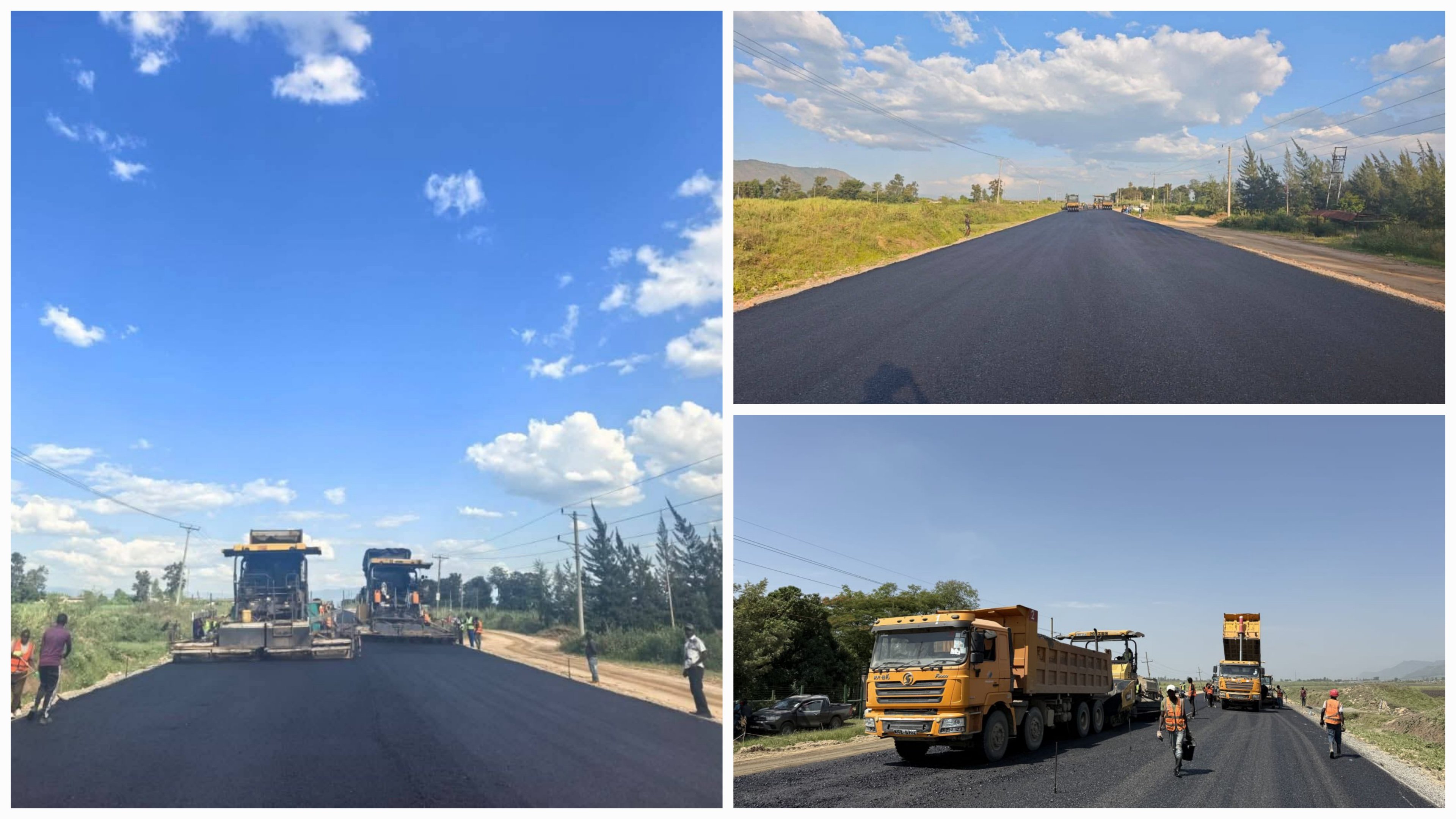

Construction on the Miwani to Chemelil road section is moving into a more intensive phase as paving machines and ground crews focus on laying the final bitumen layers across the sugar belt corridor. The work is part of a broader rehabilitation of the 63-kilometer link between Mamboleo junction in Kisumu and Kipsitet in Kericho, a route that had fallen into severe disrepair over several decades.

Contractors recently increased their presence on site following the resolution of previous funding delays that had slowed progress across various lots of the project. The Miwani-Chemelil stretch, designated as Lot 2, is being upgraded to a standard bitumen surface with a widened seven-meter carriageway and two-meter shoulders. This design is intended to accommodate the heavy axle loads associated with sugarcane transport, which remains the primary economic activity in this region.

Local logistics have historically been hampered by the state of the old road, which was originally constructed in the 1960s. For years, motorists and commercial transporters have been forced to take a longer detour through Ahero and Awasi to reach Muhoroni or Kericho. The current works are aimed at restoring the direct route, which is expected to shorten travel times and reduce vehicle maintenance costs for residents and sugar factories alike.
Engineers on site are currently focusing on the application of the base and wearing courses. The use of multiple paving units working in tandem, as seen in recent progress reports, suggests a push to complete substantial portions of the asphalt work while weather conditions remain favorable. Ground teams are also finalizing drainage structures and culverts to ensure the new pavement is protected from the heavy seasonal rains typical of the Nyanza and Nandi border areas.
The Kenya National Highways Authority (KeNHA) has divided the overall Mamboleo-Kipsitet project into three distinct lots to allow for concurrent work. While Lot 1 handles the section from Mamboleo to Miwani, the Miwani to Chemelil section serves as the central link of the corridor. Sinohydro JV, in partnership with local firms, has been tasked with the execution of this middle section, which involves not just resurfacing but also significant earthworks to improve the road’s vertical and horizontal alignment.
The completion of this infrastructure is viewed as a necessity for the survival of the local sugar industry. Factories such as Miwani, Chemelil, and Muhoroni rely on this artery for the delivery of raw cane from surrounding plantations. With the road nearing a usable state, local transporters anticipate a reduction in the "cane spillage" and vehicle breakdowns that were frequent on the previous pothole-ridden track.
Government monitors and regional officials have conducted several site inspections in recent months to ensure that the contractors maintain the current momentum. The focus remains on ensuring that the standard of work meets the 15-year design life expected for such Class C regional highways.
Comments (0)
Leave a Comment
No comments yet. Be the first to share your thoughts!