
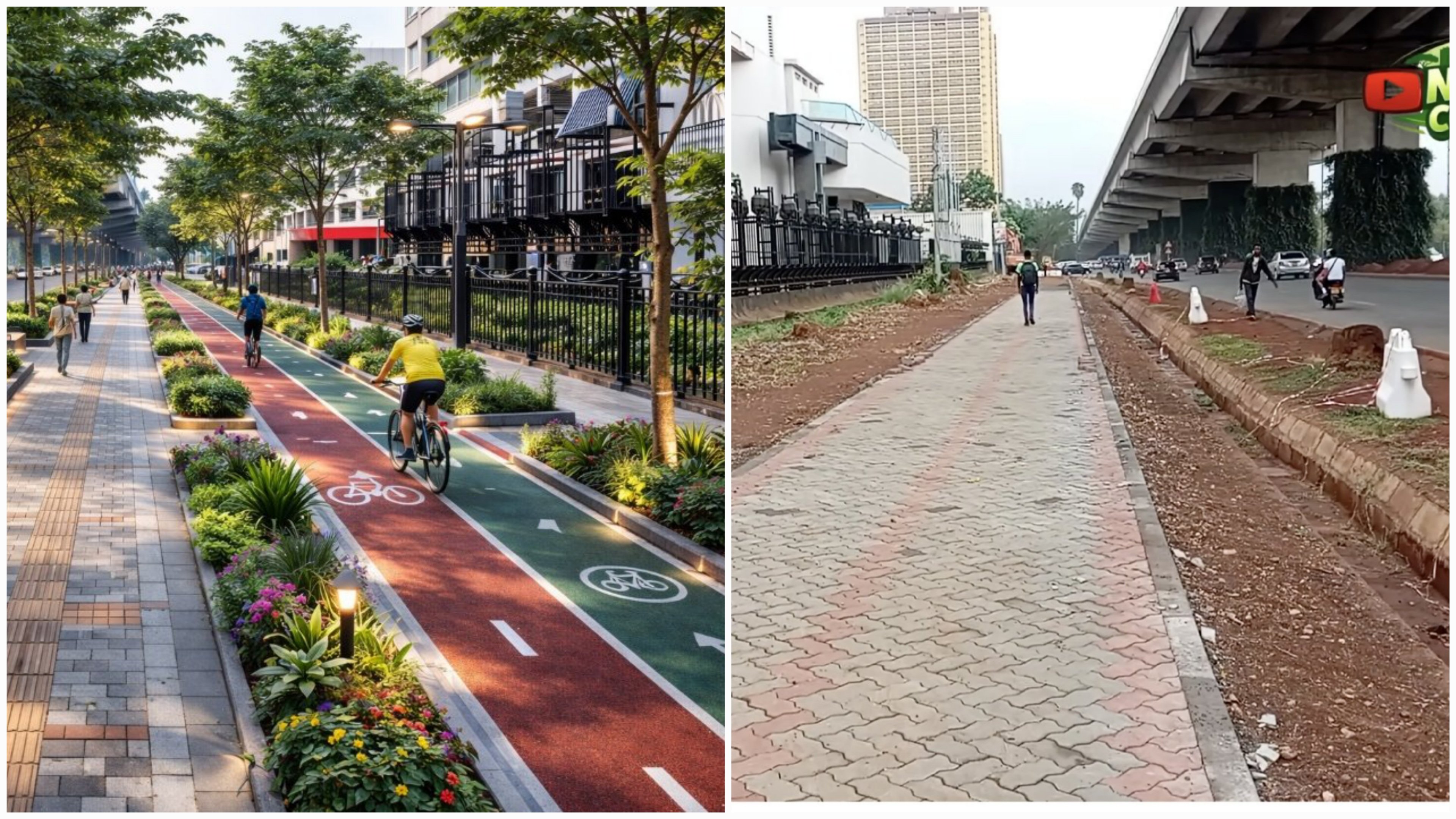

The visual contrast between the proposed aesthetic for Nairobi's non-motorized transport (NMT) facilities and the physical infrastructure currently being installed has triggered a significant debate among urban planning observers and the general public. At the heart of the contention is the quality of the paving and landscaping works being executed along the service lanes of the Nairobi Expressway, which some stakeholders argue falls short of the international standards initially suggested for the project.
In recent social media discussions, critics have highlighted the disparity between architectural renders that featured high-grade, multi-colored paving blocks, integrated green belts, and sophisticated lighting, against the actual installation of standard zigzag cabro blocks. The comparison, which gained traction following posts by urban enthusiasts and digital creators, suggests that the project is failing to meet the "world-class" expectations set during the planning phases. One specific critique pointed to the rough finish and lack of refined landscaping in the current sections, calling for authorities to salvage the project's integrity before the final handover.
This development comes at a time when the Nairobi City County and the National Government have finalized an KSh 80 billion framework aimed at repositioning the capital through infrastructure upgrades. Part of this funding is earmarked for mobility and safety programs, which include the modernization of walkways and the introduction of solar street lighting. The Kenya National Highways Authority (KeNHA) and Moja Expressway have previously emphasized that the beautification and NMT upgrades are essential components of the corridor’s ecosystem, intended to facilitate safe passage for the thousands of pedestrians who navigate the JKIA-ABC Place axis daily.
While construction is ongoing, the visual evidence from the ground shows a more utilitarian approach to the walkways. The current installations utilize standard concrete paving blocks, which, while durable, lack the aesthetic refinement of the textured, multi-tonal tiles seen in project visualizations. Furthermore, the promised lush greenery and modern street furniture are yet to materialize in several completed paving stretches, leading to fears that the final product may be a scaled-down version of the original vision.
The tension between design and delivery is a common friction point in large-scale public works. However, in the context of Nairobi’s urban renewal, where the administration has pledged to create a more walkable and aesthetically pleasing CBD, the stakes are higher. The Greenpark underpass and the Haile Selassie exit projects have already set a precedent for modern finishes, making any perceived drop in quality along the main expressway corridor particularly noticeable to the public eye.
Engineers and project managers often cite budget constraints or the need for local material procurement as reasons for design variations. However, construction observers argue that for a flagship project like the Nairobi Expressway, the quality of the "last-mile" pedestrian infrastructure is just as critical as the elevated toll road itself. The ongoing works are part of a broader effort to declutter the corridor and reclaim space from informal encroachments, but if the resulting walkways do not invite use through high-quality design, the objective of improving NMT uptake may be compromised.
As the beautification program continues to take shape, particularly in the sections beneath the elevated highway, the pressure is mounting on the China Road and Bridge Corporation (CRBC) and supervising consultants to align the site works with the high-fidelity renders shared with the public. For now, the call for "amplified" complaints remains a signal that Nairobi residents are no longer passive observers but active stakeholders in the quality of the infrastructure they use.
Comments (0)
Leave a Comment
No comments yet. Be the first to share your thoughts!