
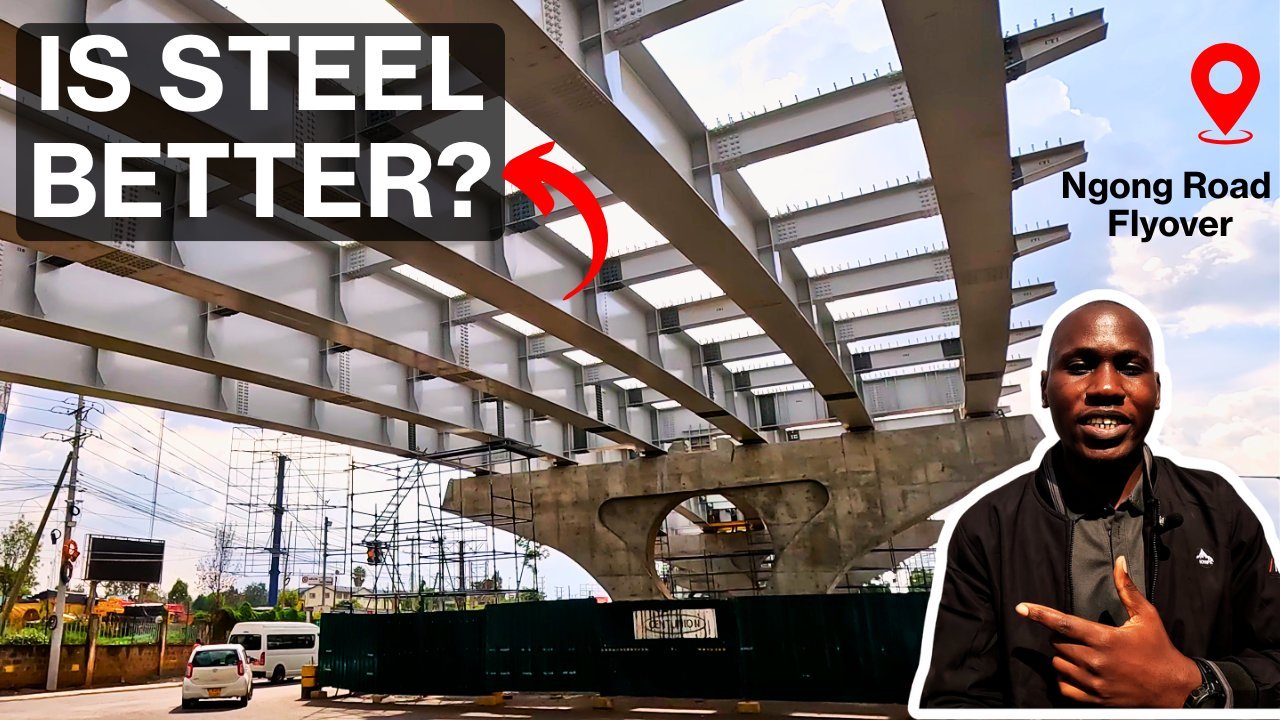

Construction crews in Nairobi have positioned steel girders across the Ngong Road viaduct, advancing a key infrastructure effort to untangle traffic at the junction with Naivasha Road and King’ara Road. The site sits near Junction Mall, where daily commutes from areas like Karen and Ngong often stall amid competing flows from Lavington, Kawangware, and Dagoretti. This elevated structure, built by Spanish contractor Centunion, draws on designs similar to the Langata Road flyover, prioritizing steel for its handling of the road's curves.
Engineers opted for steel beams over precast concrete, citing the material's lighter weight and higher strength ratio, which cuts down on foundation demands and allows quicker overnight installations. Welded shear studs anchor the concrete deck to the girders, ensuring stability under heavy loads like trucks. Bearing pads add further support between components. The choice also promises longevity, with proper coatings extending the viaduct's life to 75 or even 100 years, much like enduring bridges elsewhere.
The project ties directly into preparations for the Talanta Stadium, less than a kilometer away, which holds 60,000 seats and enters its final phase with installation of Kenyan flag-inspired shields. Officials plan to rename it Raila Odinga International Stadium upon opening in early 2026. With Kenya co-hosting the 2027 African Cup of Nations alongside Uganda and Tanzania, the viaduct serves as a critical outlet for dispersing crowds, preventing Ngong Road from gridlocking during matches.
Beyond the immediate site, the work includes non-motorized transport elements like cycling lanes, wide footpaths, and modern lighting along the dual carriageway and ground-level roads. Drainage systems round out the upgrades. While the official handover remains slated for July 2027, teams aim to finish more than a year early to align with the stadium timeline. Kenya Urban Roads Authority has urged drivers to heed marshals and proceed carefully around the zone.
In a broader push against Nairobi's congestion, the recently opened 66-kilometer Ngong-Susa Road offers an alternative route to the Rift Valley, bypassing the often-clogged Mai Mahiu path. Looking further ahead, the Riruta-Ngong commuter rail line approaches full operation, part of a gazetted mass rapid transit network intended to shift high volumes of passengers away from roadways.
Comments (0)
Leave a Comment
No comments yet. Be the first to share your thoughts!