
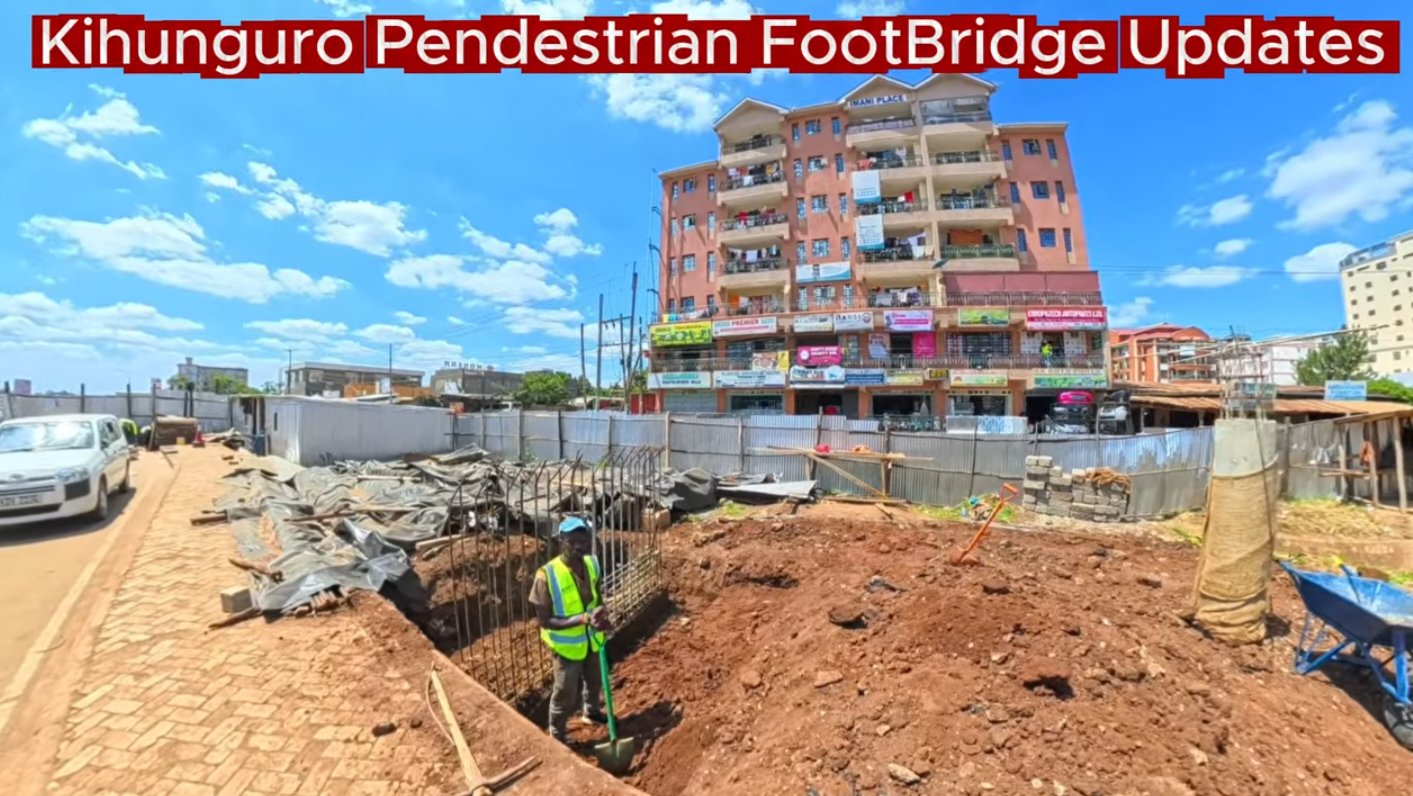

Construction crews completed the installation of heavy concrete support pillars for the new Kihunguro pedestrian footbridge along the Thika Superhighway. This structural advancement alters the landscape of one of the busiest highway sections in Kiambu County.
The project aims to separate high-speed vehicular traffic from the thousands of pedestrians who cross the multi-lane corridor daily. The site previously relied on a street-level zebra crossing, which frequently created severe traffic gridlock during peak hours.

Thika Road Kihunguro Crossing Point /Handout
Recent site observations reveal that workers filled the large foundation excavations, which dominated the area during earlier phases of work. The massive vertical support columns now stand fully formed on both sides of the highway.
The engineering design of the infrastructure accommodates different mobility needs on opposite sides of the highway corridor. One flank features a standard concrete staircase structure, which guides walking commuters up to the overhead crossing.
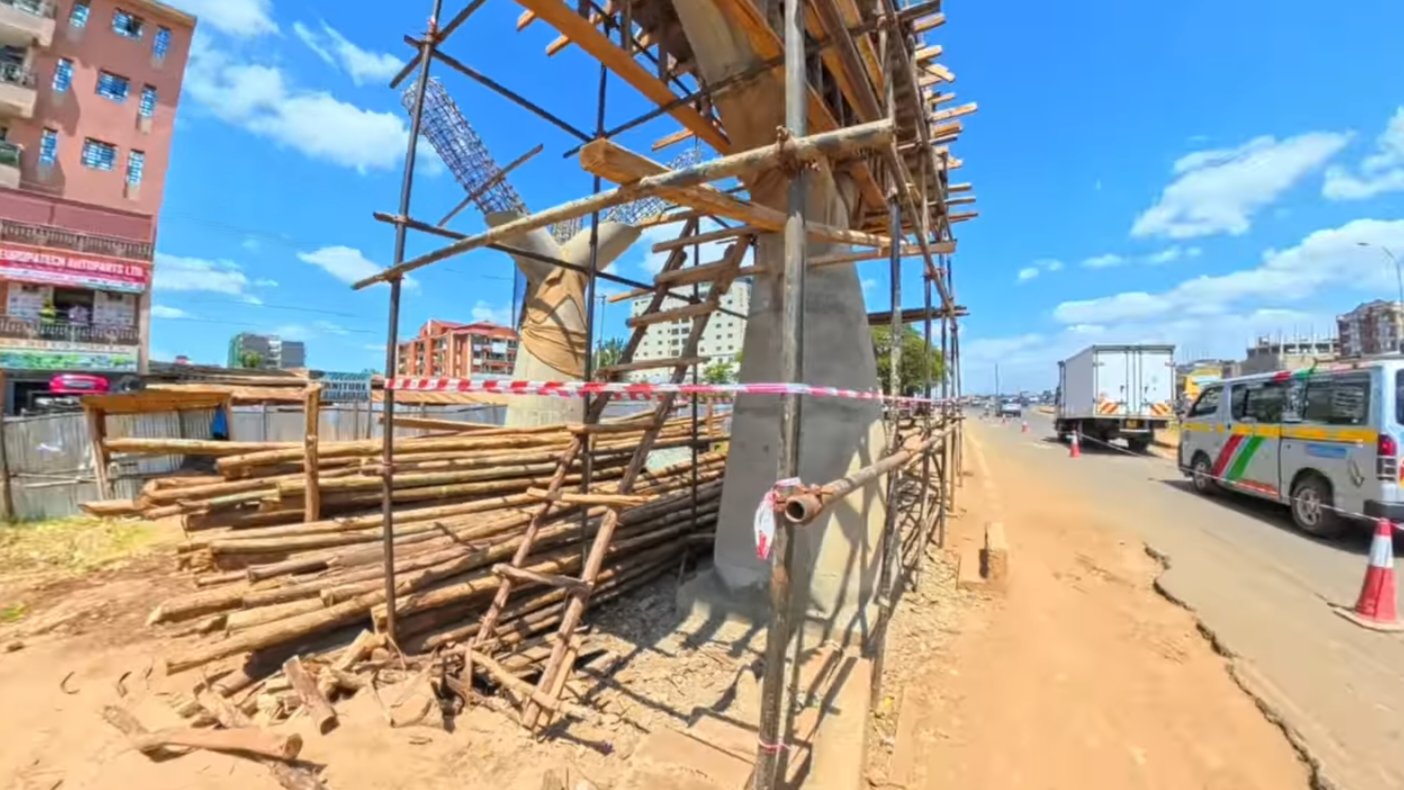
Thika Road Kihunguro Crossing Point ongoing works /Handout
The opposite side of the structure includes a long, flat ramp designed to provide seamless access for disabled individuals, wheelchair users, and people pulling loads. This configuration aligns with modern universal accessibility standards for public infrastructure.
With the support pillars secured in place, the next phase of work involves lifting and anchoring the main steel bridge span. Crews will also assemble the access stairs and ramp walkways, which will finish the crossing.
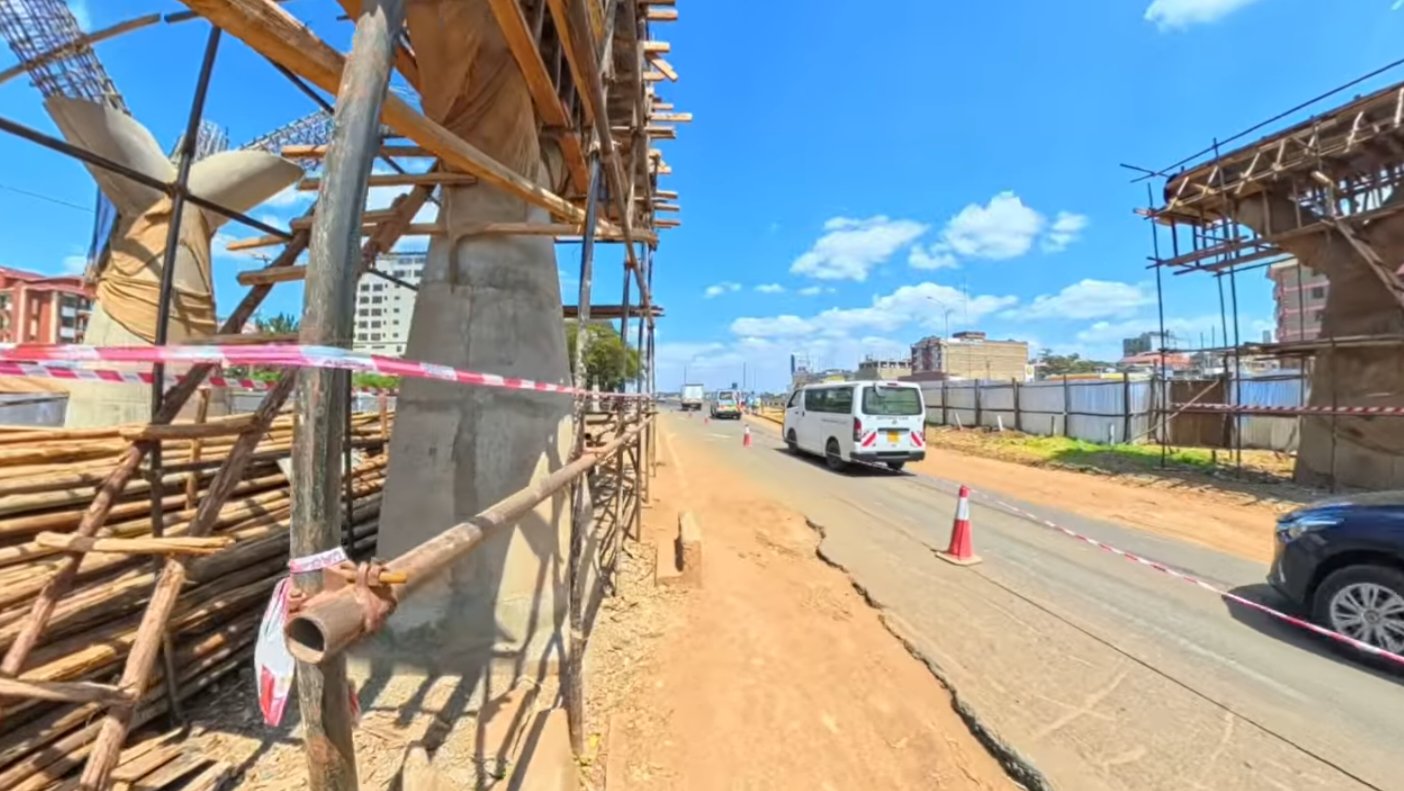
Thika Road Kihunguro Crossing Point ongoing works /Handout
Site personnel indicate that the remaining engineering and assembly tasks will require several months of active work. The revised construction schedule positions the final completion date around December or January.
Until the overhead deck opens, commuters continue to use the existing zebra crossing to navigate across the speeding traffic. Vehicles heading toward the Nairobi Central Business District (CBD) must halt completely, when pedestrians step onto the tarmac.
The frequent stoppages generate long queues of idling vehicles, which stretch far back along the arterial route. The congestion becomes particularly acute during morning and evening rush hours, when commuting numbers spike.
Traffic police officers frequently deploy to the Kihunguro section to manually regulate the conflicting flows of vehicles and pedestrians. Without manual intervention, the crossing point routinely descends into gridlock, which raises safety risks.
The Thika Superhighway remains a critical transport artery connecting Nairobi to central and eastern regions of Kenya. However, its high-speed design has historically presented serious safety challenges for communities living along its perimeter.
The Kenya National Highways Authority (KeNHA) has systematically implemented a program to replace dangerous surface crossings with elevated footbridges. The initiative targets several high-risk blackspots along the entire length of the highway.
The Kihunguro section has long stood out as a primary area of concern due to the high density of residential settlements nearby. Local residents spent years advocating for an elevated crossing, which eliminates pedestrian fatalities.
Past interventions by state agencies included the installation of wire mesh fencing along the highway median to discourage people from darting across the lanes. However, these barriers frequently suffered vandalism from determined crossers, who bypassed the designated areas.
Engineers emphasize that physical separation through overhead steel structures provides the most effective long-term solution for high-speed corridors. The new footbridge represents a permanent structural fix for the local community, which improves transit safety.
The construction activity requires occasional traffic diversions to ensure the safety of both motorists and construction workers. Contractors sometimes close specific lanes, when handling heavy machinery or pouring large concrete elements.
Local businesses operating near the construction zone report temporary disruptions, but they express long-term optimism about the project. Improved pedestrian safety is expected to stabilize foot traffic, which enhances the local business environment.
As the steel framework arrives on site for the final installation, transport authorities urge motorists to exercise caution. Drivers should observe reduced speed limits, when they travel through the active construction zone.
Comments (0)
Leave a Comment
No comments yet. Be the first to share your thoughts!