
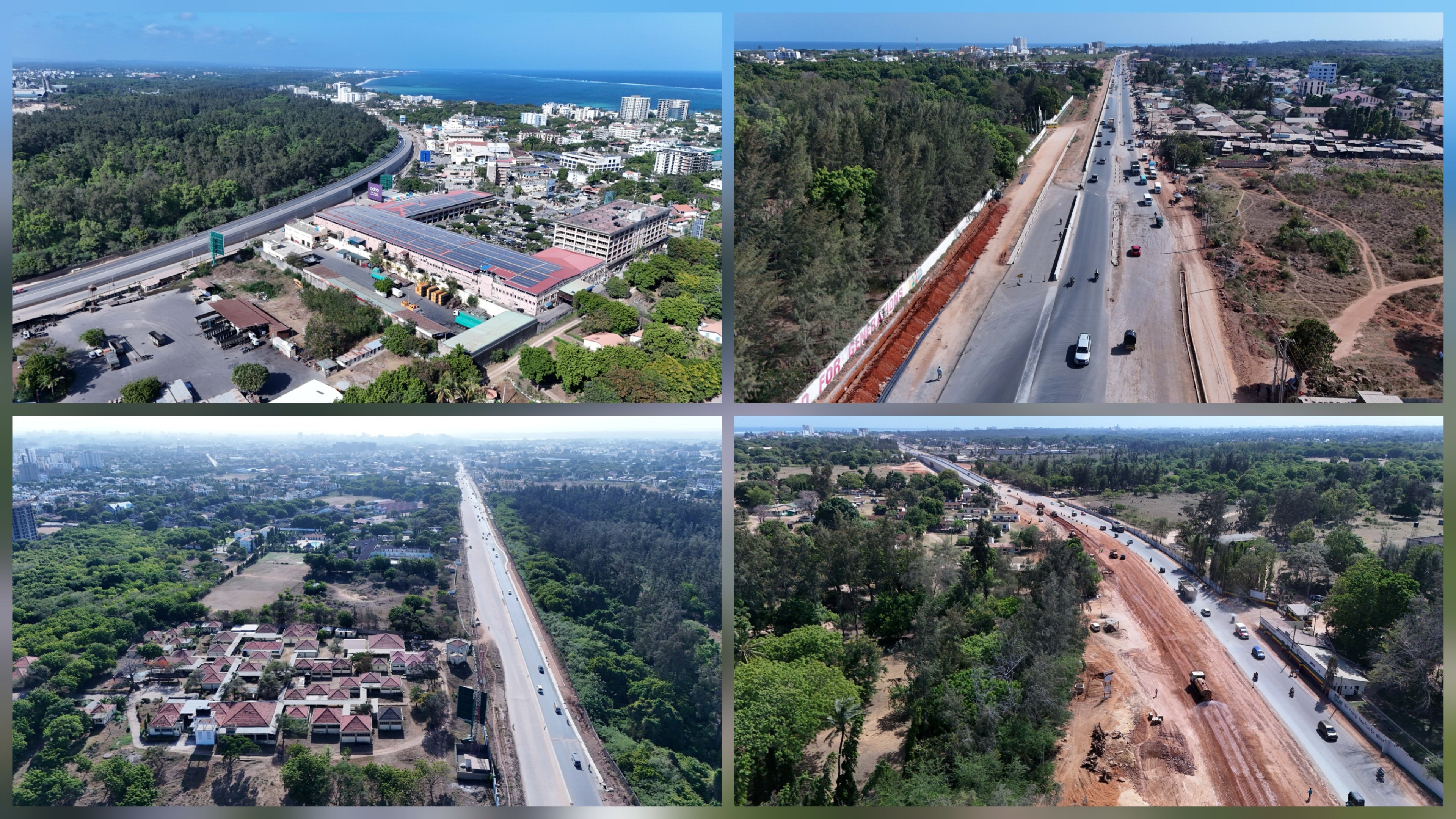

The dualling of the 13.5-kilometre road section between Nyali Bridge and Mtwapa is entering its final stages, with the Kenya National Highways Authority (KeNHA) reporting that Lot 1 of the project has reached 70 per cent completion. This progress comes after the project faced significant initial delays caused by land acquisition disputes and compensation issues that slowed the pace of work following its launch in late 2022.
Work on this stretch of the A7 highway is part of the larger Multinational Bagamoyo–Tanga–Horohoro/Lunga Lunga–Malindi Road Project. The Sh7.5 billion contract for this section is being financed through a partnership between the African Development Bank (AfDB), the European Union, and the Government of Kenya. Recent reports indicate that the release of Sh3.16 billion for compensation to the National Land Commission in late 2025 was a turning point, allowing the contractor to resume full-scale operations.
Engineers on-site are currently focused on the construction of the new Mtwapa Bridge, which is being expanded from two lanes to a four-lane dual carriageway. The bridge works are central to the completion of Lot 1, as the structure serves as the primary link between Mombasa and the northern coastal towns. Alongside the bridge, the project scope includes the installation of six grade-separated junctions and six pedestrian footbridges to manage the high volume of human and vehicular traffic in the urban sections of Nyali and Mtwapa.
The State Department for Internal Security and National Administration has maintained a presence on the corridor to facilitate coordination between contractors and local communities. This administrative oversight has been tasked with safeguarding equipment and resolving localized concerns that previously hindered progress. Security agencies and local administration have worked to ensure that the heavy machinery and night-time construction activities proceed without interference.
Infrastructure improvements extend beyond the main pavement. To mitigate seasonal flooding that has historically affected the northern gateway of Mombasa, the project includes 12.3 kilometres of trunk drainage systems. Environmental mitigation is also being managed through the planting of indigenous trees along the road corridor, a move aimed at replacing vegetation cleared during the initial earthworks.
Travel times for commuters and freight operators are expected to drop significantly once the dual lanes are fully operational. Currently, the section between Bombolulu and Mtwapa has seen partial opening of new lanes, which has already provided relief for traffic moving toward the North Coast. Reduced logistics costs and improved connectivity to the Port of Mombasa are cited as the primary economic drivers for the investment.
While Lot 1 is on track for a November 2026 completion, work on Lot 2, which covers the Mtwapa to Kilifi stretch, continues in tandem. This second section is approximately 54 per cent complete and involves widening the existing single carriageway to accommodate increased trade volumes. Combined, these developments form a vital artery for the blue economy and the tourism sector, which relies heavily on reliable road access to resorts in Vipingo and Kilifi.
Comments (0)
Leave a Comment
No comments yet. Be the first to share your thoughts!