
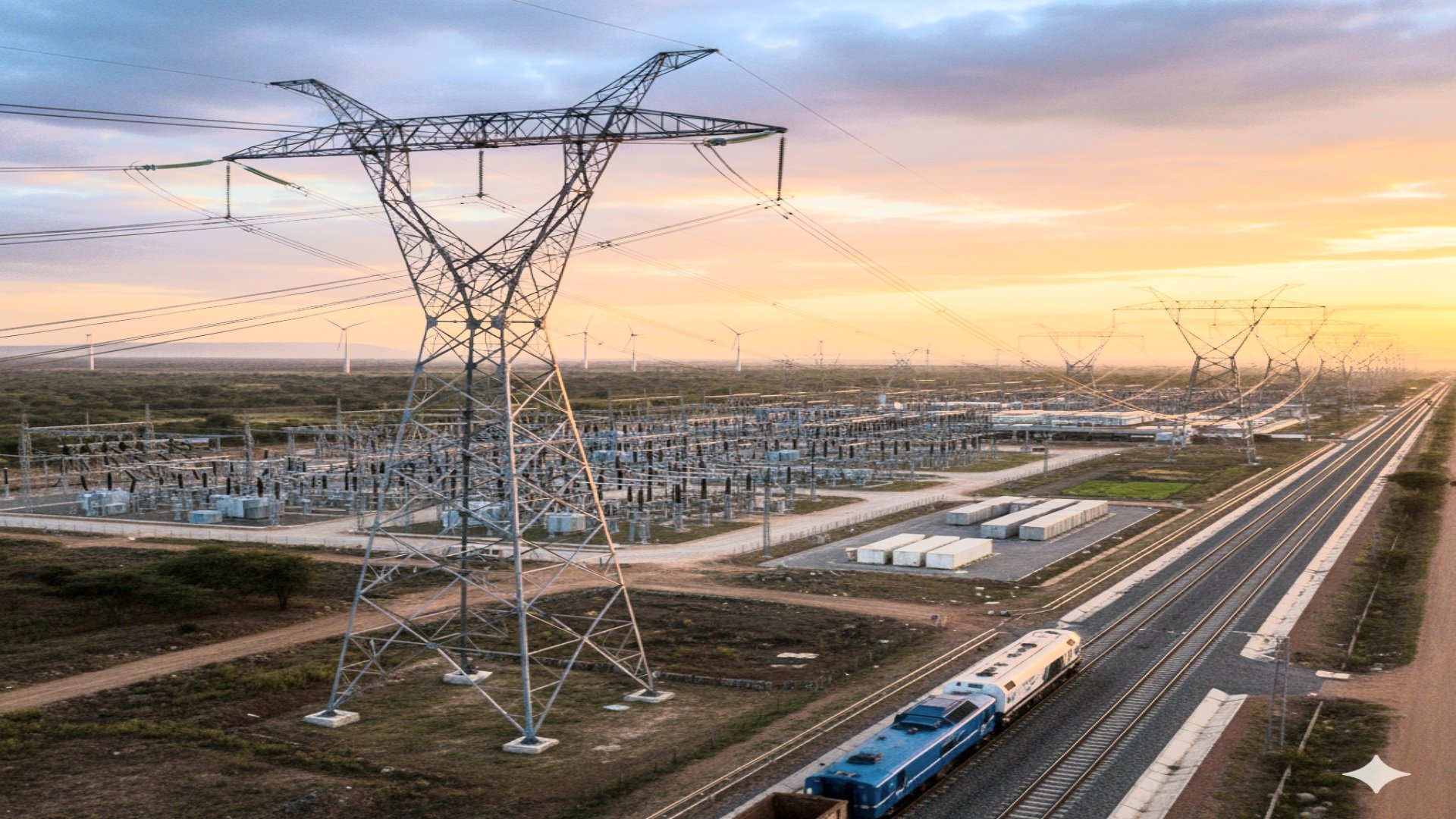

Kenya Power is currently undertaking a major reinforcement project in the Suswa area. New high-voltage transmission pylons are being erected near the Standard Gauge Railway (SGR) terminus. This critical work is necessary for strengthening and modernizing the national electricity grid. Suswa has become an increasingly vital intersection for Kenya’s entire energy infrastructure system, and this project ensures the long-term reliability and security of the power supply across the country. Besides, it represents a substantial investment intended to support national development goals. This geographical convergence point is now a key gateway for both transport and electricity distribution. Engineers are focusing intently on replacing and strengthening aging structures along these critical corridors as a systematic reinforcement, essential for maintaining a continuous and stable power flow to consumers.
The Suswa substation complex is arguably the most important node in Kenya's entire power system. It is a massive hub that manages the transfer of vast amounts of electricity from diverse generation sources. It receives significant volumes of clean geothermal power from the Olkaria power complex nearby and serves as the final destination for enormous wind energy generated by the Lake Turkana Wind Power plant, far to the north. Furthermore, Suswa acts as the essential connection point for the 500kV High Voltage Direct Current interconnector line with Ethiopia. This massive power highway allows Kenya to import cheaper and cleaner hydro energy. The strategic national importance of this location means that comprehensive maintenance work is not optional. Any unexpected failure at Suswa risks triggering widespread power outages across the entire network. Therefore, securing the transmission lines leading into and out of this hub is a top national priority for the region's energy stability. The new pylons add a crucial layer of physical resilience to the power system, thus strengthening the entire grid against potential external shocks and unexpected faults.

The specific construction involves the meticulous design, supply, and erection of robust new transmission towers. These powerful steel structures are actively replacing older structures that may have previously collapsed or deteriorated from age. For instance, the crucial Loiyangalani-Suswa 400kV line recently saw the successful restoration of several collapsed towers. This challenging work involved installing new double-circuit lines and associated conductor stringing. The successful completion of such vital projects restores the critical N-1 contingency. This means the overall system can comfortably withstand a major fault on one transmission circuit without resulting in a national power blackout. The reinforcement currently underway near the SGR terminus is an integral part of this broader national stability effort and specifically protects the transmission line that supplies the railway and its surrounding industrial parks. Reliable power is essential for the SGR's continuous operation, including all signaling and ticketing systems. The new infrastructure will also comfortably accommodate the growing power demand from future industrial customer. Suswa's proactive approach prevents future infrastructural bottlenecks to critical economic growth.
The Suswa projects also play a vital role in regional power integration and trade efforts. The substation facilitates electricity exchange with neighboring countries like Ethiopia, Tanzania, and Uganda. The newly erected pylons are a powerful physical symbol of Kenya’s ongoing infrastructural progress and commitment. They represent a firm and resolute step towards fulfilling the ambitious energy objectives of Vision 2030. While the construction takes place in a geologically challenging area of the Rift Valley, the challenging landscape and weather conditions pose significant engineering challenges to the construction teams. This massive logistical feat requires careful planning and the deployment of specialized heavy equipment. The new towers are built to much higher standards of resilience to withstand potential seismic activity, with a long-term view that is most cost-effective for the utility company. The transmission line reinforcement near the SGR demonstrates coordinated national development planning. This effort successfully links a modern transportation system directly to a modernized and resilient energy grid.
Comments (0)
Leave a Comment
No comments yet. Be the first to share your thoughts!