
The Government of Kenya has confirmed the integration of high-speed digital infrastructure along the 750-kilometer Isiolo-Mandera Highway, a move aimed at transforming one of the country's most expansive road projects into a smart transport corridor. The initiative, spearheaded by the Information and Communication Technology Authority (ICTA) in coordination with the Kenya National Highways Authority (KeNHA), involves the installation of a high-speed optical fiber Cable (OFC) network parallel to the ongoing road construction.
According to a project update released this week, the digital backbone will span 741.75 kilometers, supported by an additional 62 kilometers of metro networks and 194 kilometers of access networks. This technological layer is designed to provide reliable internet access to 341 government institutions, including schools, health facilities, and community centers across the counties of Isiolo, Meru, Garissa, Wajir, and Mandera.
The Isiolo-Mandera highway is currently the largest single road project in Kenya’s history, valued at approximately Sh100 billion. By embedding fiber optic ducts during the civil works phase, the government aims to reduce the long-term costs of digital deployment while simultaneously boosting the socio-economic profile of the North Eastern region. This integrated approach ensures that the physical road serves as a conduit for both goods and data, bridging a connectivity gap that has historically affected the northern frontier.
Environmental and social safeguards have been prioritized as the project moves into its active phase. The National Environment Management Authority (NEMA) has directed the ICTA to implement strict mitigation measures to address potential impacts, including cybersecurity risks and electronic waste management. The public has been granted a 30-day window to review the Environmental Impact Assessment (EIA) and provide feedback on the planned technological upgrades.
The project is a central component of the Horn of Africa Gateway Development Project (HoAGDP), largely funded by the World Bank. Beyond the pavement of the road to bitumen standards, the inclusion of the fiber optic network is expected to facilitate real-time monitoring and administrative automation in the region. Local authorities have noted that the project will also support pastoralist roadside markets and export processing zones by providing the necessary digital infrastructure for modern trade and communication..
Construction of the road itself has been divided into 11 distinct sections to expedite delivery, with completion targeted for 2027. Security measures along the corridor have been significantly bolstered to protect both the construction personnel and the high-value technological equipment being deployed. This strategic investment is expected to lower the cost of doing business in Northern Kenya while integrating the region more closely with the national economy and neighboring Ethiopia and Somalia.
State Announces Sh100 Billion Smart Infrastructure Rollout for 750km Northern Highway
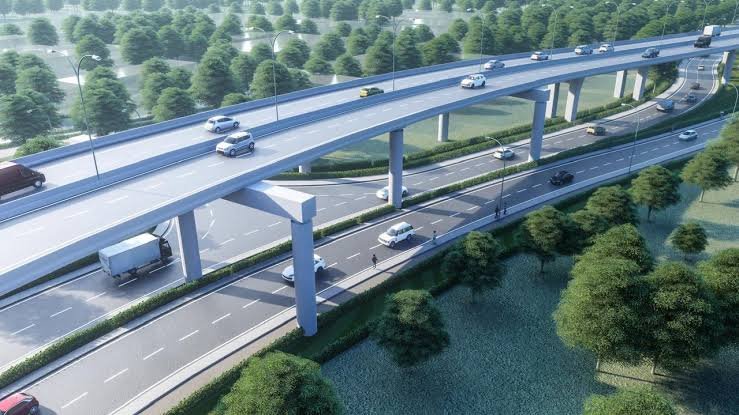
Aerial 3D architectural rendering showing a modern multi-lane highway interchange with surrounding green spaces and urban infrastructure in Kenya
|
HANDOUT

The Ministry of Roads and ICT Authority have initiated a major technological integration along the Isiolo-Mandera highway, featuring a 740km fiber optic backbone to enhance regional digital connectivity.
Comments (0)
Leave a Comment
No comments yet. Be the first to share your thoughts!