

A version of this article originally appeared in the Daily Nation.
The efficiency of Kenya's primary irrigation infrastructure is currently under scrutiny as technical failures in canal networks begin to impact national agricultural output. Large-scale projects, which were originally designed to provide a steady water supply to arid and semi-arid regions, are increasingly hindered by a lack of consistent maintenance and the natural accumulation of silt. This deterioration is not just a logistical hurdle but a direct threat to the reliability of food production across the country.
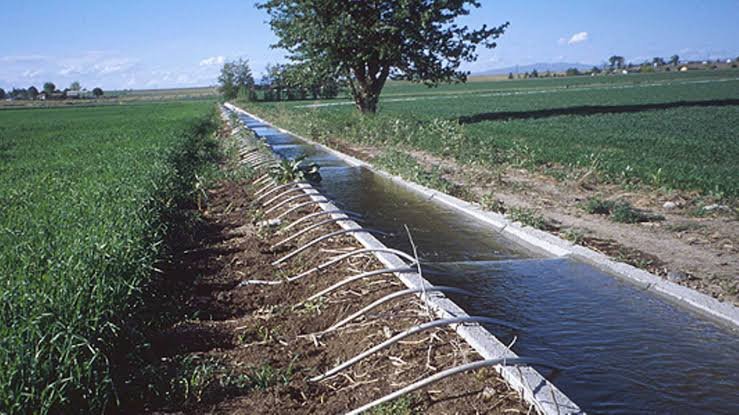
Civil works within these schemes rely on gravity-fed systems and concrete-lined channels to transport water from high-yield sources to farm clusters. However, the National Irrigation Authority and various stakeholders have noted that many of these conduits are operating well below their intended capacity. When canals become clogged with sediment or suffer from cracked linings, water loss through seepage increases significantly. This inefficiency means that farmers at the end of the distribution line often receive little to no water, even when the source levels are adequate.
Engineering experts point out that the cost of rehabilitating these existing structures is often more sustainable than commissioning entirely new projects. Fixing the integrity of a canal involves desilting, repairing embankments, and ensuring that control gates are functional. Without these interventions, the capital invested in the original construction is effectively wasted. The focus is now shifting toward a more rigorous maintenance schedule to prevent the total collapse of these vital water lifelines.
Beyond physical repairs, there is a growing conversation around the integration of technology into the management of these networks. Traditional manual monitoring of water levels is being viewed as insufficient for the demands of modern large-scale farming. Automated sensors and flow meters could provide real-time data on water distribution, allowing for more precise control and helping to identify leaks or blockages before they become critical failures. This transition to "smart" irrigation infrastructure is seen as a necessary evolution for the sector.
The reliance on seasonal rainfall has proven risky for the Kenyan economy. Irrigation serves as the primary buffer against drought, yet the current state of the infrastructure suggests the buffer is thinning. In regions like Mwea, Bura, and Hola, the performance of the canals dictates the success of entire harvest cycles. If the water does not flow as planned, the secondary effects are felt in the markets, where food prices fluctuate based on the availability of irrigated crops.
Resource allocation remains a significant hurdle. Funding for construction often takes precedence over funding for operations and maintenance. Journalists covering the sector have observed that while new project launches attract public attention, the quiet decay of older systems rarely receives the same level of political or financial backing. There is a need for a dedicated budget line that prioritizes the health of the existing concrete and steel that make up the national irrigation grid.
Soil erosion from neighboring farmlands further complicates the engineering challenge. Poor land-use practices upstream lead to heavy runoff, which carries silt directly into the main canals. This necessitates more frequent dredging, adding to the operational costs. Integrated watershed management is therefore becoming a part of the construction conversation, as engineers realize that the longevity of a canal depends heavily on the stability of the surrounding environment.
As Kenya moves to expand its acreage under irrigation, the lessons learned from the current infrastructure deficit are clear. It is no longer enough to build and move on. The sustainability of the nation's food systems depends on a continuous cycle of inspection, repair, and technological upgrades. For the construction sector, this represents a steady demand for specialized hydraulic engineering and maintenance services that can keep the water moving where it is needed most.
Comments (0)
Leave a Comment
No comments yet. Be the first to share your thoughts!