
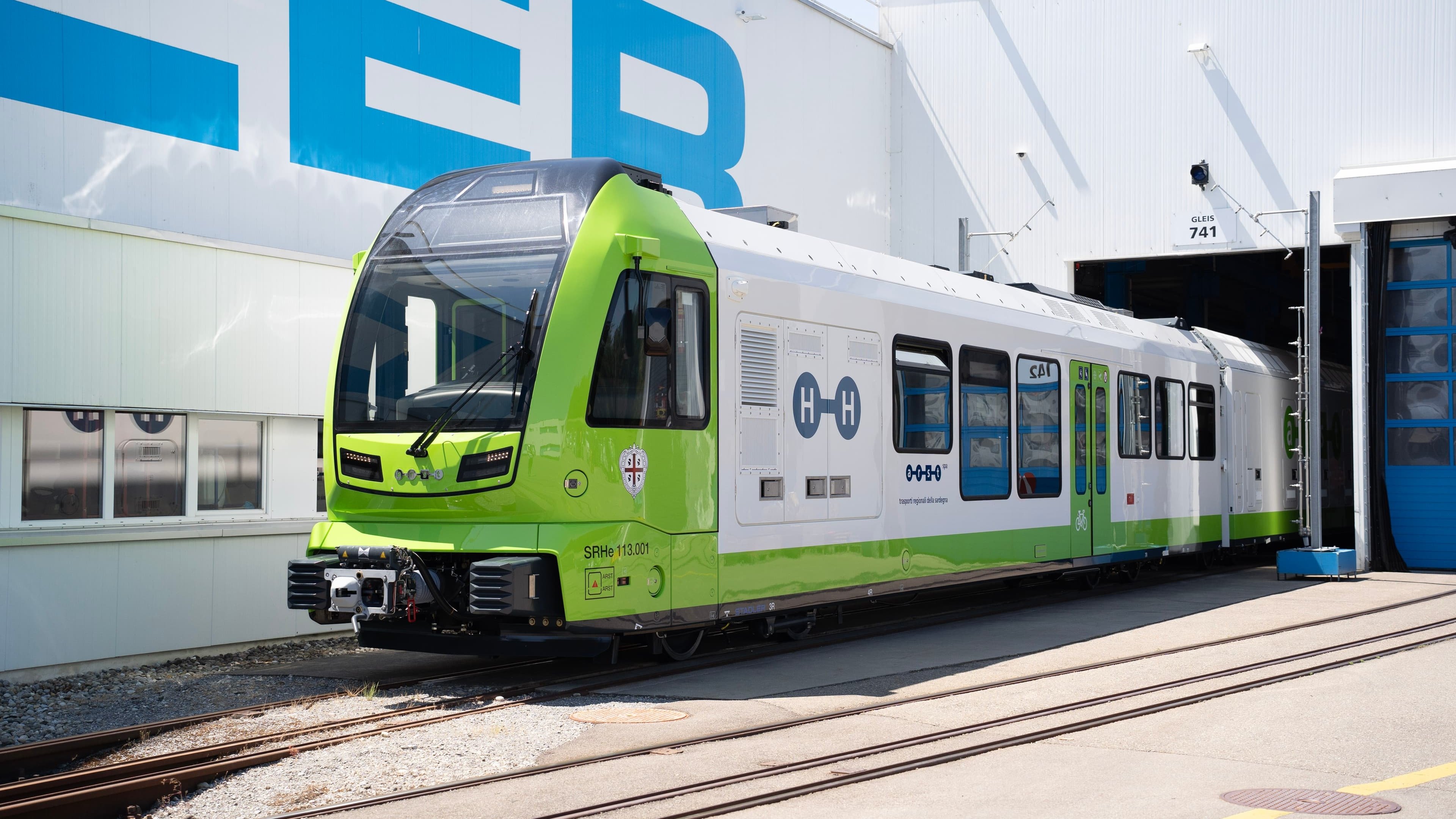

Swiss rolling stock manufacturer Stadler and Italian transport operator Azienda Regionale Sarda Trasporti (ARST) have revealed a new alternative for regional rail lines, which could alter how rural networks handle decarbonisation.
The development came to light on June 19, 2026, when the two firms unveiled the world's first narrow-gauge hydrogen-powered train during a presentation held in Erlen, Switzerland.
Ten of these newly developed passenger trains are scheduled to begin active commercial service across the Mediterranean island of Sardinia starting in 2028, where they will replace existing aging diesel fleets.
Infrastructure managers face persistent challenges trying to clean up remote rail networks, because conventional electrification projects require immense capital deployment for overhead wires and substations.
These narrow-gauge lines often cross hilly terrain, meaning that standard line electrification becomes financially unviable for low-traffic regional routes.
By implementing hydrogen technology, the network operators can completely remove diesel propulsion without the massive capital expenditure required to rebuild or modify the existing overhead physical track structure.
The engineering behind this clean train relies on a specialized configuration, which places the primary propulsion elements inside a dedicated center carriage.
This middle power pack carriage houses advanced hydrogen fuel cells, which mix hydrogen fuel with oxygen from the air to generate electricity.
The electricity then charges the onboard lithium-ion batteries, which directly feed the traction motors that propel the vehicle down the tracks.
According to data from the manufacturing testing facility, the fuel supply comes entirely from solar-powered production plants, achieving a clean process from fuel generation to the wheel.
Operating these ten hydrogen trains will eliminate more than 2,100 tons of carbon dioxide (CO2) emissions each year, which represents a substantial reduction in greenhouse gases.
Environmental analysts estimate that this reduction is equivalent to taking approximately 450 passenger vehicle journeys completely around the circumference of the planet.
The technology offers a much quieter, cleaner ride for rural passengers, while setting a new blueprint for tracking systems globally.
Stadler remains the only manufacturer globally developing hydrogen fuel cell solutions specifically tailored for narrow-gauge lines, which typically have a track gauge under standard dimensions.
The Swiss company is currently extending this specific production line to fulfill similar orders for other Italian regions, including Calabria and Sicily, where old lines remain disconnected from national grids.
This rollout demonstrates that regional rail networks can transition directly away from fossil fuels, even if the primary grid infrastructure never reaches their remote geographical locations.
Sardinia has long sought solutions to modernise its isolated rail lines, but the topography of the island has historically limited the expansion of traditional rail systems.
The narrow-gauge format, which measures less than the standard width, is common across many historic European mountain passages and island transit systems.
Maintaining these corridors is vital for connecting rural communities to urban centers, although high maintenance costs often threaten their long-term operational survival.
By utilising existing alignments, the new rolling stock avoids the need for disruptive civil engineering works or extensive land acquisition processes.
The trains feature a low-floor design to improve passenger accessibility, which allows passengers with reduced mobility to board easily at rural platforms.
Inside the cabins, large panoramic windows provide travelers with expansive views of the countryside, while advanced insulation materials reduce internal cabin noise significantly.
Comments (0)
Leave a Comment
No comments yet. Be the first to share your thoughts!