
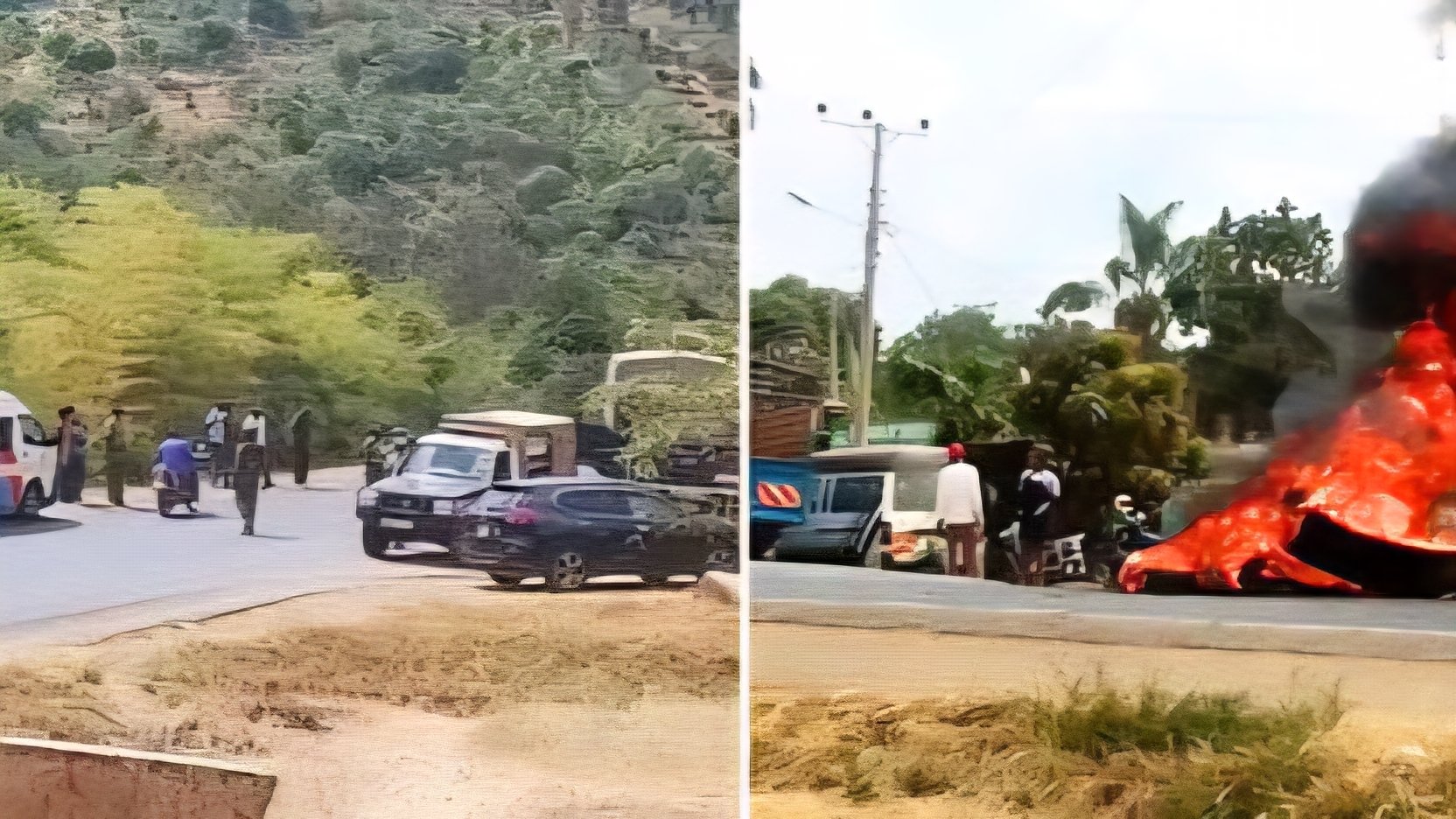

Transport along the busy Embu-Meru highway came to a standstill on Thursday morning as residents of Tharaka Nithi County took to the streets to protest the perceived slow pace of the Nithi Bridge reconstruction. The demonstrations, which centered around the backyard of Deputy President Kithure Kindiki, saw locals lighting bonfires and using boulders to obstruct the road, citing continued safety risks at the notorious blackspot.
The protest comes just weeks after the government scheduled the formal commencement of the Sh7 billion engineering project. While the Kenya National Highways Authority, KeNHA, has already finalized the tender process and moved to the site for preliminary works, residents argue that the physical progress on the ground does not match the urgency of the situation. The bridge, which was constructed in 1985, has long been a site of frequent and fatal accidents, leading to intense local pressure for a complete redesign.
According to engineering plans released by the Ministry of Roads and Transport, the new project involves a total realignment of the existing road crossing. The objective is to eliminate the sharp curves and steep gradients that have historically caused heavy commercial vehicles to lose control. The Sh7 billion investment is intended to create a straight three-kilometer transit corridor between Marima and Mitheru markets, replacing the current winding descent into the Nithi River gorge.
Police were deployed to the area early Thursday to manage the escalating situation and restore the flow of traffic. The disruption caused significant delays for passenger buses and commercial trucks traveling between Nairobi and the Upper Eastern regions. Protestors, however, remained adamant, claiming that promises of a safer bridge have been made for decades without the necessary speed in execution.
The Deputy President had previously noted that the government secured Sh7 billion for the redesign and reconstruction, emphasizing that the project is a priority for the current administration. During recent public addresses, officials stated that the new design would feature a central embankment to prevent dangerous overtaking and runaway truck ramps to mitigate the impact of brake failure, which is a common cause of crashes at the site.
Construction experts familiar with the project note that the mountainous terrain and the requirement for an elevated structure make the realignment a complex engineering task. Despite these technical challenges, the local community remains focused on the timeline, particularly as the bridge is situated in a high-traffic zone essential for regional trade.
The Kenya National Highways Authority has maintained that mobilization is ongoing and that the project remains on schedule for completion before the 2027 deadline. However, the current unrest suggests that the government faces a narrow window to demonstrate tangible progress to a public weary of road fatalities at the crossing. For now, the focus remains on clearing the highway and resuming work on the site, while local leadership attempts to engage the disgruntled residents.
Comments (0)
Leave a Comment
No comments yet. Be the first to share your thoughts!