

A version of this article appeared on Interesting Engineering.
Modern structural engineers often struggle to ensure commercial buildings last more than a century, but structures built during the Roman Empire still stand intact across Europe and the Mediterranean.
This extreme durability stems from self-healing Roman concrete, an ancient material technology that researchers are analyzing to improve modern infrastructure longevity.
Unlike modern Portland cement, which degrades under environmental stress, the ancient Roman mix used specific volcanic ash components that reacted dynamically with water to seal developing fractures automatically over time.
Beyond infrastructure, ancient civilizations achieved complex material and mechanical breakthroughs that challenge conventional timelines of technological progress.
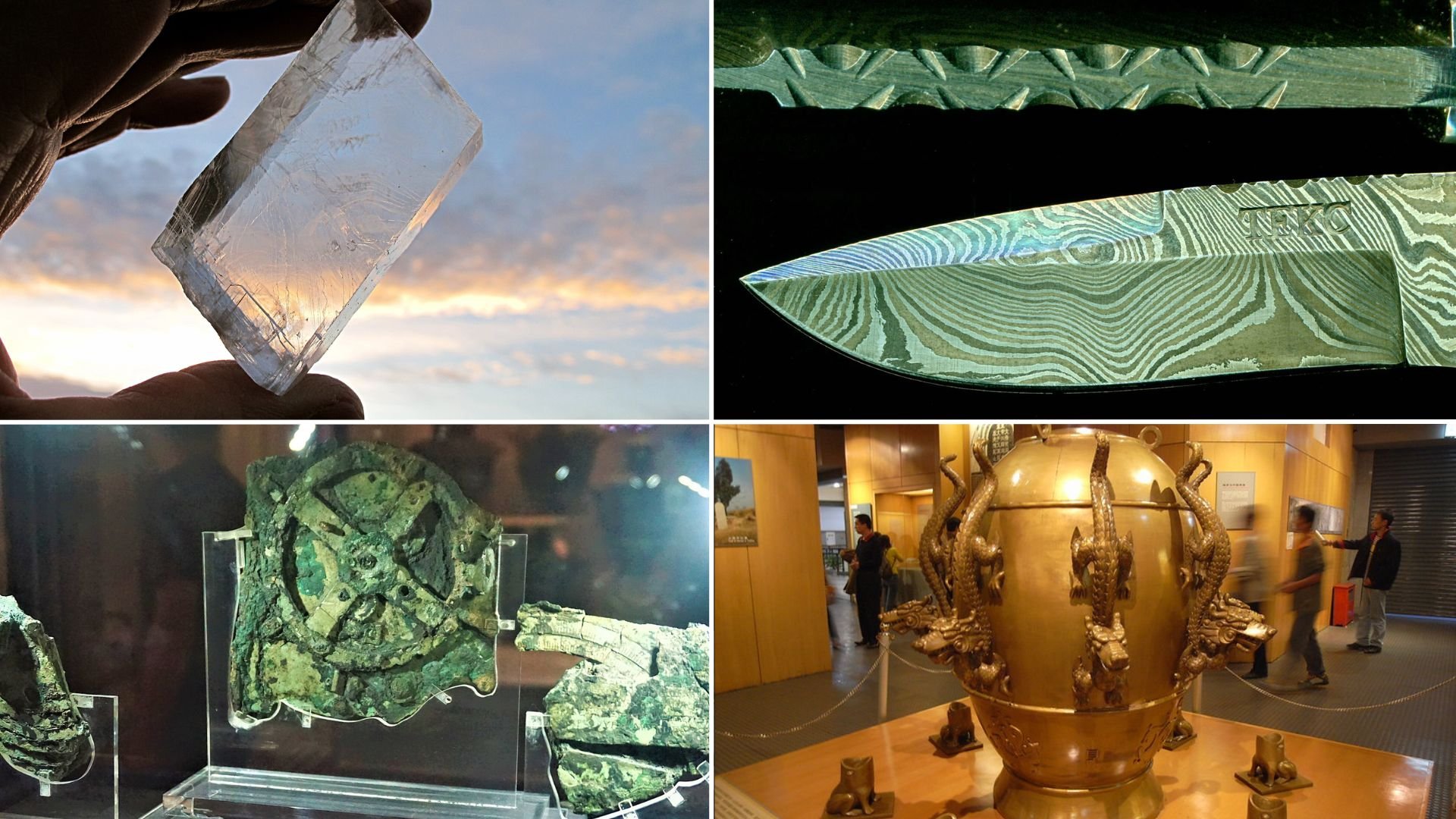
In metallurgy, precision-crafted Wootz steel provided the base material for the legendary Damascus blades, which featured unmatched structural flexibility and sharpness due to unique crystalline patterns engineered at the microscopic level.
Meanwhile, mechanical engineering reached a surprising peak in ancient Greece with the construction of the 2,000-year-old Antikythera Mechanism.
Discovered in an ancient shipwreck, the intricate bronze device utilized a complex series of interlocking gears to track solar and lunar cycles with mathematical precision, functioning essentially as an early analogue Computer-Aided Design (CAD) physical prototype for astronomical calculation.
As detailed in the archival records of these diverse historical technologies highlight a sophisticated level of material science that was systematically lost to history before being rediscovered by modern science.
The integration of chemical engineering in concrete production and precise thermal control in steel fabrication suggests that ancient builders relied on systematic observation and highly advanced production methodologies.
Today, materials scientists are studying these historic techniques to develop sustainable, long-lasting construction materials for modern infrastructure projects.
By understanding how ancient builders engineered structural resilience without modern chemical additives, contemporary laboratories aim to reduce the carbon footprint of cement production while dramatically extending the operational lifespan of roads, bridges, and maritime barriers.
Comments (0)
Leave a Comment
No comments yet. Be the first to share your thoughts!