
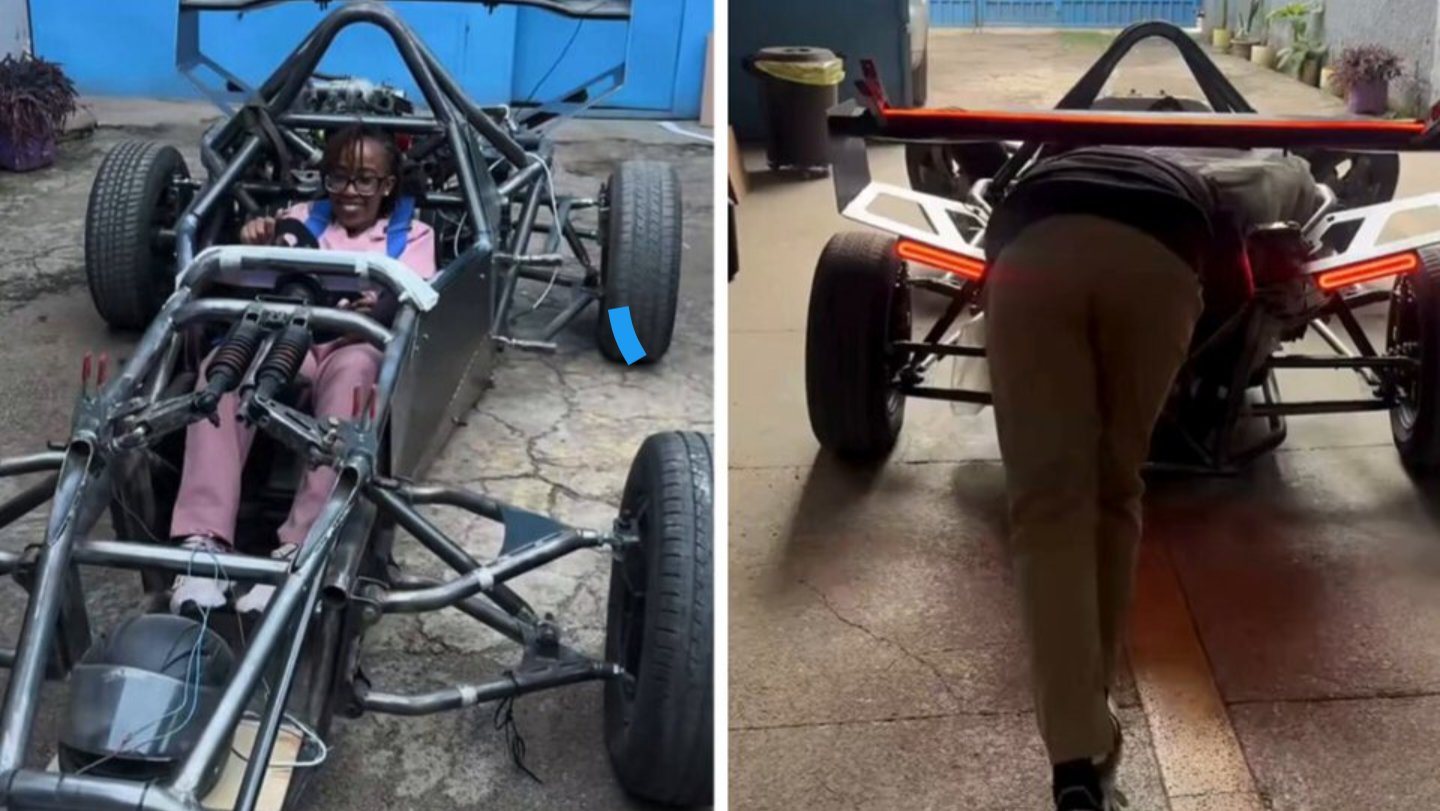

A custom-built, open-wheel racing vehicle fabricated by a local technician has sparked widespread interest across Kenyan engineering and automotive design circles. Images circulating on social media show a single-seater machine featuring a tubular space frame chassis and advanced structural layout reminiscent of professional motorsport designs.
The project highlights the growing capacity of local fabricators to execute complex mechanical engineering tasks without relying on conventional automotive assembly plants. The vehicle incorporates custom bodywork, independent front suspension assemblies, and a rear wing configuration designed to mimic high-performance racing platforms.
Initial public discussions regarding the build centered on whether the vehicle qualifies as a dune buggy or an elongated racing prototype. Observers noted that the prolonged wheelbase and low-slung seating position align more closely with single-seater formula racing standards than standard off-road recreational vehicles.
Fabrication of the vehicle relies heavily on steel tubing, manual welding techniques, and careful geometry alignment to ensure structural integrity. This approach aligns with traditional manufacturing practices, where artisans maximize limited industrial machinery to produce complex structural outputs.
The cockpit area is designed for a single occupant, featuring a low center of gravity and integrated safety roll bars. A driver wearing a professional suit was photographed testing the controls, illustrating the functional ergonomics embedded within the custom steel framework.
At the rear, the vehicle features integrated Light Emitting Diode (LED) strips functioning as tail lights and brake indicators. The wiring assembly runs through the open frame, connecting the rear-mounted powertrain to the steering column controls positioned at the front.
Engineers observing the build have highlighted the importance of precision alignment in independent suspension systems fabricated outside controlled factory conditions. Poor geometry can lead to rapid tire wear or unstable handling, making manual calculations critical during the initial welding phase.
Local fabrication projects of this scale frequently face regulatory hurdles when trying to obtain road-legality certificates from state agencies. Vehicles built outside commercial assembly plants must undergo rigorous safety evaluations before being permitted on public infrastructure networks.
The National Transport and Safety Authority (NTSA) remains the primary body responsible for inspecting and approving custom vehicle modifications in Kenya. Without official clearance, such prototypes are restricted strictly to private tracks, closed testing grounds, or exhibitions.
Despite these regulatory challenges, the project underscores a broader trend of technological self-reliance within the informal manufacturing sector. Young Kenyan technicians continue to push mechanical boundaries, utilizing basic workshop equipment to develop complex mobility solutions.
As engineering interest expands, local institutions may look toward these informal fabricators to bridge the gap between theoretical training and practical assembly. Such grassroots innovations demonstrate that advanced automotive design concepts can be interpreted and executed using locally available materials.
The development comes at a time when regional interest in motorsport infrastructure is growing, with several private test tracks under consideration across East Africa. This shifting landscape could provide a viable proving ground for independent Kenyan vehicle builders looking to test their mechanical creations.
Ultimately, the emergence of this vehicle showcases the potential for domestic engineering talent to contribute significantly to the local mechanical fabrication industry. With the right institutional support, grassroots projects like this open-wheel machine could transform from solitary workshop experiments into scalable manufacturing enterprises.
Comments (0)
Leave a Comment
No comments yet. Be the first to share your thoughts!