
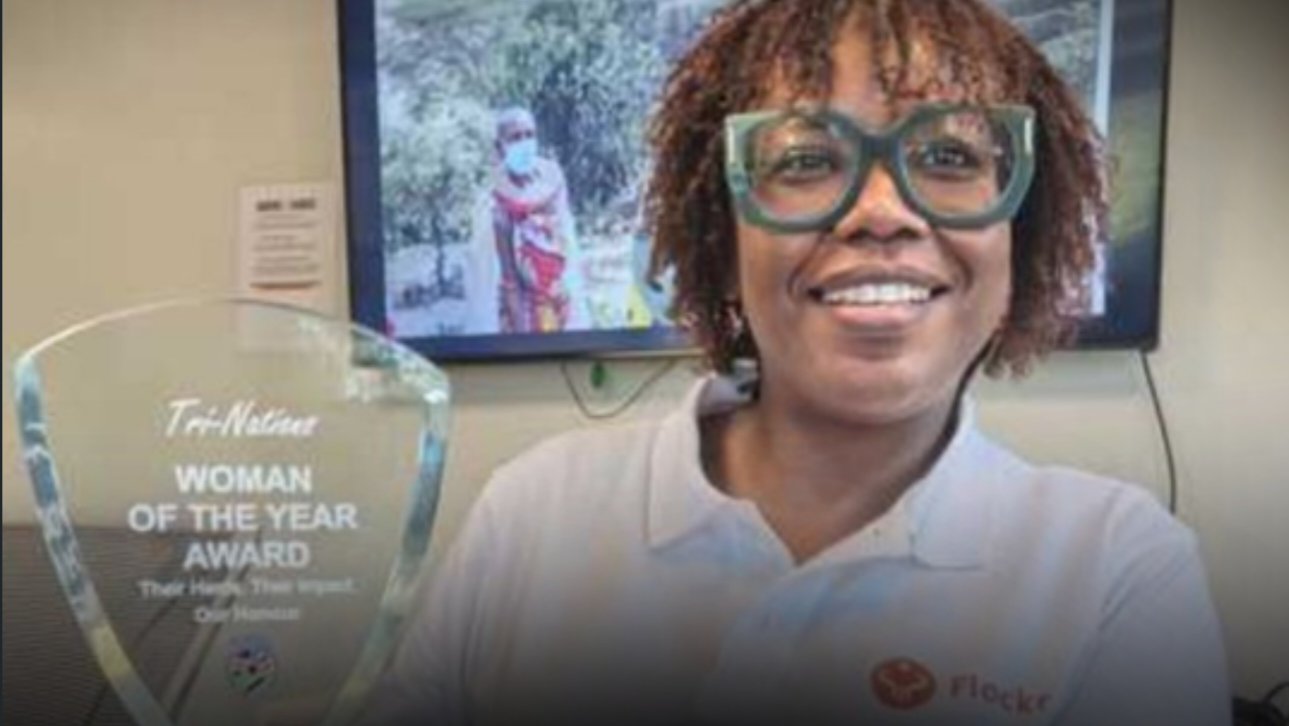

A version of this article appeared on Nation.Africa. Kenyan lawyer-farmer Maria Mbeneka Mutua has received the 2026 Tri-Nations Livestock Expo & Sale Woman of the Year award, an honour celebrating innovation and technology adoption within regional agricultural systems.
The award, presented during the regional livestock gathering in Chalinze, Tanzania, highlights her efforts in building structured aggregation networks, and introducing digital solutions across pastoral markets.
Mutua stated that the award serves as personal validation, but it is also a recognition of the thousands of pastoralists, who form the backbone of the system.
Her enterprise utilises a dedicated digital platform known as Flockr, which helps livestock producers transition away from selling under pressure. By providing better information, and stronger structured negotiating power, the tool addresses long-standing market inefficiencies.
The innovation has also targeted gender inclusion within a traditionally male-dominated sector. Through a strategic partnership with the Chui Mamas Group, the initiative links directly to approximately 1,000 women, who actively participate in production and structured decision-making roles.
Traditional livestock trading in East Africa has frequently suffered from fragmented supply chains, where rural herders remain price takers. Mutua introduces data-driven traceability into her operations, which bridges the gap between isolated producers, and higher-value commercial markets.
By integrating modern logistics, and climate-resilient training, the model establishes a credible framework for transparent regional trade. The enterprise operates a women-led feedlot, which serves as a practical hub for training, and organizing local pastoral communities.
The technological footprint aims for substantial expansion, with a target of reaching two million Flockr users across the African continent. This digital network connects scattered herds to verifiable data points, which simplifies livestock tracking, and commercial valuation.
Her approach redefines the agricultural sector for younger generations, who often view rural farming as a last economic resort. By introducing digital applications, and analytical tools, the venture demonstrates that livestock management can operate as a serious, commercially viable profession.
Agriculture in pastoral zones requires robust support networks, but infrastructure deficits often limit growth. The deployment of accessible mobile software bypasses physical distance, which allows remote herders to interact with automated valuation data, and livestock aggregation centers.
This integration of livestock logistics, and regional trade aligns with ongoing infrastructure developments across East Africa. Modern transport corridors, and border facilities in places like Chalinze facilitate the movement of agricultural goods, which enhances the impact of digital marketplace solutions.
Regional livestock markets require transparent governance to thrive. By establishing clear records of animal health, and ownership through digital means, the enterprise mitigates risks associated with cross-border animal movement, and fluctuating market prices.
The model demonstrates how localized tech platforms can address broader continental challenges. Through structured collaboration, rural communities gain the tools needed to combat climate volatility, and sudden market shifts, which secures their financial independent future.
Ultimately, the recognition at the regional expo underscores the changing dynamics of East African agriculture. True influence in the sector is increasingly measured by the capacity to modernize old supply systems, and uplift vulnerable rural populations.
As the platform expands its network, the combination of digital tools, and physical aggregation hubs will likely influence future agricultural policy. Mutua demonstrates that combining legal expertise with practical farming creates a powerful foundation for regional transformation.
Comments (0)
Leave a Comment
No comments yet. Be the first to share your thoughts!