
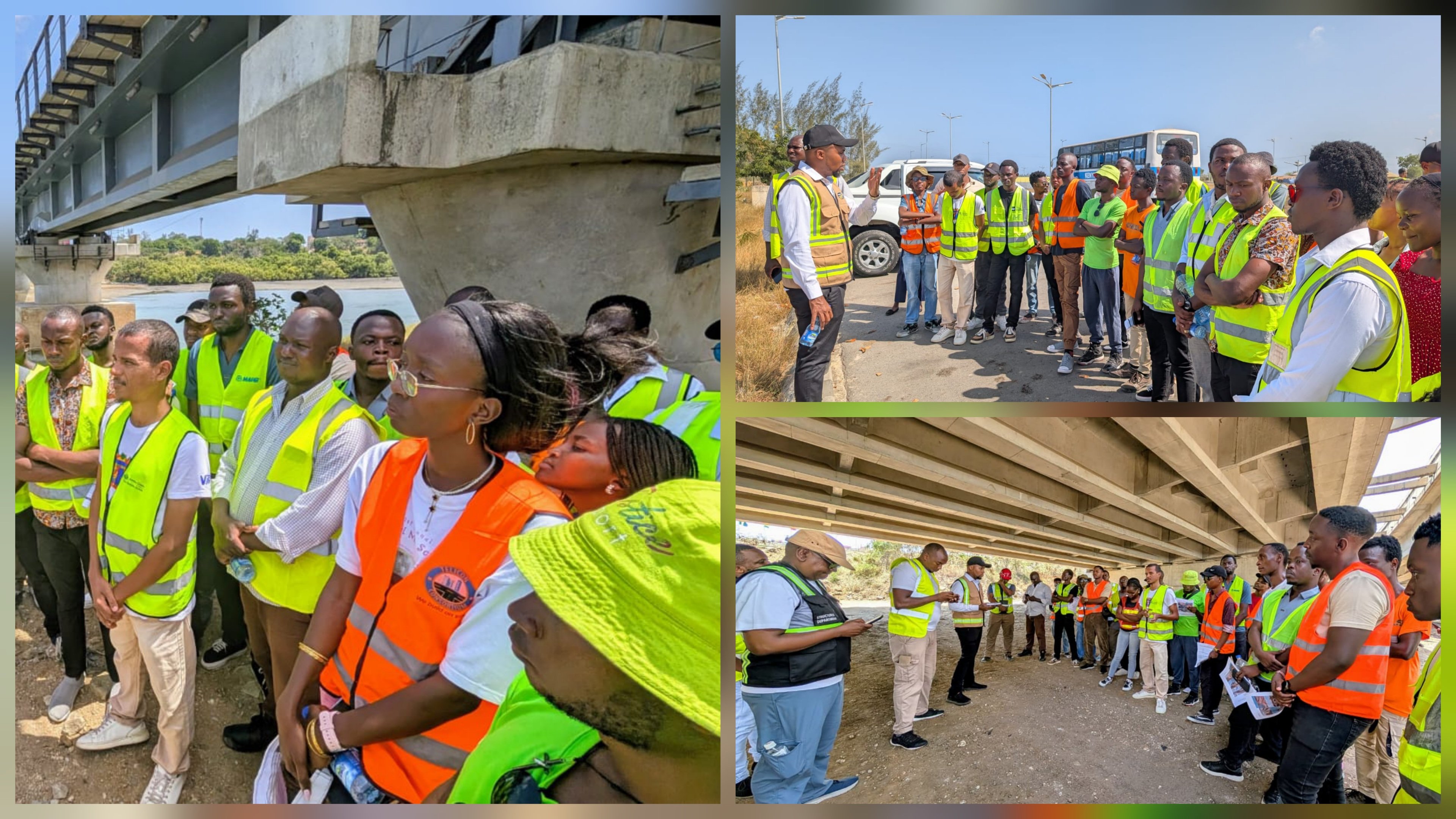

The Kenya National Highways Authority (KeNHA) Structures Department, in coordination with the Coast Regional Office, hosted a delegation of fifth-year civil engineering students from Kenyatta University for an experiential learning visit. The tour focused on two of the most significant infrastructure developments in the coastal region: the Makupa Bridge and the Dongo Kundu Bypass.
The visit began at the Makupa Bridge, a 457-metre-long structure that replaced the historic Makupa Causeway. Completed in 2022 at a cost of approximately Sh4.5 billion, the bridge was designed to restore the natural water flow between Tudor and Port Reitz creeks. For the students, the site provided a practical look at the transition from a solid earth embankment to a modern multi-span viaduct. Engineers on-site detailed the technical specifications of the bridge, which features two parallel four-lane decks and deep-seated friction piles ranging from 35 to 49 metres in depth.
Following the briefing at Makupa, the group moved to the Dongo Kundu Bypass, also known as the Mombasa Southern Bypass. This project is a critical component of the Mombasa Port Area Development Project, designed to provide an alternative route to the South Coast and bypass the Likoni Ferry. The students observed the complex engineering required for the bypass, which includes several long-span bridges across swampy terrain and open water.
The Dongo Kundu project has been developed in three distinct phases, involving the construction of dual carriageways and major interchanges at Miritini and Kipevu. One of the primary focal points of the tour was the Mwache Bridge, a key structure within the bypass system. Engineers explained the challenges of maritime construction and the specialized foundation work necessary to stabilize heavy infrastructure in a saline environment.
Experiential visits of this nature are part of a broader effort by KeNHA and academic institutions to bridge the gap between classroom theory and field application. By interacting with practicing engineers and seeing active project management in person, the students were able to witness the scale of logistical coordination required for national flagship projects.
The tour concluded with a technical Q&A session where students engaged with KeNHA officials regarding the maintenance and structural monitoring of these assets. For the final-year students, the visit served as a direct introduction to the professional standards and engineering complexities they will encounter upon graduation and entry into the Kenyan construction industry.
Comments (0)
Leave a Comment
No comments yet. Be the first to share your thoughts!