
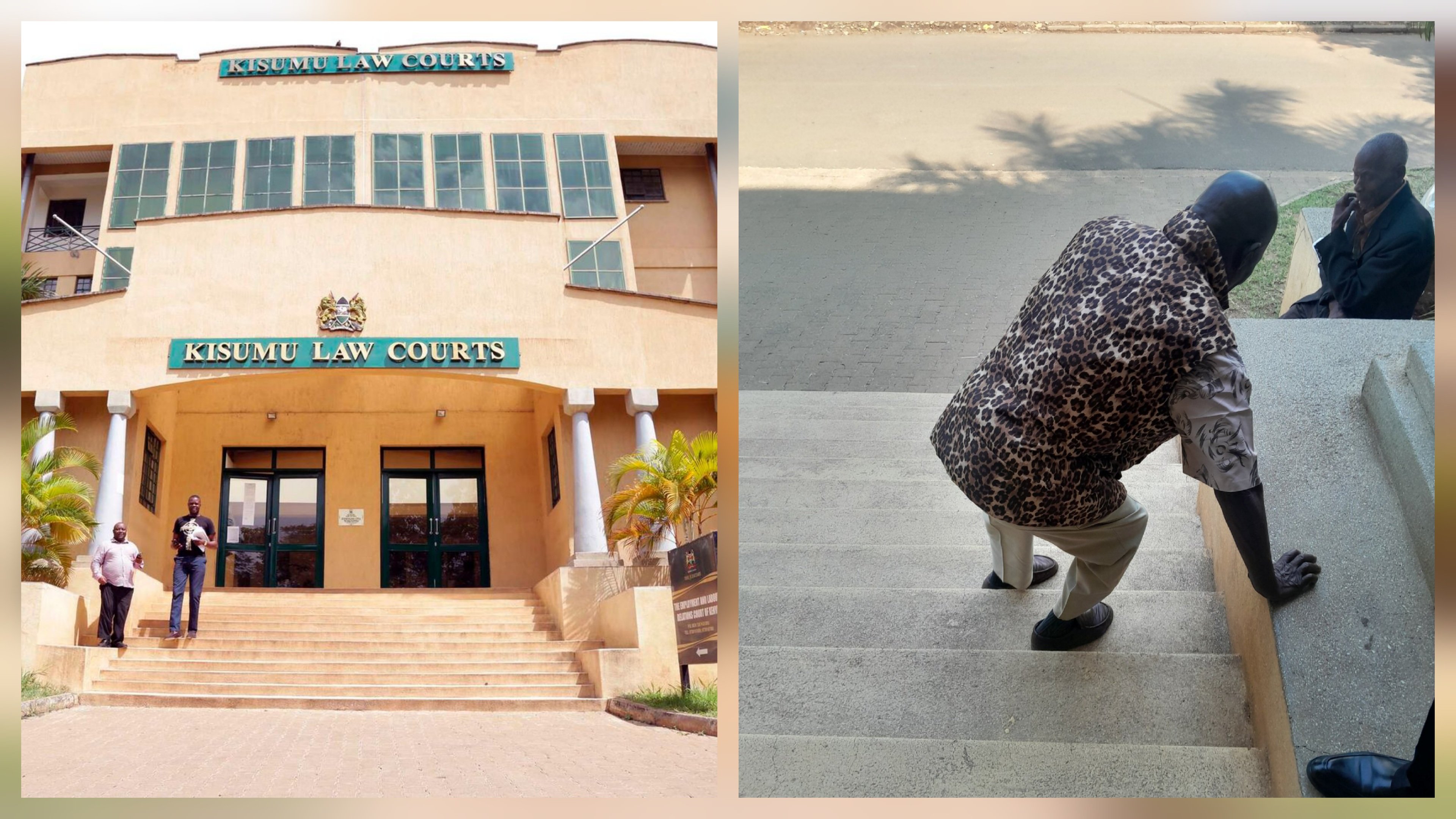

The Kenyan Judiciary is facing intense scrutiny over the architectural design of the Kisumu Law Courts, after a viral social media post highlighted the struggles of persons living with disabilities (PWDs) attempting to access the facility. The building, which has been in operation for nearly a decade, lacks basic universal design features such as ramps or elevators at its primary entrance.
Images shared online by a concerned citizen on February 25, 2026, depicted a man struggling to scale a significant flight of concrete stairs by crawling on his hands and knees. The incident has reignited a dormant debate regarding the slow pace of infrastructure modification within the Kenyan justice system, particularly for structures built within the last ten years.
Construction of the Kisumu Law Courts was completed around 2016, a period during which the Persons with Disabilities Act was already in effect. Under Kenyan law, all public buildings are required to be "disability-friendly," providing seamless access to all citizens regardless of their physical capabilities. Critics argue that the continued existence of such barriers at a high-level judicial institution represents a failure in both the design and oversight phases of the project.
The facility features a prominent, elevated entrance supported by several pillars, but the lack of a visible ramp alongside the main stairway forces many to rely on the assistance of others or, in extreme cases, resort to crawling. For many litigants, this is not just a matter of physical difficulty but a significant blow to their dignity while seeking legal redress.
Local advocacy groups have previously pointed out that many older government buildings in Kenya were constructed without PWDs in mind, yet newer projects like the Kisumu Law Courts were expected to lead the way in modern standards. The fact that the building has remained in this state since 2016 suggests a lapse in the Judiciary’s facility management and maintenance budget priorities.
Engineers and urban planners often cite the "universal design" principle, which dictates that environments should be usable by all people to the greatest extent possible without the need for adaptation. In the case of Kisumu, the heavy reliance on steep stairs suggests that the original architectural brief may have prioritized aesthetics or traditional courthouse grandeur over practical inclusivity.
There are growing calls for the Kenyan Judiciary to conduct an urgent audit of all its facilities across the 47 counties. While some newer court stations have successfully integrated ramps and lifts, the situation in Kisumu highlights a persistent gap in the implementation of the National Construction Authority (NCA) guidelines for public spaces.
As the images continue to circulate, the pressure mounts on the Registrar of the Judiciary to address the specific shortcomings at the Kisumu station. Without a clear timeline for the installation of a ramp or an external lift, the promise of "equal access to justice" remains physically out of reach for many in the region.
Comments (0)
Leave a Comment
No comments yet. Be the first to share your thoughts!