
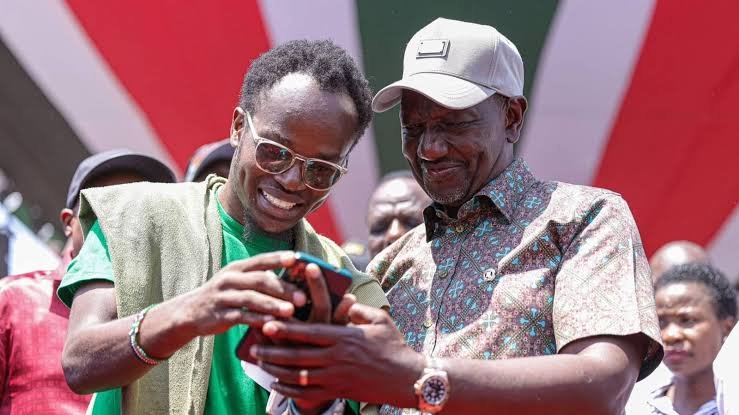

The Government of Kenya has commenced a large-scale financial disbursement to young entrepreneurs across the country, aiming to facilitate the growth of micro-enterprises. Under the National Youth Opportunities Towards Advancement (NYOTA) project, President William Ruto has been leading a nationwide circuit to verify the distribution of KSh 3 billion. This capital is earmarked for 121,800 young people, specifically targeting those who have completed preliminary entrepreneurship and life-skills training.
The NYOTA initiative, which is a successor and scale-up of the previous Kenya Youth Employment and Opportunities Project (KYEOP), is a five-year programme funded by the World Bank. Its primary objective is to increase employment and earnings while fostering a formal savings culture among the youth. The current disbursement phase focuses on providing business start-up capital to individuals aged between 18 and 29, though the age limit is extended to 35 for persons with disabilities.
President Ruto has recently visited several counties to witness the rollout, including sessions in the North Rift, Central, and North Eastern regions. In Garissa County, the President presided over the distribution of KSh 63 million to 2,520 entrepreneurs. Similar regional events have taken place in Kilifi, where KSh 252 million was distributed to 5,040 beneficiaries, and in Eldoret, where over 9,400 youth from five counties received KSh 200 million.
The funding structure is designed to promote financial stability through a phased approach. Each beneficiary is eligible for a total of KSh 50,000, which is released in two tranches of KSh 25,000. To ensure long-term financial security, the government has integrated a social insurance component into the disbursement. For every KSh 25,000 tranche, KSh 3,000 is automatically diverted to an NSSF Haba Haba savings wallet. The remaining KSh 22,000 is sent directly to the beneficiary's mobile wallet for immediate use in business operations.
Beyond the provision of capital, the NYOTA project utilizes a multi-agency framework. The Micro and Small Enterprises Authority (MSEA) handles the business support component, while the National Industrial Training Authority (NITA) and the State Department for Youth Affairs oversee skills development and apprenticeships. The program also features a Recognition of Prior Learning (RPL) track, which seeks to certify technical skills acquired through informal work, potentially opening doors for youth to participate in formal construction and infrastructure tenders.
The World Bank has committed approximately $200 million to the project, citing the need for transparent and inclusive interventions to address high rates of youth unemployment. World Bank officials have noted that the program is specifically tailored for vulnerable youth with a Form Four level of education or below, who often face significant barriers when attempting to access traditional credit markets.
The project is expected to run through December 2028. During this period, it aims to reach a total of 820,000 youth across all 47 counties. In addition to the business grants, the government is facilitating on-the-job experience placements for 90,000 youth, who receive a monthly stipend of KSh 6,000 during their six-month training period.
As the President continues his regional tours, he has emphasized the importance of fiscal discipline among the recipients. The integration of the savings component is intended to build a financial cushion for young workers, particularly those in the informal sector. By combining capital with mandatory savings and technical mentorship, the government hopes to create a more resilient workforce capable of supporting the country's broader infrastructure and economic goals.
Comments (0)
Leave a Comment
No comments yet. Be the first to share your thoughts!