
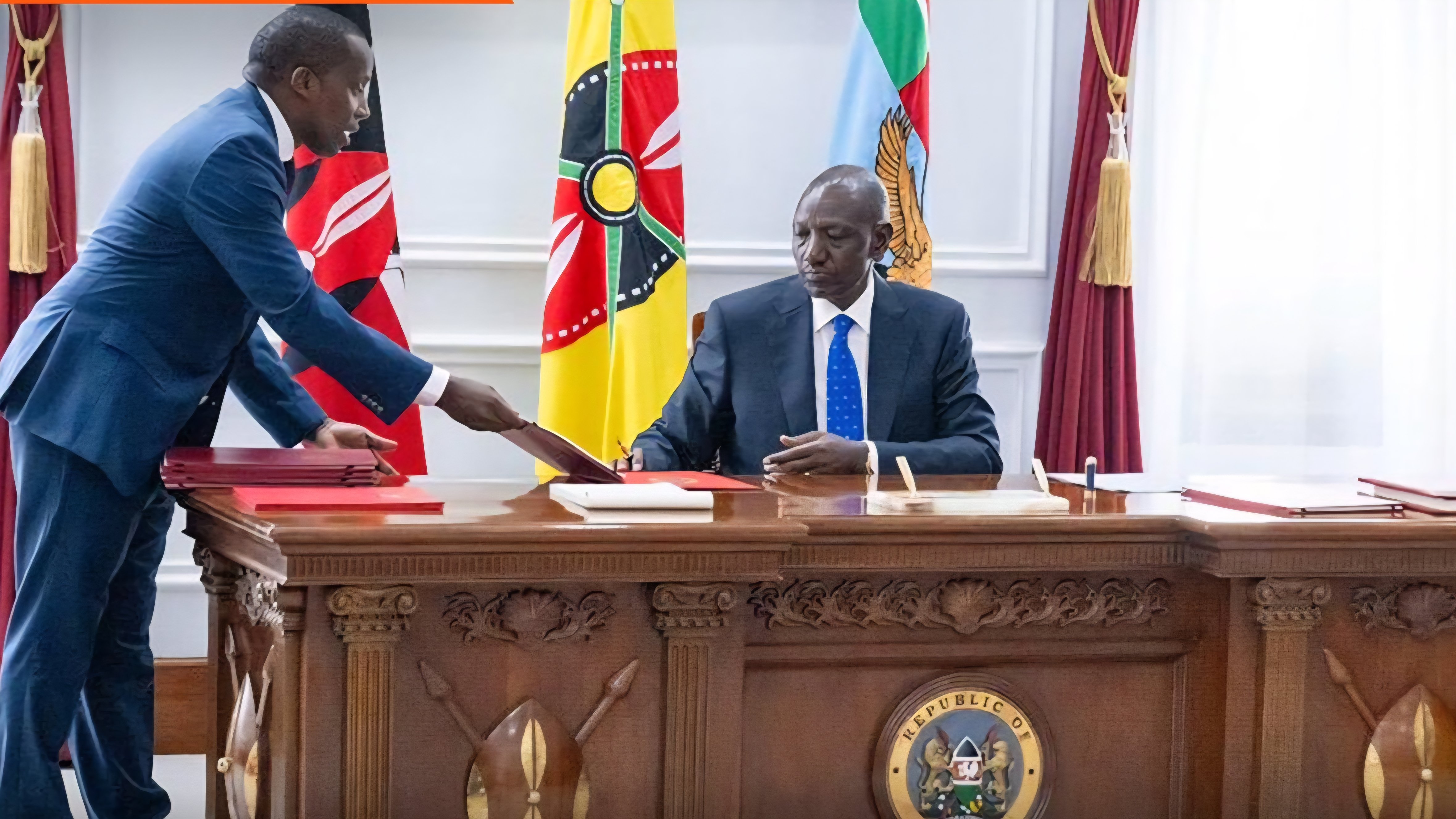

President William Ruto has announced the imminent appointment of the Governing Council for the National Infrastructure Fund, following the recent signing of the NIF Bill 2026 into law. The move is intended to operationalize a financial instrument designed to mobilize Sh5 trillion over the next decade for large-scale development projects.
Speaking at the KICC in Nairobi on Tuesday, the President confirmed that the new council will be tasked with the competitive recruitment of a board of directors. This two-tier governance structure is designed to separate policy oversight from day-to-day operations, if the fund is to meet its mandate of high-level transparency.
The National Infrastructure Fund marks a transition in how Kenya handles its most ambitious capital works. By moving from a model reliant on external borrowing to an investment-led approach, the government intends to utilize domestic pension funds, private capital, and proceeds from state asset sales to fuel development.
The initial capitalization for the fund will be sourced from the Kenya Pipeline Company's initial public offering, which recently raised Sh109 billion. This capital will act as a foundation to attract further private and institutional investment into sectors such as transport, energy, and digital connectivity.
The Governing Council will be chaired by the Cabinet Secretary for the National Treasury. Its membership includes the Governor of the Central Bank of Kenya, the Attorney-General, and six non-public officers with leadership experience in finance or public policy. These independent members will serve three-year terms.
Under the new law, the council is prohibited from interfering in the routine management of the fund. Instead, an independent board will oversee the actual execution of projects. This board must consist of professionals with at least ten years of experience in engineering, law, or finance.
Eligible projects under the NIF include national highways, railway networks, airports, and seaports. The fund also targets investments in electricity generation and transmission, alongside agribusiness infrastructure and water systems. This broad scope is intended to address the persistent financing gap that has slowed down several megaprojects.
The legislation stipulates that the NIF cannot borrow or take credit against its balance sheet, a measure intended to protect the fund from the debt traps that have historically hampered infrastructure growth. Instead, it functions as a body corporate capable of entering contracts and owning property.
During the announcement, President Ruto emphasized that the fund will be run on principles similar to those of the private sector. He stated that the recruitment processes would be rigorous, if the government is to ensure that only qualified professionals manage the Sh5 trillion kitty.
The establishment of the NIF follows months of parliamentary debate regarding oversight and executive control. Amendments introduced by the Finance and National Planning Committee were crucial in securing the fund's assets from political interference through the creation of the Governing Council as a protective layer.
As the government prepares for the first round of appointments, industry players are watching closely to see how the fund will prioritize its initial project list. With billions already raised through the Kenya Pipeline IPO, the operationalization of the NIF is expected to provide immediate momentum for stalled infrastructure works across the country.
Comments (0)
Leave a Comment
No comments yet. Be the first to share your thoughts!