
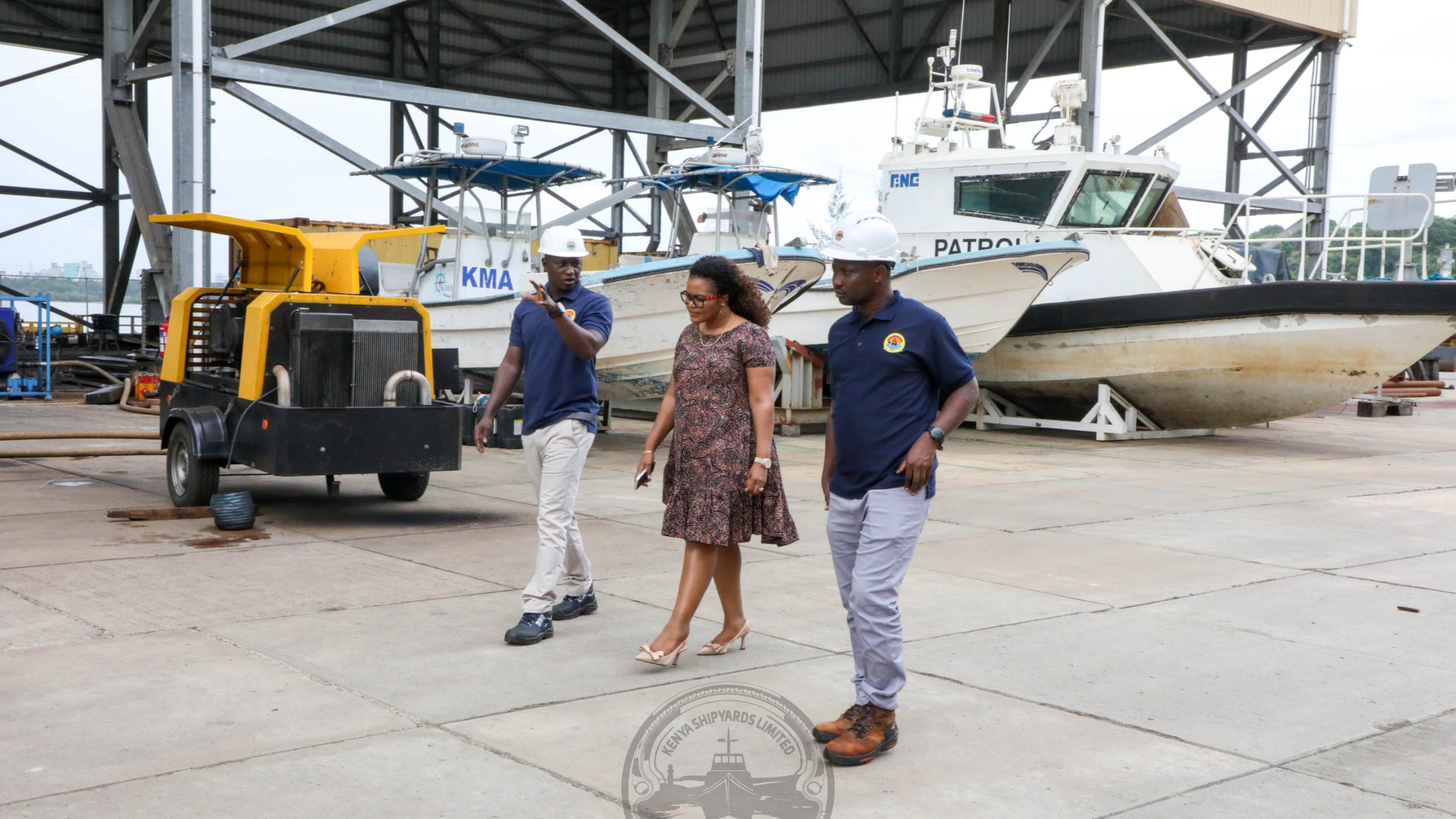

A newly appointed oversight official at Kenya Shipyards Limited (KSL) has conducted an extensive physical inspection of coastal operations. The familiarization tour signals direct board-level involvement in ongoing infrastructure updates, which remain central to national maritime strategy.
Ms. Mercy Nehema Nderitu, who represents the newest addition to the corporate leadership team, concluded her comprehensive assessment of the facility. She reviewed active maintenance bays and structural engineering divisions during the multi-hour visit.
Mombasa Yard Manager Major Stephen Nyongesa received the state delegation at the site, which sits within a tightly secured zone. The operational commander led the technical briefing, which outlined immediate capacity targets and current construction backlogs.
The executive visit follows an official gazettement by the Cabinet Secretary for Defence. The state appointment places Nderitu on the board for a fixed three-year tenure, which operates under the guidelines of the State Corporations Act.
Situated adjacent to the Kenya Navy Base (KNB) at Mtongwe, the coastal logistics hub plays an integral role in sovereign defense infrastructure. The site provides essential proximity to deep-water shipping lanes, which benefit both military and commercial fleets.
The National Security Council (NSC) initially authorized the establishment of KSL under the Ministry of Defence (MOD). The strategic framework utilizes excess workshop capacity to generate state revenue, but its primary purpose remains domestic vessel self-reliance.
The primary physical asset at the location includes a massive heavy-duty slipway. The specialized marine installation can safely winch out maritime vessels weighing up to 4,000 tonnes, which eliminates the logistical need to outsource major repairs abroad.
Technical parameters allow the yard to accommodate ships measuring up to 150 meters in length, although the draft must not exceed 6 meters. This physical capacity fits the entire current fleet of local naval defense vessels.
The yard incorporates a massive operations hangar measuring 120 meters long, but the structure also stands 20 meters high for interior clearances. The enclosure protects sensitive engineering projects from harsh maritime weather conditions during assembly.
Structural maintenance tasks are distributed across four highly specialized technical zones. The complex includes a dedicated Marine and General Engineering Workshop, and a separate Electronic Repair Workshop to handle automated navigational circuitry.
Heavy fabrication occurs inside a Fitting and Carpentry Workshop, along with a specialized Hull and Superstructure Repair Workshop. These units work in unison to execute complex structural overhauls, which match international maritime engineering standards.
Before the commissioning of these domestic yards, local naval forces relied heavily on overseas shipyards located in Spain and the Netherlands. Foreign overhauls added an estimated 15 percent in extra logistical costs, which strained national defense budgets.
The agency also manages a secondary facility in Kisumu on the shores of Lake Victoria. That inland yard specializes in fabricating fiberglass-reinforced plastic boats, which support freshwater security and commercial lake transport networks.
Current national procurement directives instruct ministries, departments, and public agencies to source maritime products from KSL. This policy ensures a steady stream of domestic orders, if the state-backed enterprise maintains competitive delivery timelines.
The familiarization tour highlights the ongoing administrative transition at the state firm, as new board members take charge of multi-billion shilling assets. Effective oversight will determine how efficiently the country manages its growing blue economy investments.
Comments (1)
Leave a Comment
Wilson Koech
Jun 20