
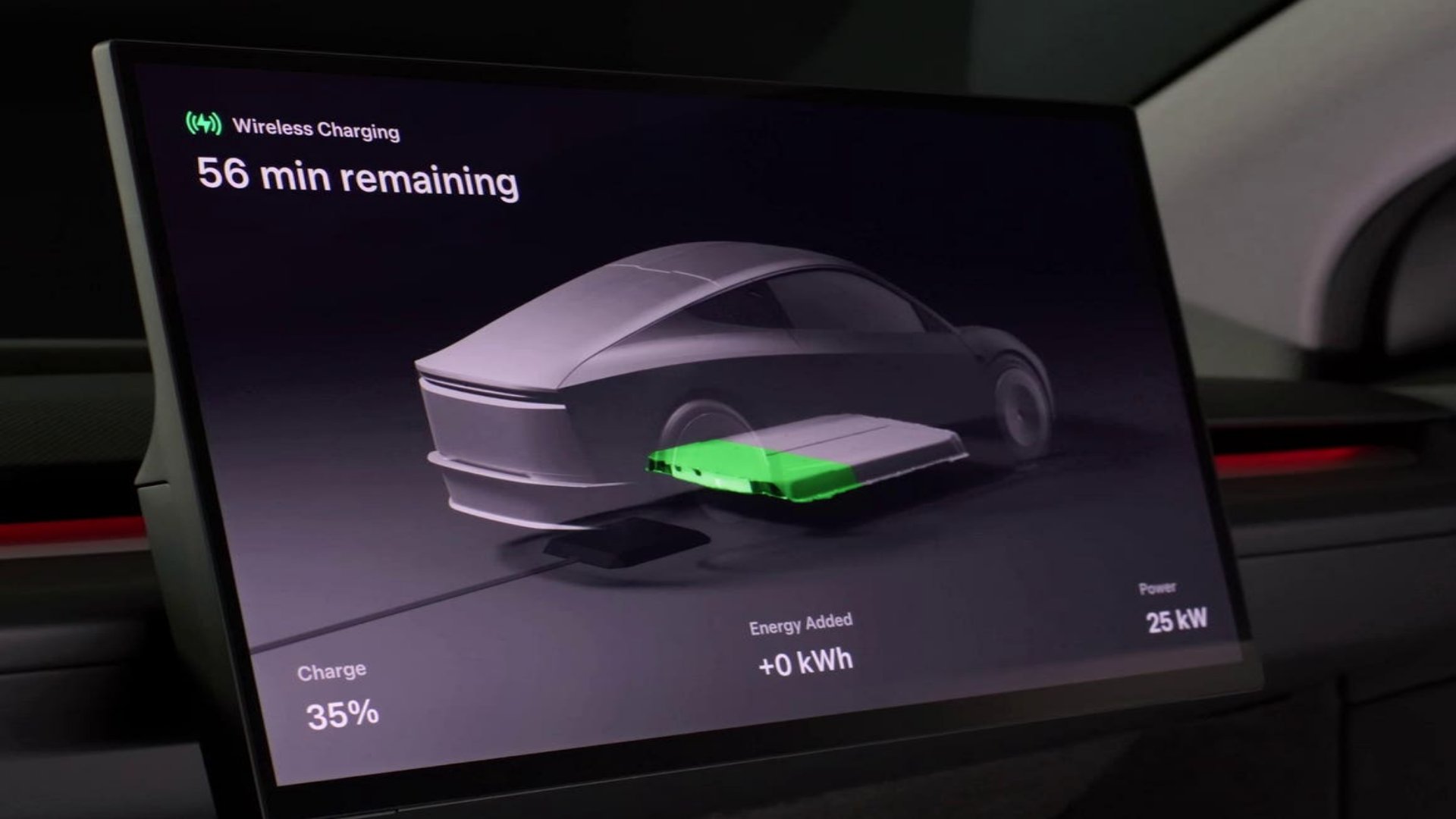

The US Federal Communications Commission (FCC) has granted Tesla a waiver to use ultra-wideband (UWB) technology in its wireless electric vehicle (EV) charging system. This decision marks a significant development in the company's efforts to advance wireless charging capabilities, which have previously been restricted for fixed outdoor equipment.
Tesla's innovative system utilizes a multi-step process for vehicle alignment and charging. Initially, the vehicle uses Bluetooth technology to locate the wireless charging pad as it approaches. Once in proximity, the UWB technology is activated to precisely align the car with the pad before the wireless charging process commences. The FCC noted that the UWB signal operates at very low power and only for brief periods during the parking process, minimizing the risk of interference with other electronic devices.
The approval of UWB technology for wireless charging is a critical component of Tesla's broader strategy for autonomous vehicles. By enabling vehicles to charge themselves without human intervention, Tesla is moving closer to its vision of fully autonomous Cybercabs. These vehicles could potentially return to a base and recharge automatically, further enhancing the efficiency and convenience of autonomous transportation systems.
The FCC's decision to grant this waiver reflects a growing recognition of the importance of wireless charging in the future of the automotive industry. As electric vehicles become more prevalent, the demand for convenient and efficient charging solutions is expected to increase. Tesla's wireless charging system, now bolstered by the use of UWB technology, offers a promising glimpse into a future where vehicles can power themselves as seamlessly as they drive.
This regulatory clearance is just one piece of Tesla's larger autonomous puzzle. The company continues to invest heavily in the development of self-driving technology and related infrastructure, with the goal of creating a fully integrated and autonomous transportation network. The successful implementation of wireless charging will be a key factor in achieving this objective, as it will allow autonomous vehicles to operate for extended periods without the need for manual recharging.
In conclusion, the FCC's approval of UWB technology for Tesla's wireless charging system is a significant development for the company and the broader automotive industry. This technology has the potential to revolutionize the way we charge our vehicles and pave the way for a more autonomous and efficient future. As Tesla continues to push the boundaries of innovation, we can expect to see even more exciting developments in the years to come.
Comments (0)
Leave a Comment
No comments yet. Be the first to share your thoughts!