
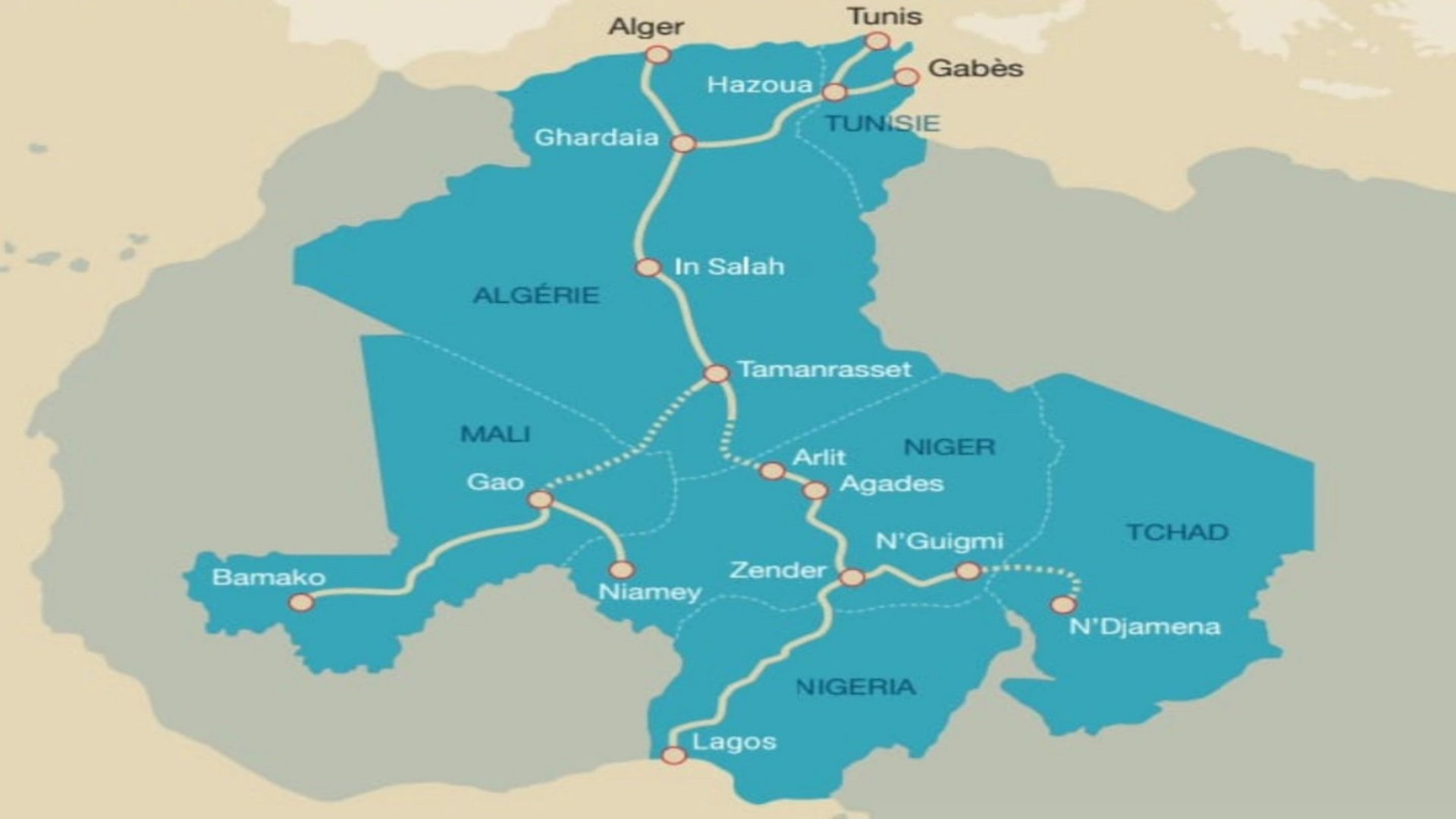

Algeria has finished work on its 2,400-kilometer section of the Trans-Saharan Highway (TSH), bringing a decades-long engineering effort in northern Africa closer to full completion.
The completed national segment establishes a direct paved link running from Mediterranean port facilities through desert terrain to the country’s southern borders.
The infrastructure initiative required a total capital outlay of approximately 2.6 billion USD from the Algerian state. Heavy earthworks and paving operations across extreme desert landscapes formed the bulk of engineering challenges along the corridor.
Contractors applied specialized weather-resistant asphalt mix designs along the alignment. Engineers engineered the pavement layers to withstand extreme desert surface temperatures exceeding 50 degrees Celsius without structural rutting, bleeding, or premature thermal cracking.
The completed section forms the northern backbone of the broader Trans-Saharan Road Corridor (TSR), also historically referred to as the African Unity Road.
The total transnational network spans roughly 9,400 kilometers when accounting for primary routes and regional feeder links connecting six partner nations.
The six countries involved in the corridor project include Algeria, Tunisia, Mali, Niger, Chad, and Nigeria. Together, these member states represent roughly a quarter of the continent's total population and gross domestic product.
By providing a fully paved heavy-freight corridor to the border, Algeria aims to facilitate direct freight transport between sub-Saharan markets and Mediterranean shipping terminals.
The completed road provides landlocked nations in the Sahel region with a viable overland route to coastal ports, reducing reliance on longer maritime transit routes.
The broader multi-nation highway network aligns with long-term infrastructure goals framed under the African Continental Free Trade Area (AfCFTA).
Regional planners anticipate that seamless road links across the Sahara will lower cross-border logistics costs and expand intra-African commercial exchange.
While Algeria has finished its designated stretch, neighboring border nations continue working to complete their remaining unpaved gaps along the transnational alignment.
Infrastructure agencies across member states continue coordinating through regional technical committees to align border post operations and finalize remaining construction packages.
Comments (0)
Leave a Comment
No comments yet. Be the first to share your thoughts!