


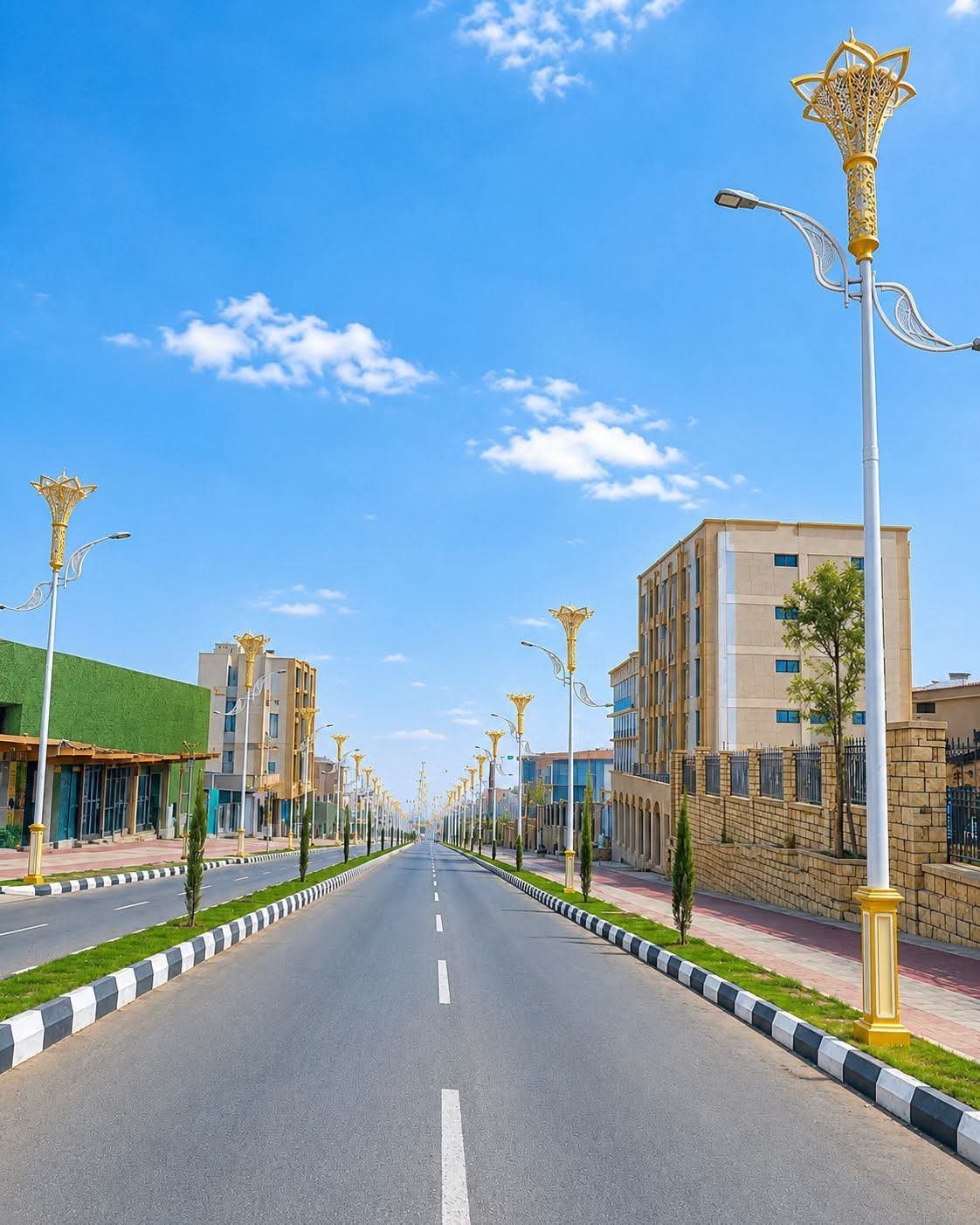
Images displaying immaculate paved avenues and decorative streetlights in Harar have triggered widespread discussions across regional social networks. Commentators are questioning how the eastern Ethiopian town maintains such high standards of urban cleanliness, when many regional centers struggle with basic waste management.
The visual showcase depicts wide asphalt corridors free of litter, framed by gold-toned lighting poles that illuminate night thoroughfares. Municipal authorities in the historic town have been expanding localized infrastructure works, which focus on systematic waste management, roadside drainage, and public lighting upgrades.
Much of the visible progress stems from broader national urban initiatives coordinated through the Ministry of Water and Energy (MoWE). Public sanitation schemes across secondary Ethiopian cities have received dedicated technical backing, which aims to modernize local civic services and improve overall public health.
In Harar, direct administrative oversight falls under the Harar Water Supply and Sewerage Authority (HWSSA). The municipal agency has overseen civil works projects aimed at expanding community toilets, constructing secondary drainage networks, and implementing structured solid waste disposal protocols throughout commercial sectors.
Financing support from global multilateral institutions, including the World Bank (WB), helped fund critical urban sanitation infrastructure in recent years. Funds channeled via the International Development Association (IDA) enabled local engineering firms to construct modern sanitation facilities, while improving local capacity to process organic waste.
These ongoing civic investments complement earlier utility projects backed by the African Development Bank (AfDB) to secure regional bulk water pipelines. Sustained infrastructure funding allowed city managers to address structural sanitation deficiencies, which previously created significant environmental hazards in heavily populated residential areas.
Local micro-enterprises play a direct role in maintaining daily hygiene along major thoroughfares, when dedicated civic crews clear debris before morning traffic starts. Community organizations manage public facilities, which creates steady employment opportunities for women, while ensuring that public spaces remain neat and welcoming.
By integrating formal waste collection with structured street maintenance, municipal directors keep primary arterial roads orderly. The visible outcome is a bright street network, where routine sweeping prevents trash accumulation along asphalt curbs, pedestrian pathways, and commercial storefronts.
Regional civil engineers note that maintaining pristine urban corridors requires heavy capital investment combined with rigorous daily enforcement. When municipal infrastructure systems operate effectively, public spaces stay clean, even as vehicle traffic and pedestrian volume increase during busy commercial hours.
The success in Harar has drawn keen attention from municipal planning teams across East Africa, who seek practical templates for secondary city development. Engineering consultants often highlight the town as clear evidence that medium-sized urban centers can achieve world-class maintenance standards through disciplined administration.
Journalists and civic leaders observe that urban clean-up campaigns must pair capital construction expenditure with strict operational protocols. Without continuous maintenance, newly asphalted highways quickly deteriorate under heavy vehicle loads, intense pedestrian traffic, and unmanaged roadside refuse that clogs drainage.
Harar demonstrates how targeted infrastructure investments, when backed by organized waste collection, directly transform public perception. Civic managers in neighbouring nations are studying these operational strategies, hoping to replicate similar street-level results within their own rapidly growing municipalities.
As urban populations expand across the region, effective civic governance will depend heavily on consistent maintenance schedules, functional drainage systems, and adequate lighting. Harar proves that well-executed civil engineering projects, if supported by continuous municipal management, produce clean and resilient urban environments.
Comments (0)
Leave a Comment
No comments yet. Be the first to share your thoughts!