

A version of this article was posted on X by Object Zero.
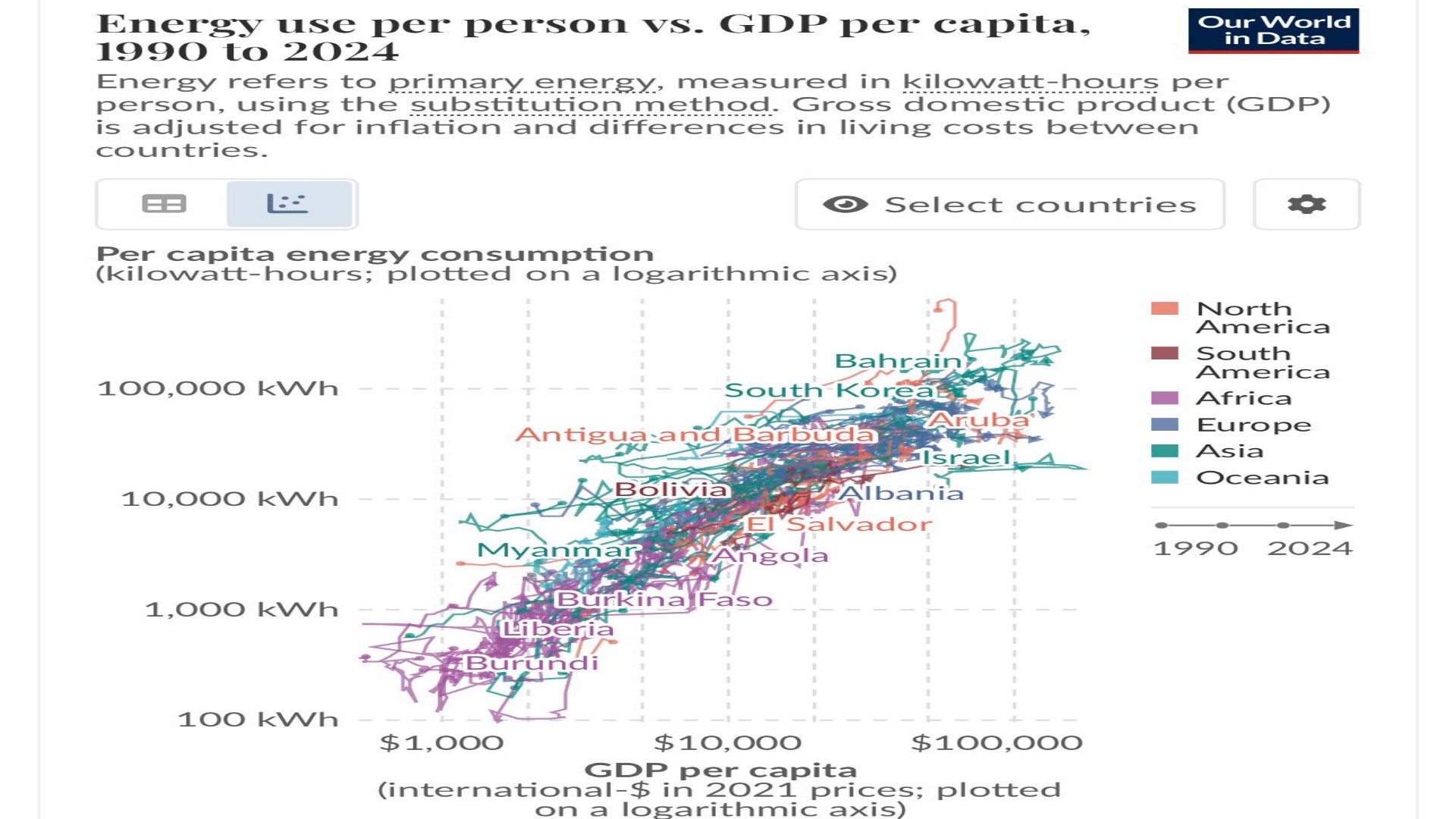
Analysis of long-term economic data indicates that primary energy consumption scales directly with economic output across international markets.
Recent figures published by research platforms show how per-capita energy use aligns closely with gross domestic product. Experts note that historical data spanning decades demonstrates this steady correlation despite changes in governance and industrial technology.
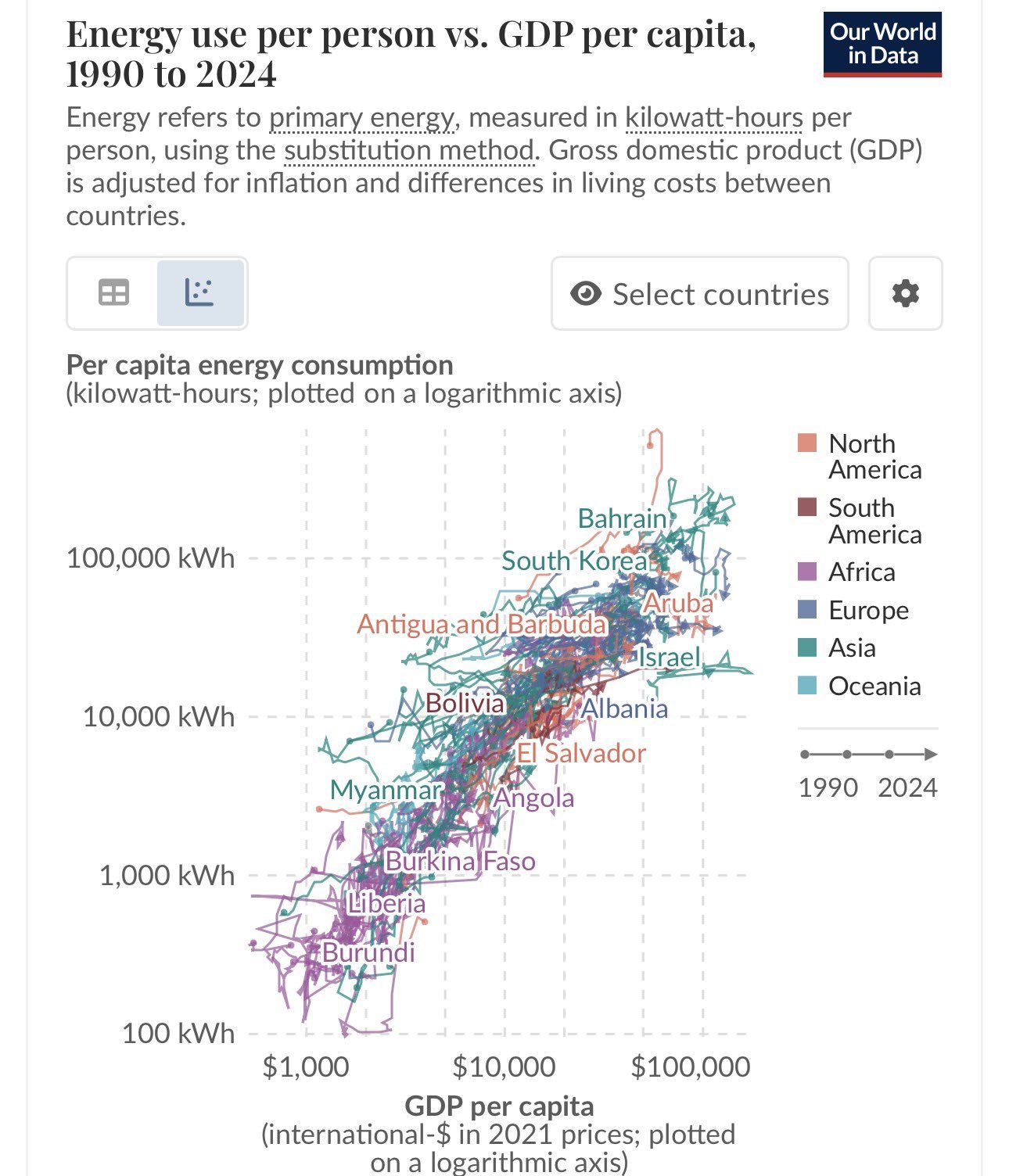
Global output currently averages roughly seventy-two thousand kilowatt-hours per person, while gross domestic product per capita sits near sixteen thousand dollars.
Energy historically accounts for roughly five to ten percent of gross domestic product, anchoring industrial demand. When societies adopt new technologies, overall energy requirements expand across commercial sectors.
Historical industrial shifts show how technological innovations initially widen consumption gaps between regions. During the steam and electric revolutions, leading economies pulled ahead while other regions lagged behind.
Modern trends suggest that emerging markets consuming lower amounts of energy per capita face distinct economic opportunities as global demand shifts.
Analysts observe that countries positioned in lower consumption tiers often experience rapid energy growth and gross domestic product expansion.
This catches up older baselines over extended periods. Macroeconomic data confirms that primary energy remains foundational for industrial expansion and standard of living improvements worldwide.
Observers track these metrics closely to forecast future infrastructure requirements.
Comments (0)
Leave a Comment
No comments yet. Be the first to share your thoughts!