

Nairobi County Executive approved Phase One of Nairobi Metropolitan Mass Rapid Transit System (NMRTS). The initiative introduces Kenya's first underground railway running beneath capital's Central Business District (CBD).
Development carries an estimated cost of Ksh1 trillion, with national government expected to contribute Ksh388 billion. County authorities are establishing a dedicated Project Management Unit (PMU) to direct construction works.
Initial phase targets high-density commuter corridors linking city center with Eastlands residential areas. Underground tunnel works will later extend network toward Westlands and Upper Hill districts.
Second phase will expand transit network along Ngong Road and Lang'ata Road. Expansion plans aim to cut commuting times across capital, which suffers severe daily gridlocks.
Feasibility studies were completed alongside Japan International Cooperation Agency (JICA) and technical experts from China. Engineers demonstrated underground tunnelling viability at Haile Selassie and Uhuru Highway junction.
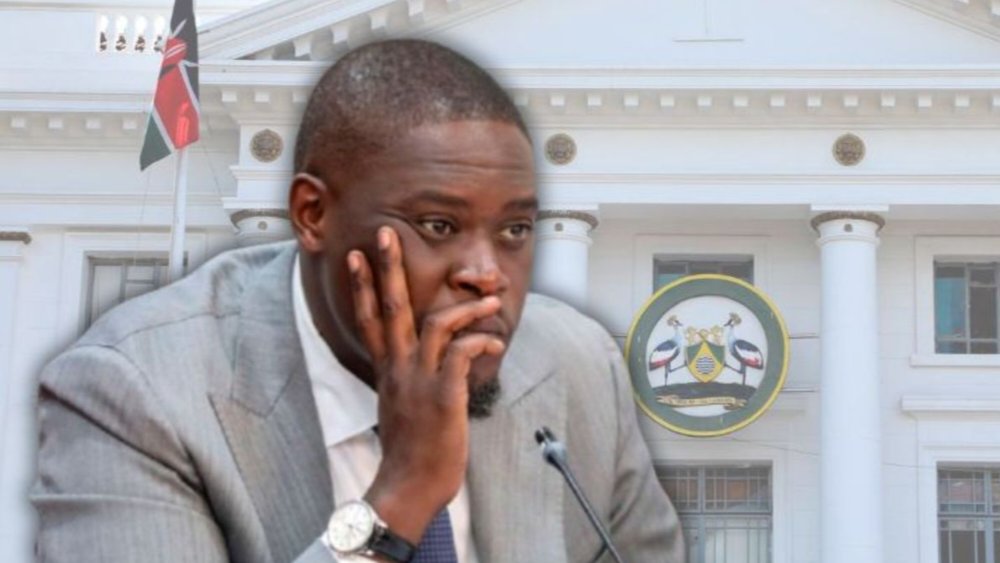
Governor Johnson Sakaja briefed Senate Committee on National Security, Defence and Foreign Relations regarding approved plans. He noted city planners first conceptualised underground rail links for Nairobi in 1948.
Colonial-era master plans proposed a ring railway and underground links, but funding constraints halted progress. Later recommendations in 1972 reinforced need for integrated transport corridors.
The project integrates underground metro lines, suburban rail, Bus Rapid Transit (BRT), and Non-Motorised Transport (NMT) networks. Unified system creates multimodal transport infrastructure across Nairobi.
County officials anticipate station areas will trigger Transit-Oriented Development (TOD) and attract private investments. Rising land values around planned transit nodes form key part of economic strategy.
Executive Office of the President, led by President William Ruto, collaborated with county officials over three years to refine project blueprint. Coordination meetings included representatives from Ministry of Roads and Transport.
Tunnelling beneath established urban centres involves complex engineering, including installation of specialized ventilation and emergency evacuation channels. Project engineers must also navigate existing utilities and complex geological conditions.
Modern signalling technology and automated train control systems will be fitted throughout underground network. High-capacity rolling stock will move thousands of commuters daily between city center and surrounding suburbs.
Drainage infrastructure will be upgraded beneath subterranean corridors,, as heavy rainfall requires robust flood prevention. Construction teams will deploy specialized tunnel boring machines to excavate deep rock layers.
Intermodal hubs will allow passengers to switch seamlessly between underground rail lines, surface buses, and pedestrian pathways. Integrated ticketing systems will streamline operations across all transit modes.
Transport planners emphasize that underground rail reduces surface traffic, which currently costs local economy millions daily. Reduced congestion will lower vehicle emissions and improve urban air quality.
Legislative frameworks are being finalized by Nairobi County Assembly to govern private sector participation and land use. Clear legal guidelines will protect public funds, while encouraging private capital investments.
Project team will now proceed with detailed engineering designs, while finalizing financing agreements with external partners. Mass transit operations represent fundamental shift in capital city transport strategy.
Comments (0)
Leave a Comment
No comments yet. Be the first to share your thoughts!