
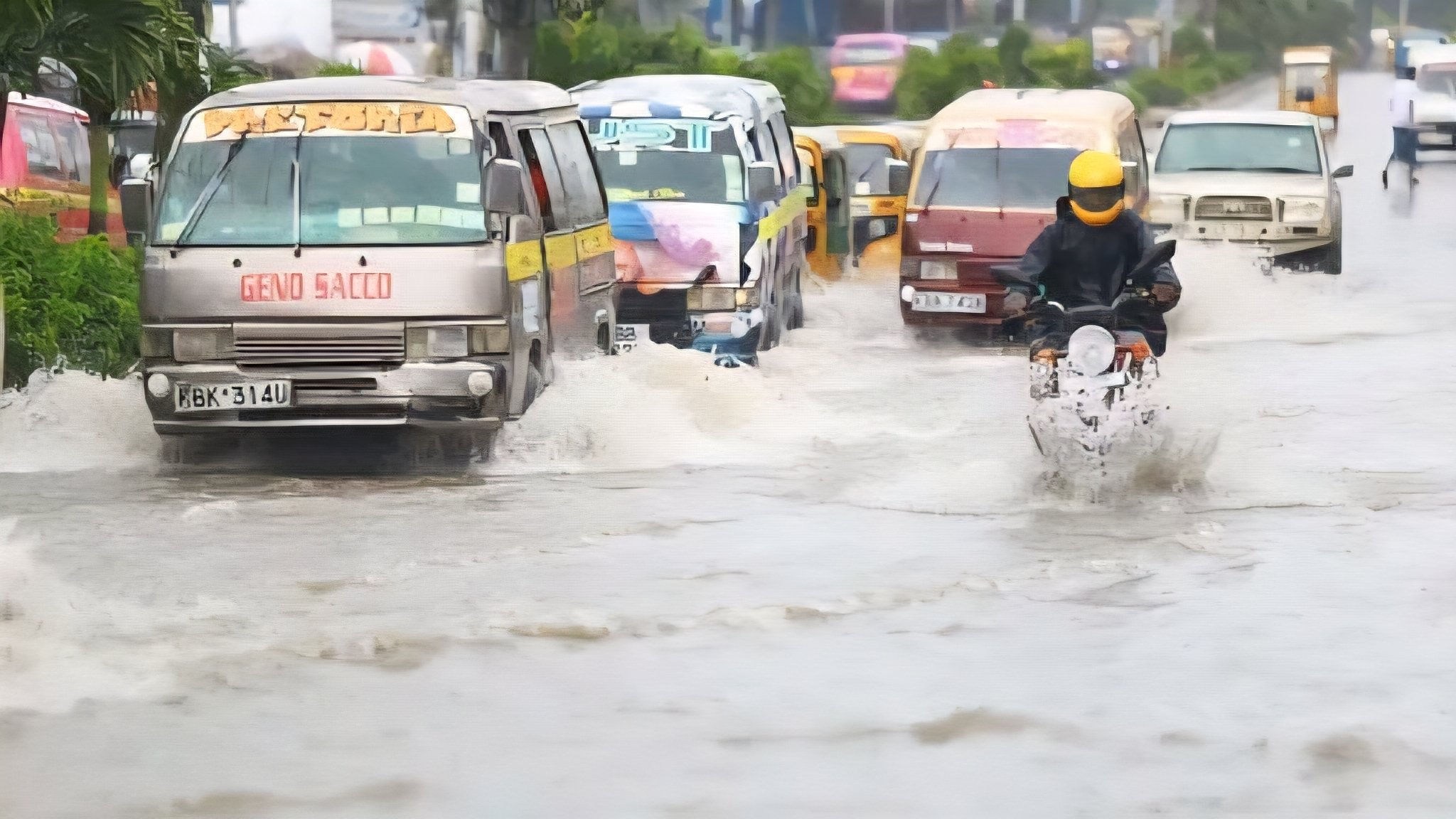

Climate experts have warned that the anticipated El Niño season during the October to December 2026 short rains could significantly raise flood risks across Kenya. The phenomenon threatens to cause severe displacement in several regions.
According to the Kenya Meteorological Service Authority (KMSA), a combination of a strong El Niño and a positive Indian Ocean Dipole (IOD) will likely cause an early onset of heavy rainfall. Torrential downpours are expected to overwhelm existing infrastructure.
Meteorological forecasts indicate that intense downpours will produce rapid surface runoff, leading to widespread flash floods, riverine flooding, and lake backflow. Vulnerable communities residing in floodplains and low-lying areas face severe exposure.
Counties flagged at heightened risk include Homa Bay, Kisumu, and Nakuru. These areas historically suffer severe inundation, when major lake basins and river systems overflow during heavy rain seasons.
Urban centers face elevated danger, because inadequate drainage capacity frequently leads to submerged roads and structural damage. Municipal authorities are reviewing stormwater management networks, but existing channels remain highly vulnerable to sudden overflow.
Civic engineers warn that key transport corridors maintained by the Kenya National Highways Authority (KeNHA) could experience significant disruption. Unchecked stormwater threatens critical bridges, culverts, and secondary access roads across rural constituencies.
In urban centers, road networks managed by the Kenya Urban Roads Authority (KURA) also require urgent clearance. Silted drainage ditches and blocked culverts frequently turn primary transit routes into impassable waterways during sudden torrents.
Water infrastructure management lies heavily with the National Water Harvesting and Storage Authority (NWHSA), which continues monitoring major river basins. Existing dykes along the Nyando and Kuja rivers require urgent reinforcement to contain rising waters.
The combined climate conditions mirror previous historical weather patterns that brought severe destruction to East Africa. During prior heavy rainfall cycles, overflowing riverbanks inundated thousands of acres of farmland and destroyed crucial public utilities.
Government emergency response teams are now coordinating with local county disaster committees to prepare evacuation centers. Authorities emphasize early planning, as rapid displacement often leaves families without shelter, clean water, or emergency medical supplies.
Health officials have alerted regional hospitals to prepare for potential outbreaks of waterborne diseases. Stagnant floodwaters create ideal conditions for cholera and malaria, which usually surge following prolonged inundation in informal settlements.
President Ruto has previously directed government ministries to prioritize climate adaptation programs and disaster preparedness. National agencies are working to allocate emergency funding to reinforce flood mitigation barriers before the rains begin.
Contractors working on major infrastructure projects across the country are adjusting site schedules to mitigate severe weather delays. Heavy earthmoving machinery and exposed excavation sites remain particularly vulnerable to flash flooding during intense storms.
County authorities in western Kenya are advising families living along riparian zones to relocate to higher ground immediately. Early voluntary movement remains essential to preventing loss of life, when rivers burst their banks without warning.
Disaster management experts stress that proactive civil engineering and clear community communication remain the most effective defenses against extreme weather. Timely intervention could mean the difference between minor localized disruption and widespread disaster.
Comments (0)
Leave a Comment
No comments yet. Be the first to share your thoughts!