
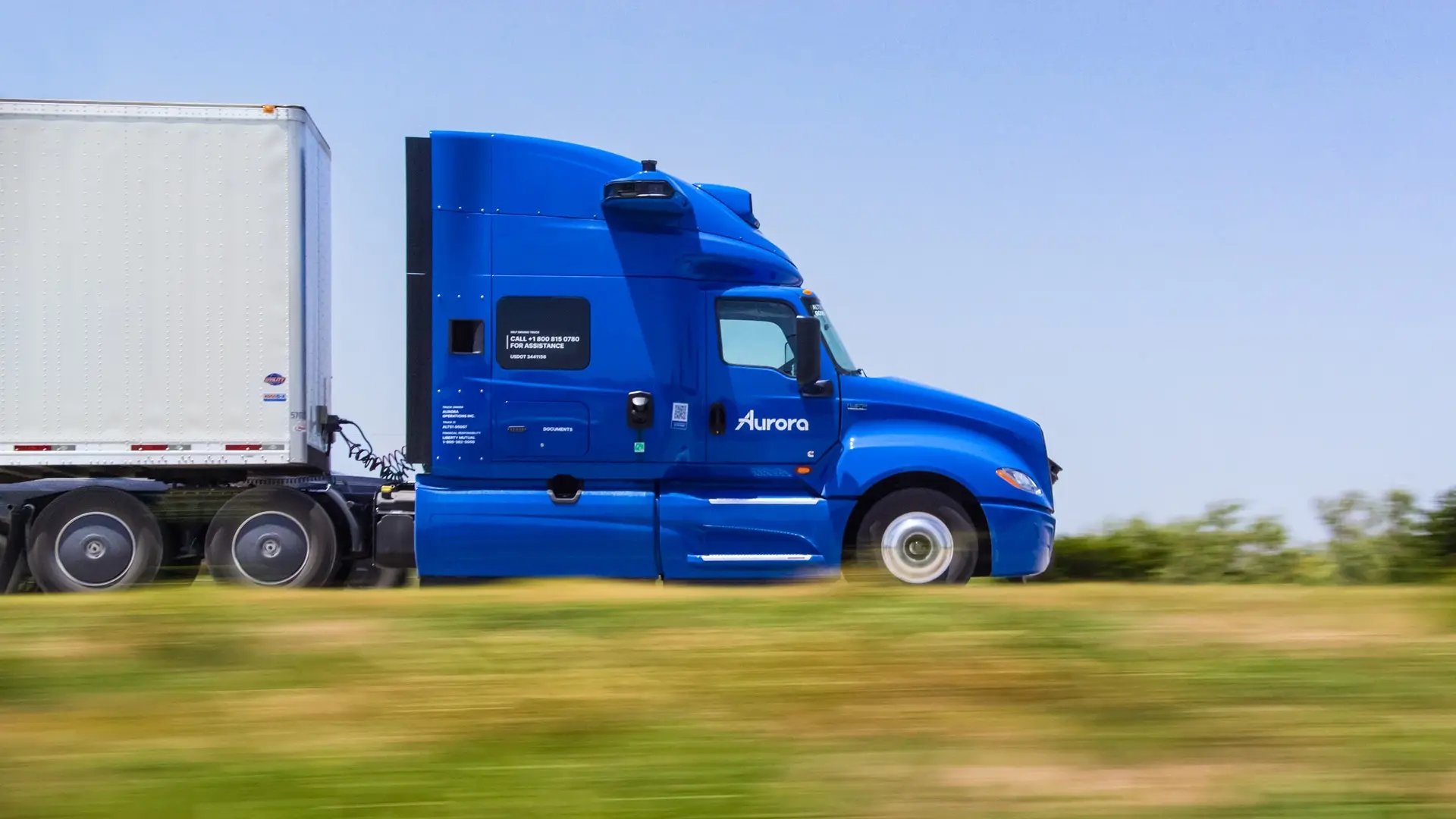

Aurora Innovation has deployed its second-generation driverless Class 8 trucks across commercial freight lanes in the United States (U.S.). The heavy trucks feature autonomous hardware rated for a one-million-mile service lifespan.
Built on the International LT Series vehicle platform, the updated fleet integrates specialized hardware designed for large-scale driverless operations. Assemblies take place in partnership with product development supplier Roush.
Chief Executive Officer (CEO) Chris Urmson confirmed the platform provides the infrastructure required for broader commercial deployment. Initial deployments follow the completion of internal safety evaluations for ten active freight corridors.
The long-haul trucks rely on upgraded sensor suites to navigate highway traffic without a human driver inside the cabin. Forward-facing Light Detection and Ranging (LIDAR) sensors detect objects up to half a mile away during bright daylight or night conditions.
An automated cleaning system uses targeted air and water jets to clear dirt from external lenses during bad weather. The system maintains visual field clarity, which allows onboard control systems to process route conditions continuously.
An onboard computing unit running Nvidia processors computes sensor inputs to render driving decisions in milliseconds. The computer operates with redundant backup systems, and it fits within a chassis forty percent smaller than previous models.
Contract logistics firm Hirschbach Motor Lines recently placed a commercial order for 500 autonomous trucks fitted with the technology. Production goals target an annual integration rate of 1,000 trucks at Roush assembly facilities by year end.
Autonomous Class 8 trucks have completed nearly 440,000 driverless miles across public roads through late June. Commercial fleets plan to run these long-distance vehicles continuously on long-haul routes, which reduces required transit delays.
Eliminating mandatory rest stops allows long-distance freight journeys to proceed without extended idle periods along transport corridors. On standard interstate routes between Texas and Arizona, delivery schedules decrease by up to forty percent.
Fleet operations using driverless configurations can effectively double total revenue generation per vehicle through continuous usage. Hardware durability targets of one million miles ensure trucks withstand heavy highway vibrations, dust, and temperature shifts.
Commercial deployment expansion across the Sun Belt network aligns with growing freight infrastructure demand. Freight operators continue adopting autonomous transport systems to handle regional haulage requirements along heavy freight corridors.
Contractors and logistics operators view extended hardware life as critical for lowering long-term maintenance costs. Reduced capital replacement frequencies provide stable operational planning for regional commercial freight networks.
The system undergoes rigorous validation tests before entering regular service without safety drivers. Comprehensive safety reviews evaluate vehicle braking, steering, and emergency stop protocols before full commercial release.
Manufacturing operations will scale over coming months as upfit facilities increase weekly vehicle builds. Continued vehicle deliveries will support expanded freight services across high-volume trade lanes throughout the country.
Logistics networks across key freight hubs expect faster turnaround times for high-volume cargo shipments. Industry observers monitor how driverless fleet integration impacts national supply chain efficiency and long-haul transport economics.
Comments (0)
Leave a Comment
No comments yet. Be the first to share your thoughts!