

A version of this article appeared on TED.
Former National Aeronautics and Space Administration (NASA) engineer and prominent content creator Mark Rober has unveiled a multi-million-dollar educational initiative designed to rewrite how science is taught in primary and secondary schools. The project represents a significant private investment into public education infrastructure, focusing heavily on hands-on engagement.
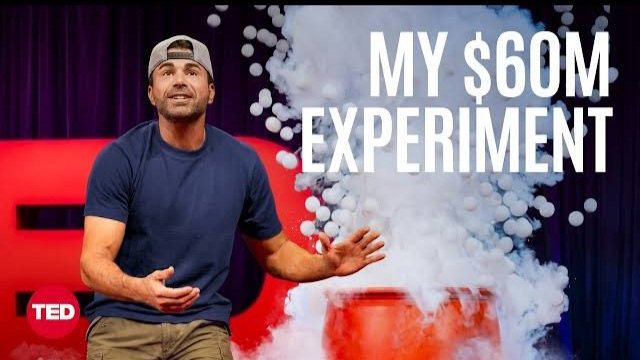
Speaking at a recent conference, Rober announced that his team has spent two and a half years developing a comprehensive science curriculum targeting students from grade three through grade eight. The entire development process is projected to span four years, with a total estimated cost of 60 million dollars.
The initiative aims to address what Rober calls the science motivation gap in modern classrooms. Traditional teaching methods often rely heavily on memorisation and textbook equations, which can alienate students accustomed to fast-paced digital media. The new program seeks to reverse this trend by grounding scientific concepts in highly visual, memorable demonstrations.
The curriculum is being designed by a team of roughly 50 specialists, including some of the top science educators in the United States. The program includes fully produced instructional videos, clean classroom slide decks, and curated live demonstrations that teachers can execute using everyday items already present in typical school facilities.
Initial testing of the material has already yielded positive feedback from educators within pilot programs. According to project data, 95 percent of teachers who participated in the pilot lessons stated they would adopt the program as their full science curriculum if given the option.
Rober confirmed that all lesson plans, teacher training materials, and original classroom demonstrations will be distributed entirely free of charge to schools. The funding model ensures that resource-strapped educational facilities will not face budget hurdles to access the materials, a move aimed directly at supporting underfunded public school classrooms.
The curriculum has been mapped out to meet and exceed current state science standards, ensuring that academic rigor is maintained despite the non-traditional delivery methods. Portions of the video library and lesson frameworks have already been released to the public, with the remaining components scheduled for rolling deployment as development concludes over the next few years.
Comments (0)
Leave a Comment
No comments yet. Be the first to share your thoughts!