
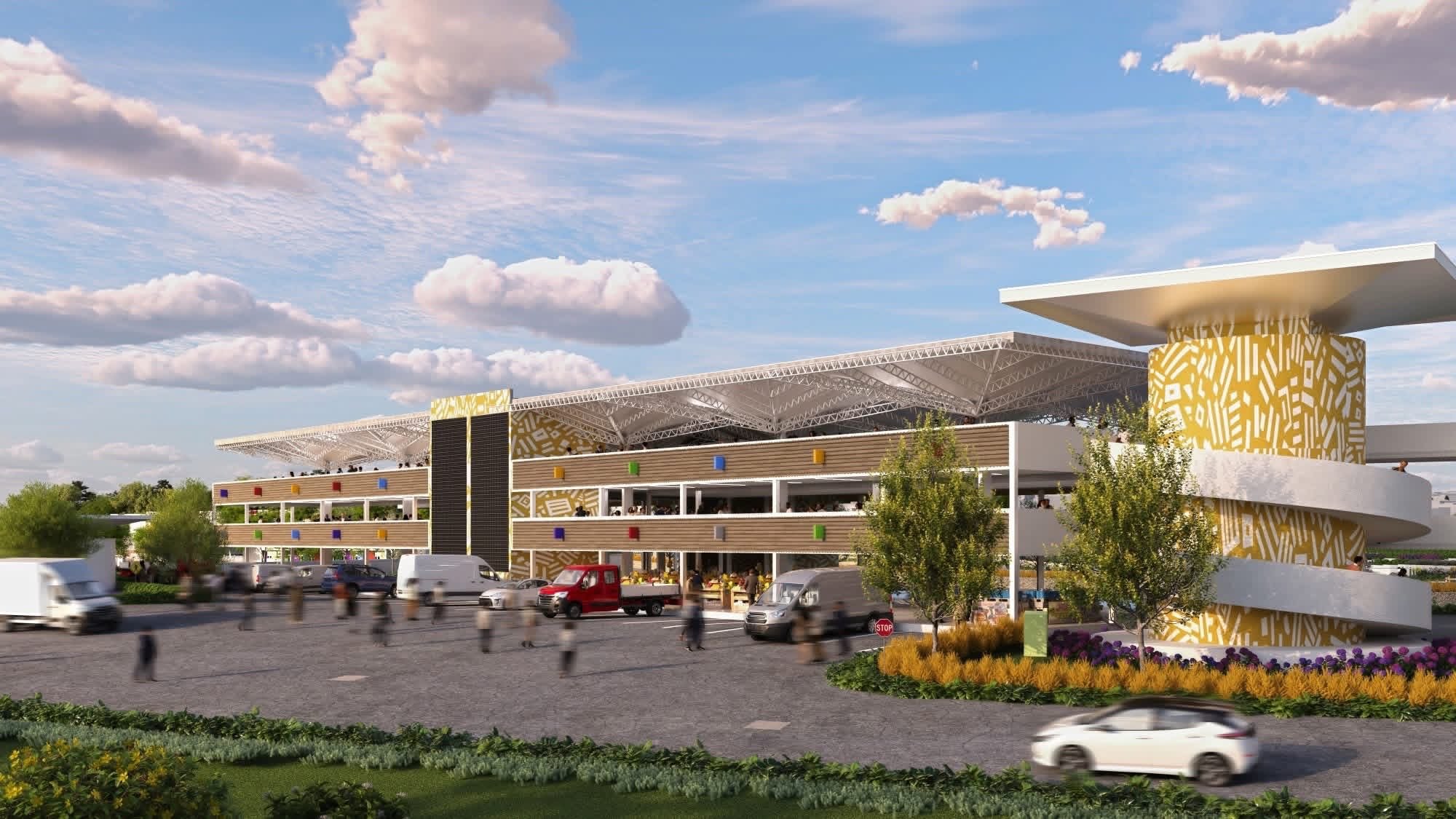

The government has advanced its urban renewal drive across Nairobi through the multi-billion redevelopment of Gikomba Market, targeting inclusive economic access for all traders.
Public commentary following new facility designs highlights shifting administrative policy toward equitable stall allocation.
Commentator Cornelius K. Ronoh noted that the new facility will serve all businesspeople without ethnic bias, reflecting broader public calls for commercial equity.
Urban planners argue that previous allocation systems restricted fair participation within central trading hubs, which limited growth.
The project falls under the State Department for Housing and Urban Development (SDHUD), which oversees the Sh5 billion facility along the river corridor.
Construction crews have already erected multi-level commercial blocks designed to replace informal timber structures destroyed in past fires.
Engineers designed the market complex to integrate modern amenities, including dedicated waste collection centers, daycare spaces, and elevated trading halls.
Architectural renderings also depict integrated recreational sports fields and landscaped public parks running parallel to the revived waterway, which enhances urban aesthetics.
Beyond Gikomba, civic stakeholders urge the Nairobi City County (NCC) leadership to extend similar infrastructure upgrades to nearby commercial sectors. Calls to modernize Muthurwa Market and rehabilitate River Road reflect growing pressure for comprehensive Central Business District (CBD) urban upgrades.
City authorities registered over 6,300 traders who were relocated to temporary sites, allowing heavy machinery to clear the riverbank area safely. Officials confirmed that affected business owners retain priority rights when allocating completed spaces inside the new multi-story complex, when operations commence.
Contractors working on the initial phase report significant progress on reinforced concrete foundations, drainage networks, and perimeter access roads.
Workers maintain continuous shifts, accumulating thousands of man-hours to keep construction strictly on schedule, although wet weather presents logistical challenges.
President Ruto recently inspected the site, emphasizing that public infrastructure projects must prioritize safety and economic inclusion for small businesses.
Government officials reaffirmed that the facility will feature improved lighting and modern fire suppression systems, which will mitigate future fire outbreaks.
Civil engineering teams are constructing wide access ramps, spiral vehicular parking structures, and covered loading bays to streamline market logistics.
Transport planners expect these structural features to reduce severe traffic congestion along surrounding city arterial routes, where heavy delivery trucks currently block traffic.
The comprehensive overhaul aligns with the broader Nairobi River Regeneration Programme (NRRP), which targets environmental rehabilitation alongside physical commercial infrastructure.
Work continues across multiple phases, while contractors finalize structural framing on the primary multi-story retail blocks.
Traders operating in temporary holding areas continue monitoring site progress, anticipating their eventual transition into the modern multi-tier structure.
Municipal inspectors schedule weekly evaluations to ensure structural safety standards remain compliant, before the facility opens for public trading later this year.
Urban development authorities maintain that establishing modern commercial facilities along the riverbank protects ecological buffers from further encroachment. Environmental engineers continue clearing riverbed silt to improve water flow alongside ongoing structural foundations.
City planners anticipate that successful completion of the Gikomba project will establish a clear technical model for upgrading adjacent informal markets.
Systematic infrastructure investment remains central to managing rapid urbanization, if Nairobi aims to maintain orderly economic growth.
Comments (0)
Leave a Comment
No comments yet. Be the first to share your thoughts!