
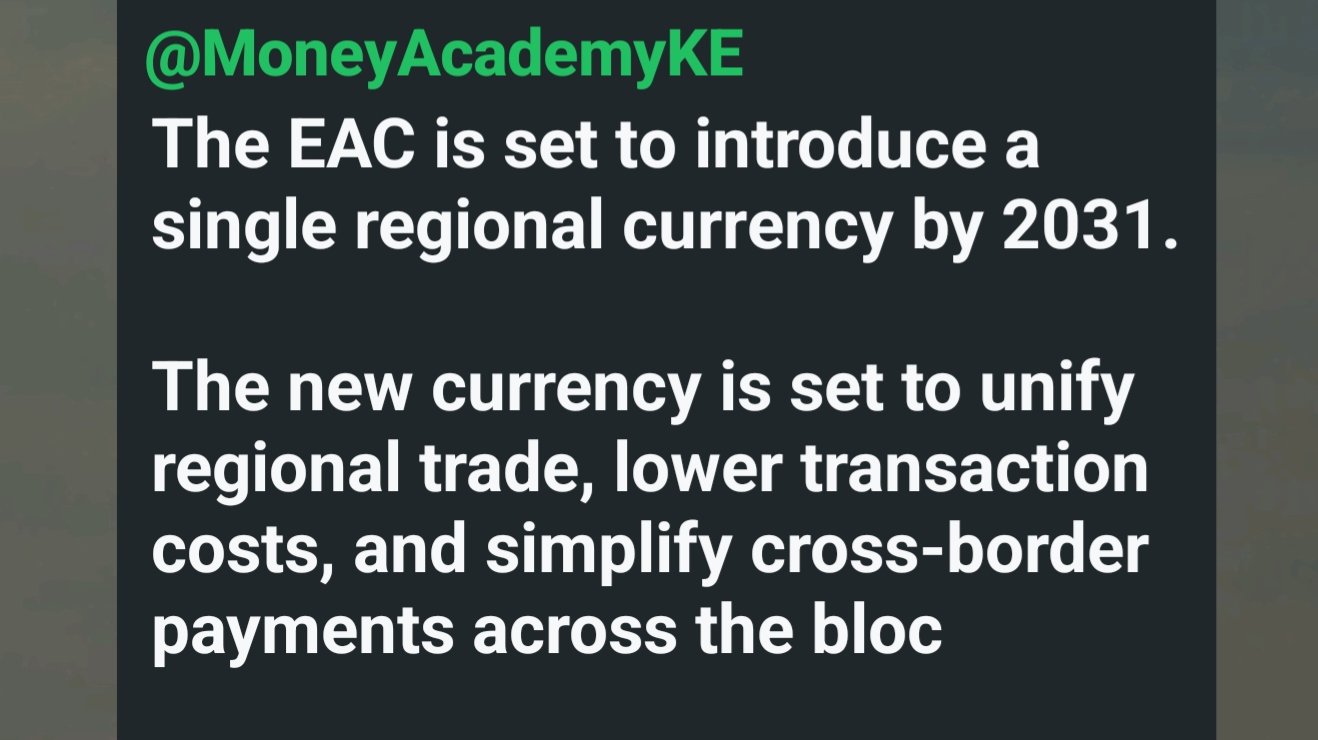

The East African Community (EAC) plans to introduce a single regional currency by the year 2031. This monetary shift will unify regional trade by eliminating the need for multiple currency conversions. Member states are aligning macro-economic policies, if they hope to meet this deadline.
A primary objective of the new currency is to lower transaction costs for businesses, who operate across borders. Currently, large infrastructure contractors face severe financial friction, when sourcing regional materials.
The financial integration will simplify cross-border payments across the bloc. Managing multiple regional supply chains is difficult, although, it becomes easier with standard tenders. A common currency ensures that payments for materials and labor move predictably between jurisdictions.
The 2031 target was recently shared by financial commentators, including MoneyAcademyKE on the social media platform X. Regional central banks have publicly confirmed this updated timeline, when holding recent monetary committee meetings in the region.
Infrastructure development across East Africa relies on predictable financing and stable procurement systems. A Kenyan contractor building a road in Uganda faces fluctuating local shillings against the dollar, which complicates project estimates. The planned unified currency offers a clear solution, if properly implemented.
Delays have previously affected the implementation of the common currency. Global economic disruptions, including the recent pandemic and international supply chain constraints, forced the bloc to revise scheduled plans. The eight member states must now demonstrate sustained fiscal discipline, although this process remains challenging.
Achieving this monetary convergence requires strict adherence to inflation caps and debt ceilings. Central banks from Kenya, Uganda, Tanzania, Rwanda, Burundi, South Sudan, Somalia, and the Democratic Republic of the Congo (DRC) are participating in these preparations. Uneven economic growth remains a significant obstacle for the region.
For the construction sector, the single currency will facilitate joint infrastructure ventures like the Standard Gauge Railway (SGR) extensions. Bidding for multinational contracts becomes straightforward, when tender documents use a standardized financial metric.
Contractors will no longer need complex hedging strategies, if they want to protect their profit margins from sudden devaluation. Lowering transaction costs directly impacts the cost of raw materials such as cement, steel, and timber. Suppliers currently factor exchange rate risks into final pricing.
Stabilizing these essential expenses will likely reduce the overall capital required for both public and private building projects. Real estate developers can accurately forecast their long-term expenditure, without worrying about sudden currency depreciation artificially inflating their heavy material costs mid-project.
The regional bloc aims to deepen the existing customs union and common market protocols, before fully launching the final monetary union. Simplifying cross-border payments across the bloc serves as a critical foundation for broader economic cohesion.
Authorities are already modernizing regional payment systems, if they are to handle the eventual transition to the new money. Successful implementation of the 2031 objective depends heavily on political will and institutional readiness.
The EAC Secretariat continues to monitor these developments, although individual countries manage their foreign reserves independently. Financial experts maintain that establishing independent regulatory bodies is absolutely necessary to enforce compliance, and prevent any future economic imbalances across the region.
Comments (0)
Leave a Comment
No comments yet. Be the first to share your thoughts!