

A fresh addition to the cultural and architectural landscape of Nairobi has emerged following the quiet opening of the Coffee Museum, a specialized institution dedicated to chronicling the history of the crop in Kenya.
The facility commenced operations recently, welcoming visitors to an exhibition space designed to bridge the gap between historic agrarian practices and contemporary urban design.
According to a review of the location captured in a public dispatch from Nation.Africa, the museum had been open for only two weeks when initial tours began.
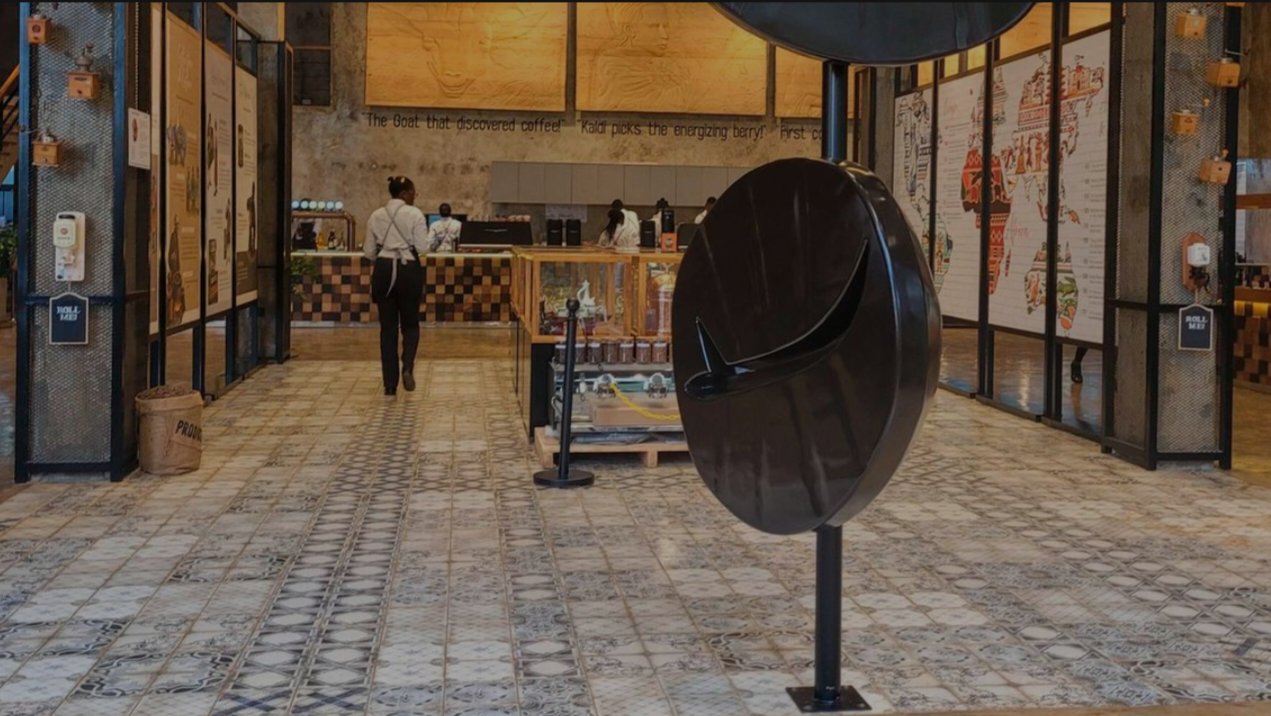
The site showcases a mix of industrial and rustic internal structural elements, including exposed concrete pillars, specialized track lighting, and geometric wall partitions that display regional maps and informational text panels.
Large, dark circular sculptural installations dominate the central floor space, serving as visual focal points within the main gallery area.
Architecturally, the building utilizes open-plan spatial configurations to facilitate foot traffic through its historical exhibits.
The construction incorporates custom metal framing for display cases, intricate floor tiling patterns, and wood-paneled accents along the service counters.
These elements reflect modern museum design standards, which prioritize adaptive indoor lighting and durable material choices for heavy public use.
Located within a prominent historical enclave in Nairobi, the venue adds to the cluster of cultural assets that draw local and international educational tourism.
The introduction of this facility complements existing historical infrastructure in the immediate vicinity, notably the Karen Blixen Museum, which preserves the early 20th-century residential architecture of the former coffee estate.
By establishing a dedicated space for coffee heritage, the project highlights the ongoing role of infrastructure development in preserving national history.
The gallery layout provides a structured educational pathway, allowing visitors to examine the evolution of processing machinery, trade routes, and farming techniques.
The facility functions as both an educational center and a cultural space, featuring an integrated café area where visitors can sample local produce.
This design choice aligns with modern global trends in commercial cultural infrastructure, where public exhibitions are paired with retail spaces to ensure financial sustainability for the facility.
As detailed in the archival record from file 231657.png, the interior layout relies heavily on raw textures and structural transparency to evoke an industrial aesthetic.
The combination of natural timber, structural steel, and concrete finishings mirrors the processing factories found in Kenya's major coffee-growing zones.
Comments (0)
Leave a Comment
No comments yet. Be the first to share your thoughts!