
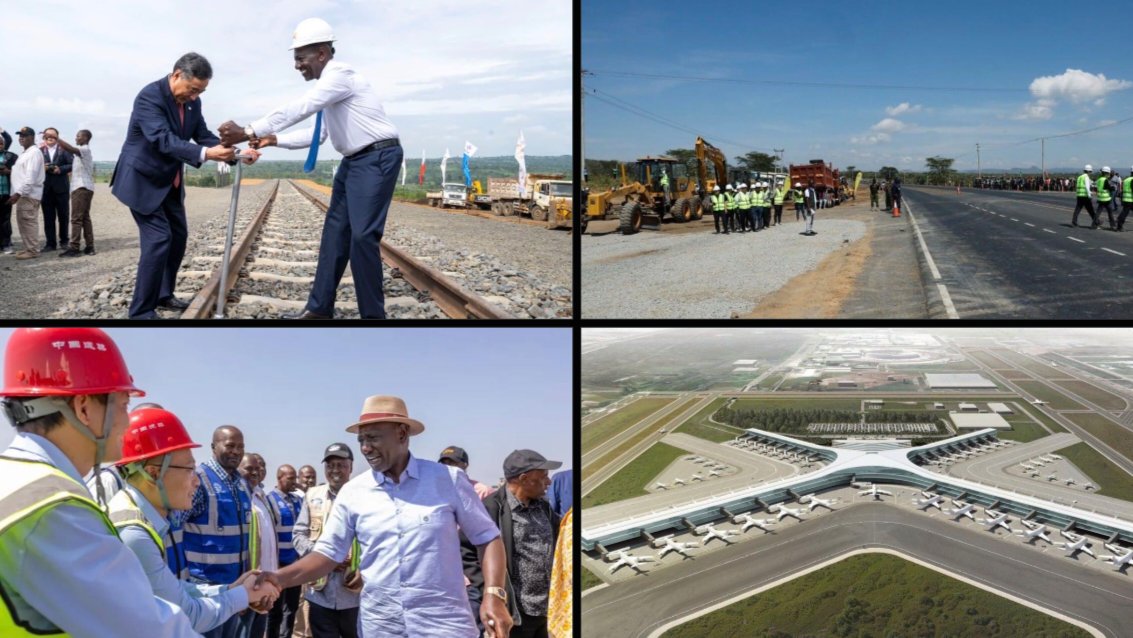

Consignments from China expanded sharply in the first five months of 2026, taking up a quarter of Kenya's total import expenditure.
Data indicates imports from the Asian nation jumped 35 percent to roughly KSh336 billion between January and May. The strong uptake driven by key transport and building projects entering intensive implementation stages across the country pushed Beijing's share of total inbound shipments to a record 25 percent.
Fresh momentum across major public works accounts for much of the surge. Chinese state contractors handling key transport corridors, energy installations, and urban infrastructure have stepped up the procurement of heavy machinery, equipment, structural steel, and specialized technology components.
Project execution requires sustained inward shipments of heavy equipment and fabricated building materials, which local supply chains cannot fully absorb.
The standard gauge railway operated by Kenya Railways Corporation (KRC) continues to generate ongoing procurement for equipment upgrades and maintenance parts.
Heavy road works under the Kenya Urban Roads Authority (KURA) and main highway arterial extensions have similarly sustained high demand for Chinese industrial equipment and steel products.
At the same time, private sector demand for cheap structural elements and electrical hardware has remained robust. Importers and contractors have increased purchases of Chinese materials to lower site costs and manage tight project schedules.
The surge in equipment and material purchases has widened the existing trade gap between both nations, as local exports to China remain low. Local manufacturers continue to face stiff competition from lower-priced imported products, particularly in structural metals, machinery, and electrical supplies.
Official figures show China maintains its position as the largest source market for goods entering the country, comfortably outstripping traditional regional and Western trading partners.
The commercial shift underlines how heavily domestic capital projects rely on Chinese industrial output and specialized equipment to maintain site progress.
Comments (0)
Leave a Comment
No comments yet. Be the first to share your thoughts!